Best Quail Egg Incubators: 6 Options for Hatching Quail Eggs
Choosing a quail egg incubator starts with more than its advertised egg capacity.
At Carter Farm, we’ve used the CoInceptus 36-egg incubator, ONKO 40-egg model, and Little Giant Quail Rails for hatching different breeds of quail.
Our experience with these products has shown us why roller spacing, automatic turning, humidity monitoring, and tray compatibility deserve attention before buying.
In this comparison, we cover six quail egg incubators and accessories, from compact tabletop models to larger automatic and cabinet-style machines.
We compare their advertised quail capacity, features, practical uses, limitations, and customer feedback so you can evaluate the options before making a purchase.
Your choice will depend on your usual batch size, budget, and available time. A small tabletop incubator may be enough for occasional hatching, while a cabinet model may suit keepers who hatch larger batches regularly.
We’ll also cover the features to check before buying, including egg-turning systems, humidity controls, and the cost of optional accessories.
Quail Egg Incubators We’ve Used, Tested, and Compared
We’ve selected six quail egg incubator options to compare, ranging from compact models for small batches to larger machines with higher egg capacities.
We’ve also included Little Giant Quail Rails, which can be useful if you already own a compatible egg turner.
When comparing quail egg incubators, we look at how many quail eggs actually fit, whether the turning system holds smaller eggs securely, and how easily temperature and humidity can be monitored.
1. CoInceptus Automatic Quail Egg Incubator (16- and 36-Egg Options)
Best for: Backyard quail keepers who want automatic egg turning, adjustable rollers, and an external water supply, with two capacity options to choose from.
Feature
Details
Available sizes
16 eggs and 36 eggs
Price
$35.99 (16-egg) / $61.99 (36-egg)
Amazon rating
4.2/5
Dimensions
12.05 × 11.22 × 7.44 inches (listed dimensions)
Egg turning
Automatic, every 90 minutes
Turning system
Adjustable rollers
Humidification
External water supply and automatic water-adding base
Humidity display
Not included
Temperature range
68–104°F (20–39.5°C)
Monitoring
Built-in temperature sensors and alarm
Extra feature
Built-in egg candler
Power
110V and 12V compatibility
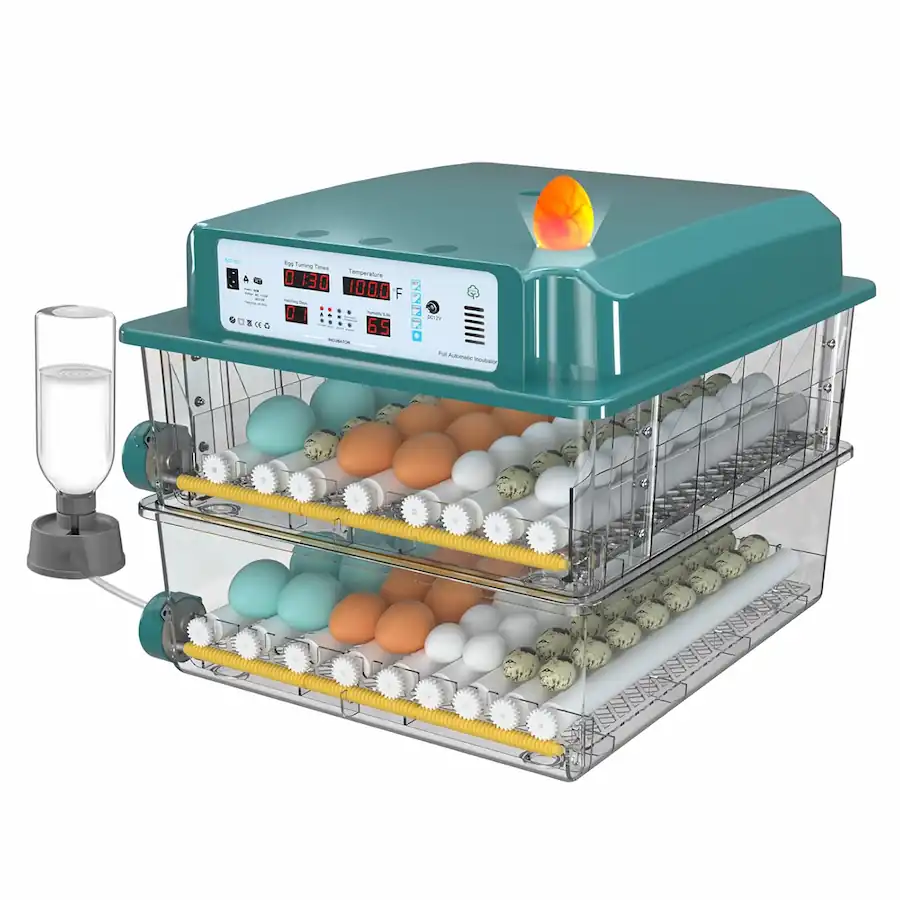
The CoInceptus Automatic Egg Incubator comes in two sizes: a 16-egg model priced at $35.99 and a larger 36-egg version priced at $61.99.
Both models feature adjustable rollers, automatic egg turning every 90 minutes, temperature monitoring, an external water supply, and a built-in egg candler.
At Carter Farm, we use the 36-egg version because we regularly hatch larger batches of quail eggs. It has proved useful for handling our hatching needs, and its adjustable rollers make it suitable for different egg sizes, including Coturnix quail eggs.
Its automatic turning system also saves us from having to turn the eggs manually throughout the day.
The smaller 16-egg version is a reasonable option for beginners or keepers who only hatch a few eggs at a time. However, if you regularly work with larger batches, the 36-egg model provides more room.
What to Know Before Buying
Both versions have an external water-feeding system, which makes adding water easier without repeatedly opening the incubator. They also include a built-in egg candler for checking embryo development.
One limitation is that neither model has a numerical humidity display. We recommend using a separate hygrometer to monitor humidity and an independent thermometer to check the actual temperature around the eggs.
Keep in mind that the advertised 16- and 36-egg capacities may not represent the number of quail eggs you can comfortably load. Actual capacity depends on how the smaller eggs fit on the adjustable rollers.
Best for: Quail keepers who want a purpose-built incubator with automatic egg turning and digital temperature and humidity controls.
Feature
Details
Customer rating
4.4/5
Advertised capacity
40 quail eggs
Temperature and humidity
Digital displays with automatic control
Egg turning
Automatic, every 2 hours
Water supply
Two external water bottles
Ventilation
Adjustable openings
Egg candler
Built-in
Design
Transparent 360-degree body
Hatching preparation
Removable turning tray
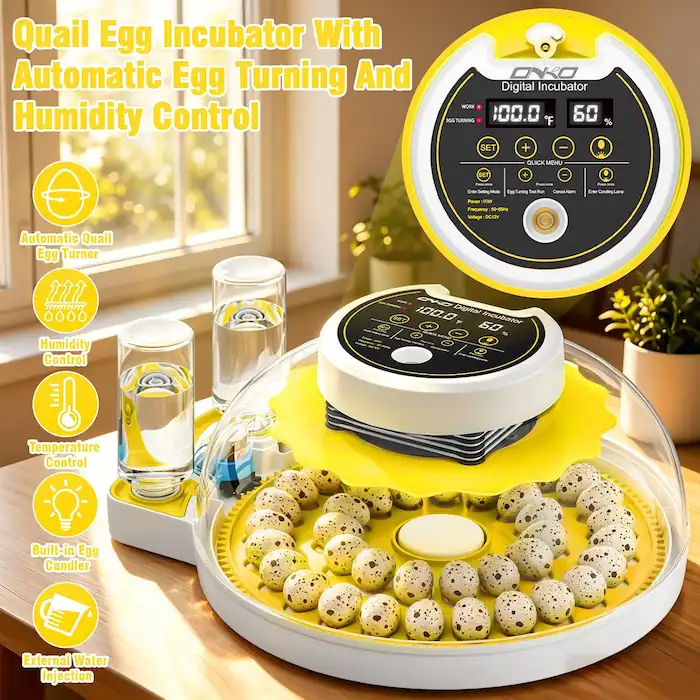
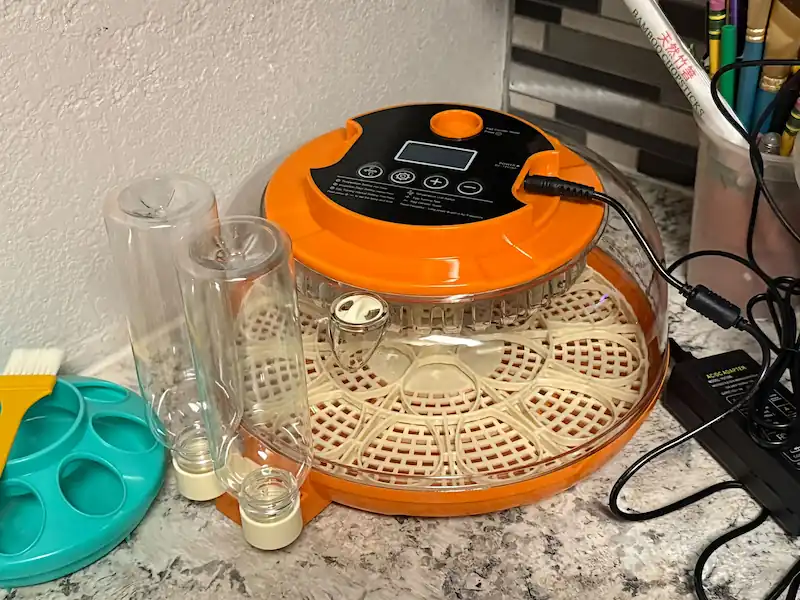
The ONKO 40-Egg Quail Incubator has given us encouraging hatching results at Carter Farm.
In our first batch, we set 25 fertile eggs inside, including shipped eggs, and successfully hatched 22 chicks.
For our second batch, we used 40 eggs from our own quail flock, and 37 hatched. These results made the incubator a useful addition to our quail hatching setup.
We also found its temperature and humidity controls useful. The incubator maintained the temperature well, and we could adjust the humidity to the level we wanted.
Its automatic turning system rotates the eggs every two hours, while the two external water bottles make it easier to add water without repeatedly opening the incubator.
What to Know Before Buying
One thing we had to arrange separately was the floor covering for hatch day. After removing the turning tray, the chicks need a suitable surface to stand on.
We placed a washcloth inside to give them better footing and help prevent their legs from slipping apart (splayed legs).
The removable turning tray makes the transition to hatching easier, but we recommend preparing a suitable liner before lockdown.
Also, verify the temperature and humidity readings with independent instruments rather than relying entirely on the built-in displays.
3. 18-Egg Automatic Incubator with Humidity Control (40 Quail Eggs)
Best for: Coturnix quail keepers who want automatic humidity control, adjustable egg turning, and room for larger batches.
Feature
Details
Standard egg capacity
18 chicken or duck eggs
Quail egg capacity
Up to 40 small eggs
Egg turning
Automatic
Turning intervals
60, 120, or 180 minutes
Turning stop
96 hours before hatching
Humidity control
Automatic water replenishment
Temperature control
Digital monitoring with audible and visual alerts
Egg candler
Built-in LED candler
Visibility
360-degree transparent dome
Suitable for
Quail, chicken, duck, parrot, and other small eggs
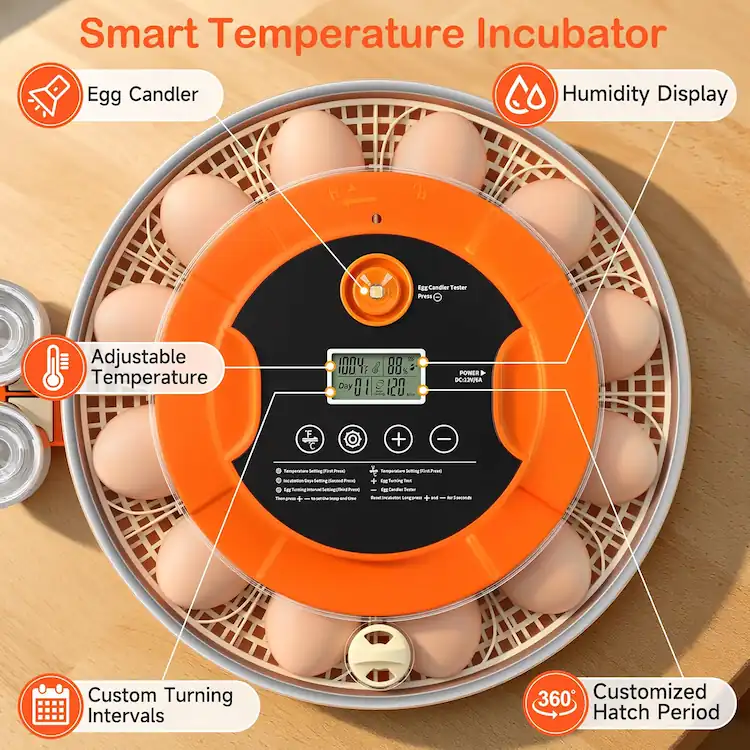
This incubator deserves a closer look if quail hatching is your main goal. Although its name mentions 18 eggs, that capacity refers to standard chicken or duck eggs. The manufacturer lists space for up to 40 smaller eggs, including quail eggs and parrot eggs.
Another useful feature is its automatic humidity system. You don’t have to keep opening the lid to refill the water.
The machine also lets you choose between 60-, 120-, and 180-minute turning intervals. It stops turning automatically 96 hours before the expected hatch date.
Why We Like Its Quail-Focused Capacity
The 40-egg capacity is the main attraction here. Unlike incubators that mainly advertise chicken egg capacity, this model gives a separate figure for smaller eggs. That makes it easier to judge its suitability for quail hatching.
Its three turning intervals (60, 120, and 180 minutes) give keepers some flexibility when setting up an incubation schedule.
Automatic water replenishment is another useful addition, especially during longer incubation periods.
One thing to check is the actual tray arrangement. The advertised 40-egg capacity depends on the eggs fitting properly in the supplied holders. Make sure the quail eggs sit securely and turn without getting stuck.
Our Perspective: This is one of the more interesting options for quail keepers because it specifically advertises space for 40 small eggs. Its automatic humidity system, adjustable turning, and built-in candler make it worth considering for regular small-batch hatching.
4. Harris Farms Nurture Right Egg Incubator
Best for: Backyard poultry keepers who want a multipurpose incubator with automatic turning, good visibility, and simple humidity controls.
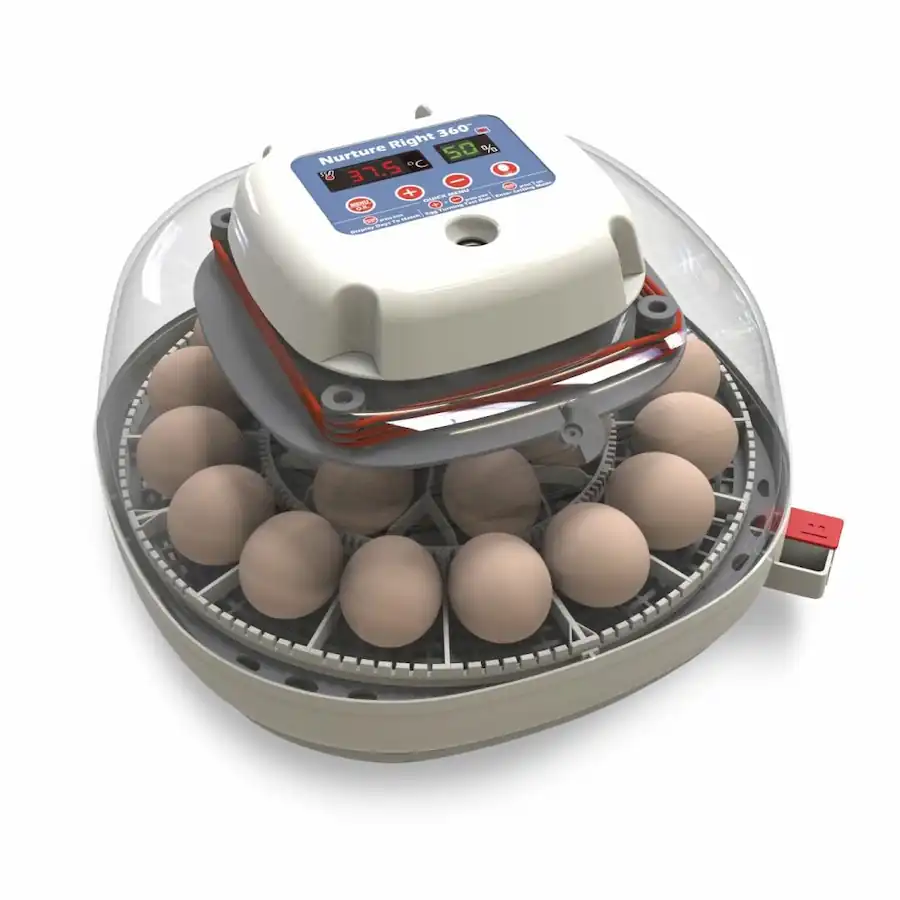
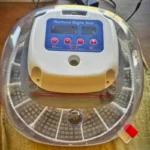
The first thing that stands out about the Harris Farms Nurture Right is its clear 360-degree viewing window.
You can watch the eggs throughout incubation and see chicks hatch without lifting the lid.
That is a nice feature, especially when children or other family members enjoy watching the process. It holds up to 34 quail eggs, depending on egg size.
What Makes It Interesting for Quail Keepers?
The airflow system is an important feature. It circulates warm air around the eggs to help maintain an even temperature inside the incubator.
The humidity display and adjustment knob also make it easier to monitor and adjust moisture levels during incubation.
Another thing worth mentioning is the automatic turning stop. It stops rotating the eggs three days before the expected hatch, so you don’t have to remember to switch off the turning mechanism manually.
However, quail eggs are smaller than chicken and pheasant eggs. Since the manufacturer doesn’t give a specific quail capacity, we wouldn’t assume that all the advertised egg spaces will accommodate quail eggs. Check the tray arrangement before purchasing.
5. MATICOOPX 20-Egg Incubator with Humidity Display and Automatic Turning
Best for: Beginners and backyard quail keepers who want an easy-to-use incubator with automatic turning, external water filling, and a built-in egg candler.
The MATICOOPX 20-Egg Incubator has a fairly simple setup. It includes a circulating fan, automatic egg turning, a humidity display, and an external water refill system.
You can add water without lifting the lid, which helps avoid sudden changes in temperature and humidity.
A Few Things Worth Knowing
One of the biggest advantages is its simple operation. The automatic turning system moves eggs from side to side every 60 minutes and stops three days before hatching.
The built-in candler also lets you check embryo development without purchasing a separate device.
There is one issue to consider if you mainly hatch quail eggs: the standard tray is not advertised with a specific egg capacity. The supplied tray arrangement may not make the best use of the available space for smaller eggs.
One reported quail hatching setup produced 31 chicks from 40 eggs, but the user had modified the original tray to hold more eggs.
This isn’t the standard capacity of the incubator, and the result shouldn’t be treated as a typical hatch rate.
However, that setup involved modifying the original tray to hold more quail eggs. The result should not be taken as a guaranteed hatch rate or as the standard capacity of the unmodified machine.
6. Chalixion 120-Egg Incubator with Automatic Turning
Best for: Quail breeders and small poultry farms that need a larger incubator with automatic turning and digital controls.
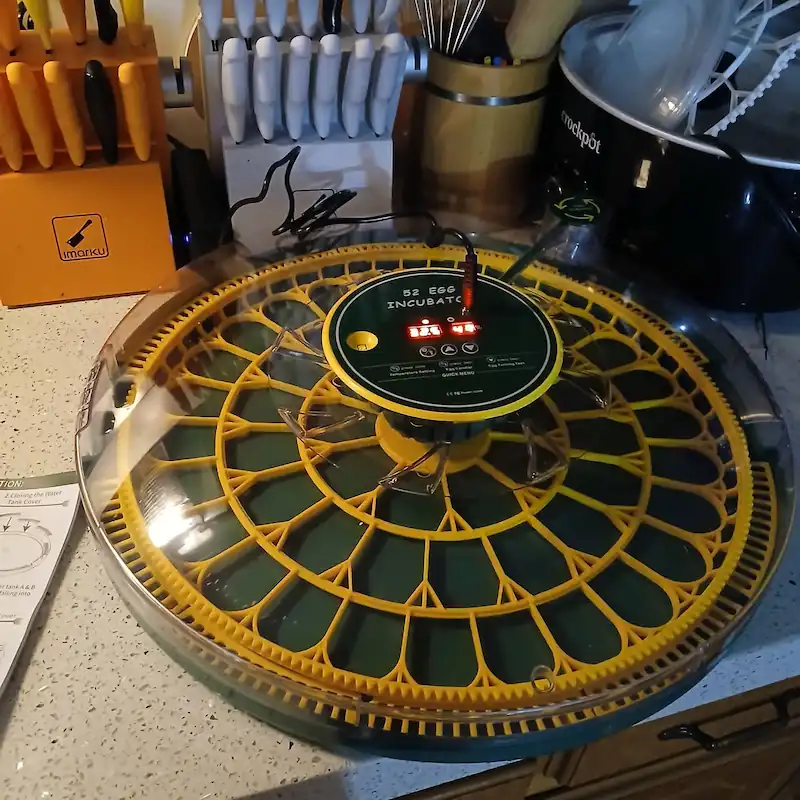
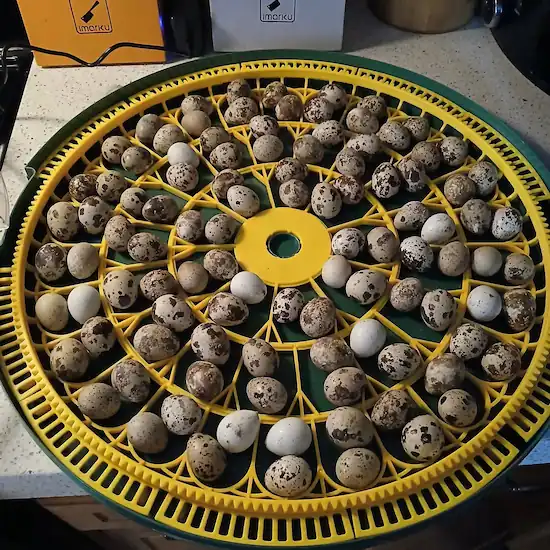
The Chalixion 120-Egg Incubator is a larger option for keepers who hatch more eggs at a time. It costs $107.99 and has an advertised capacity of up to 210 quail eggs. It also supports chicken, duck, and goose eggs.
The adjustable rollers turn eggs automatically, while digital controls help manage temperature and humidity.
What We Found During Our Research
After researching the Chalixion incubator and looking at feedback from people who have used it, we found both positive and negative experiences.
It can deliver good hatching results, with reported hatch rates above 90% and batches of more than 110 chicks.
Its automatic egg turning and digital controls are also useful features for larger hatching batches.
However, humidity control and egg turning are two areas that need attention. Maintaining humidity above 46–50% can be difficult, and the rollers may push eggs toward one side instead of turning them properly.
What to Consider Before Buying
The Chalixion offers a large advertised capacity and several useful features for its price. However, we would not recommend filling all the trays with valuable eggs without testing the machine first.
You should check that the rollers turn eggs properly and use a separate thermometer and hygrometer to monitor temperature and humidity.
This incubator is worth considering if you need a larger incubator without spending too much. Just test its turning system and temperature consistency before starting a full batch.
Quail Egg Incubators Comparison at a Glance
Product
Quail Capacity
Egg Turning
Best For
CoInceptus 16/36
16 or 36
Every 90 minutes
Beginners
ONKO 40-Egg
40
Every 2 hours
Digital controls
18-Egg Automatic
Up to 40
60, 120 or 180 minutes
Automatic humidity
Harris Farms Nurture Right
Not specified
Stops 3 days before hatch
Backyard poultry
MATICOOPX 20-Egg
Not specified
Every 60 minutes
Easy operation
Chalixion 120-Egg
Up to 210
Adjustable rollers
Larger batches
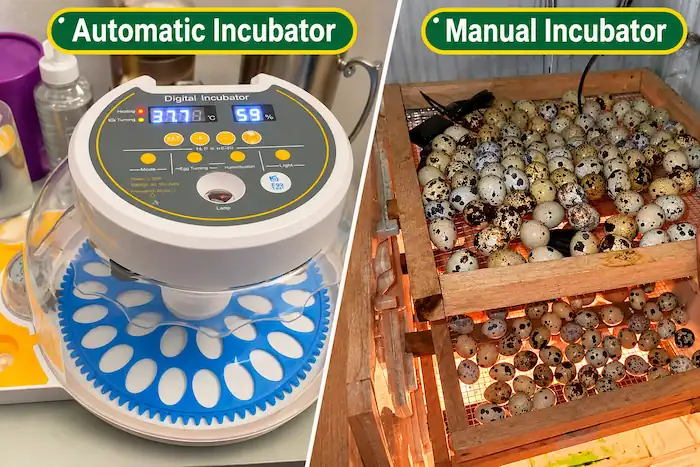
Automatic vs. Manual Incubation: Which Should You Choose?
Your choice comes down to your budget, batch size, and how much time you can give to turning eggs each day.
Consideration
Automatic Incubation
Manual Incubation
Egg turning
Machine turns eggs at set intervals
You turn eggs by hand
Daily effort
Less hands-on work
Requires regular attention
Equipment
Uses a motor, turner, or rotating tray
Usually has a simpler setup
Main benefit
Saves time and handles routine turning
Lower equipment cost and direct control
Main concern
Turner, motor, or tray may need attention
Missed or irregular turning can affect development
Several models in our product list use automatic turning, including the CoInceptus 16- and 36-egg incubators, ONKO 40-egg incubator, Chalixion 120-egg incubator, and Cimuka CT60SH.
Their turning systems differ, so check that the mechanism moves your quail eggs properly rather than assuming every automatic turner will handle them equally well.
Manual turning is still an option for a small batch. You just need to follow a regular turning schedule and make sure you don’t miss turns.
Automatic models reduce that daily work, but they still need checks for temperature, humidity, water levels, and proper egg movement.
Best for: Quail keepers who already own a Little Giant 6300 Automatic Egg Turner and want an easy way to turn smaller eggs automatically.
Feature
Details
Price
$24.99
Advertised capacity
Up to 120 small eggs
Package quantity
6 rails
Capacity per rail
Up to 20 eggs
Compatibility
Little Giant 6300 Automatic Egg Turner
Material
Plastic
Egg turning
Uses the existing automatic turner
Cleaning
Dishwasher-safe egg cups
Intended use
Quail and other small eggs
The Little Giant Quail Rails are different from the complete incubators in this list.
Instead of buying another machine, you can use these replacement rails with your existing Little Giant 6300 Automatic Egg Turner. The package includes six rails, with space for up to 20 small eggs per rail and an advertised total capacity of 120 eggs.
At Carter Farm, these rails are one of our favorite options for turning quail eggs. We like that they fit directly into the compatible automatic turner and don’t require any complicated assembly.
They keep the smaller eggs in individual cups while the turner handles the rotation. This saves us from turning each egg by hand and makes it easier to manage a larger batch.
We find these rails particularly useful for our quail eggs because the individual cups help keep smaller eggs in place during automatic turning.
They are also easy to remove and clean after use. Another advantage is that you can switch between chicken and quail rails on the same compatible turner instead of buying separate turning equipment.
One thing to consider is egg size. Standard quail eggs generally fit more easily, while larger or jumbo eggs may need extra space.
You might have to leave alternate spaces empty to prevent larger eggs from sitting too tightly together. This will reduce the total number you can load at once.
We recommend the Little Giant Quail Rails to anyone who already owns the compatible 6300 automatic turner. They are a practical and affordable way to adapt existing equipment for quail eggs.
Just remember that these are replacement rails, not a complete incubator, so you will still need the compatible turner and an incubator.
If you’re preparing your first batch, follow our guide on how to incubate and hatch quail eggs for the complete process, from setting the eggs to preparing for hatch day.
Once the eggs hatch, you’ll need to move the chicks into suitable housing and provide the right care. Our guide on how to raise quail covers the next stages of keeping them.
What Makes a Good Incubator for Quail Eggs?
Choosing an incubator for quail eggs involves more than checking its advertised capacity. The tray design, turning system, temperature control, and humidity management all affect how practical a machine is for hatching quail eggs.
1. Egg Capacity
Check the manufacturer’s stated quail capacity rather than relying on chicken-egg capacity. The actual number of eggs an incubator can hold depends on tray spacing, egg size, and turning design.
Before buying, check:
The stated egg capacity.
Whether the correct quail trays or rollers are included.
Whether eggs stay secure during turning.
Whether extra racks are needed for hatching.
If the manufacturer does not confirm quail capacity, treat any estimated number with caution.
2. Temperature Control
Stable temperature is essential for successful incubation. Check whether the incubator offers:
Temperature display: Shows the sensor reading.
Temperature adjustment: Allows you to set the desired temperature.
Automatic regulation: Controls heating to maintain the selected setting.
These features do not guarantee accurate readings throughout the machine. Use a separate, reliable thermometer to check the displayed temperature.
3. Humidity Monitoring and Control
Humidity features vary between incubators. Some display humidity, others allow manual water adjustment, and some include automatic humidification.
Check whether the machine has:
A humidity display.
Convenient access for adding water.
Automatic humidity control, if advertised.
Clear instructions for humidity management.
A separate hygrometer can help verify the built-in reading. Remember that a humidity display does not mean the incubator can regulate humidity automatically.
4. Cleaning and Maintenance
Easy cleaning makes an incubator more practical between hatches. Look for removable trays, accessible internal surfaces, and water containers that are easy to clean.
Also check the manufacturer’s cleaning instructions and the availability of replacement parts.
5. Visibility and Ease of Use
A transparent lid or viewing window lets you observe the eggs without frequently opening the incubator. Simple controls, clear instructions, and convenient water access also make daily operation easier.
For beginners, a simple machine with reliable basic features is often more useful than one with unnecessary extras.
Once the chicks hatch and are ready to leave the incubator, you’ll need a warm, prepared space for them.
We also recommend sorting out your quail brooder setup before hatch day so you’re not rushing to prepare one after the chicks arrive.
How We Evaluate Quail Egg Incubators at Carter Farm
We compare incubators based on practical suitability, available specifications, and customer feedback, not advertised features alone.
Temperature and Humidity: Displays, automatic controls, alarms, and manual adjustments.
Egg Turning: Automatic or manual operation and suitability for small eggs.
Ease of Use: Controls, water access, visibility, setup, and daily operation.
Cleaning and Maintenance: Removable trays, cleaning requirements, and replacement parts.
Value for Money: Price, capacity, features, and the cost of necessary accessories.
Customer Feedback: Reported hatch results, temperature stability, humidity, turning performance, and reliability.
Customer-reported hatch rates are individual experiences, not guaranteed results.
We distinguish feedback about the exact product from reviews of other models in the same product range. We do not claim hands-on testing unless it has actually been performed.
Why Use an Independent Thermometer and Hygrometer?
A separate thermometer and hygrometer give you another way to check the temperature and humidity inside your incubator.
This is especially useful when you’re setting up a new machine or checking whether its built-in readings are consistent.
The CoInceptus 16- and 36-egg models don’t have a humidity display, so you’ll need a separate hygrometer to monitor moisture levels.
The ONKO 40-Egg Quail Incubator and Chalixion 120 offer digital temperature and humidity monitoring with automatic control. Cimuka CT60SH also has automatic temperature and humidity control systems.
For more dependable readings:
Choose reliable instruments and follow the manufacturer’s calibration instructions.
Compare independent readings with the incubator’s displays.
Place instruments where they won’t block airflow or interfere with egg movement.
Check persistent differences before adjusting the incubator settings.
Independent instruments provide an extra layer of monitoring. They don’t automatically mean the incubator’s built-in sensors are inaccurate.
How to Choose the Right Quail Egg Incubator
Choose an incubator based on how many quail eggs you plan to hatch, your budget, and how often you expect to run a batch.
A small tabletop model may be enough for occasional hatching, while regular larger batches call for more capacity and easier monitoring.
For Beginners
The CoInceptus 16 is a compact option for smaller batches, while the CoInceptus 36 gives you more room when you want to hatch additional eggs.
Both models have adjustable rollers and automatic turning, but neither includes a humidity display. You’ll need a separate hygrometer to monitor humidity.
Before starting a full batch, check that the rollers hold and turn your bird eggs properly.
For a Quail-Focused Design
The ONKO 40-Egg Quail Incubator has dedicated spaces for quail eggs, along with digital temperature and humidity monitoring and automatic control.
At Carter Farm, we’ve used this incubator for our Coturnix eggs. We had 22 chicks hatch from our first batch of 25 fertile eggs and 37 from a second batch of 40 eggs from our own flock.
We did need to add a liner after removing the turning tray for hatching to help prevent splayed legs.
Some other reported concerns include water leakage, humidity control, and egg-turning performance, so check these functions before loading a valuable batch.
For Larger Batches on a Budget
The Chalixion 120 has an advertised capacity of up to 210 quail eggs and includes automatic turning, digital temperature and humidity controls, and an external water-refill system.
Its capacity makes it worth considering if you want to hatch larger batches without moving to a cabinet-style machine.
However, some reported experiences raise concerns about humidity control and roller performance. Check that the rollers suit your egg size and that eggs turn properly across the trays.
For Regular, High-Volume Hatching
The Hatching Time Cimuka CT60SH is a cabinet-style setter and hatcher designed for more frequent use.
It holds up to 108 quail eggs in its standard setup, or up to 156 smaller eggs when fitted with optional QT13 racks.
This is a more substantial investment, so factor in the cost of extra racks, available space, warranty coverage, and access to replacement parts before buying.
If You Own a Little Giant 6300
You don’t necessarily need to buy another incubator if you already have a Little Giant 6300 Automatic Egg Turner. Little Giant Quail Rails let you adapt that compatible turner for small eggs.
These rails are an accessory, not a complete incubator. They can hold up to 120 small eggs across six rails, although larger Coturnix eggs may need extra spacing and reduce the practical capacity.
The best choice depends on your budget and how many eggs you plan to hatch. The CoInceptus models are suitable for smaller batches, while the ONKO 40-Egg Incubator is designed specifically for quail eggs. Chalixion and Cimuka offer larger-capacity options. Check the tray size and turning system before choosing one.
Yes. Many chicken incubators can also hatch quail eggs if they have suitable trays, rollers, or replacement racks. Models such as CoInceptus and Chalixion use adjustable rollers, while Little Giant Quail Rails fit the compatible 6300 Automatic Egg Turner.
Automatic turning saves time and reduces the need to turn eggs by hand several times a day. However, the turning mechanism must hold smaller quail eggs securely. Manual turning can also work if you follow a consistent schedule and stop turning before hatching begins.
Yes, they are useful for checking the actual temperature and humidity inside your incubator. Built-in sensors may not always give accurate readings, so separate instruments provide an additional way to monitor incubation conditions.
A combined incubator and hatcher can handle both stages in one machine. For example, the Cimuka CT60SH offers both functions in a single cabinet. Separate equipment may be more useful for breeders who manage overlapping batches or hatch eggs regularly. Consider your available space, budget, and hatching needs before deciding.
No. A higher price does not guarantee more chicks. Egg fertility, storage conditions, temperature, humidity, ventilation, and proper incubation management all affect hatch results. Even a well-equipped incubator cannot compensate for poor-quality eggs or incorrect settings.
David Carter, founder of Farmstead Guide, has over 20 years of hands-on homesteading experience. From raising poultry to practicing sustainable farming, he shares practical tips and insights to help others live a more self-sufficient lifestyle.