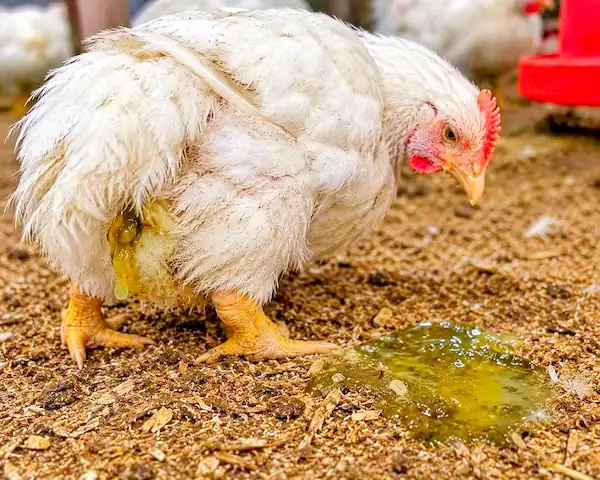
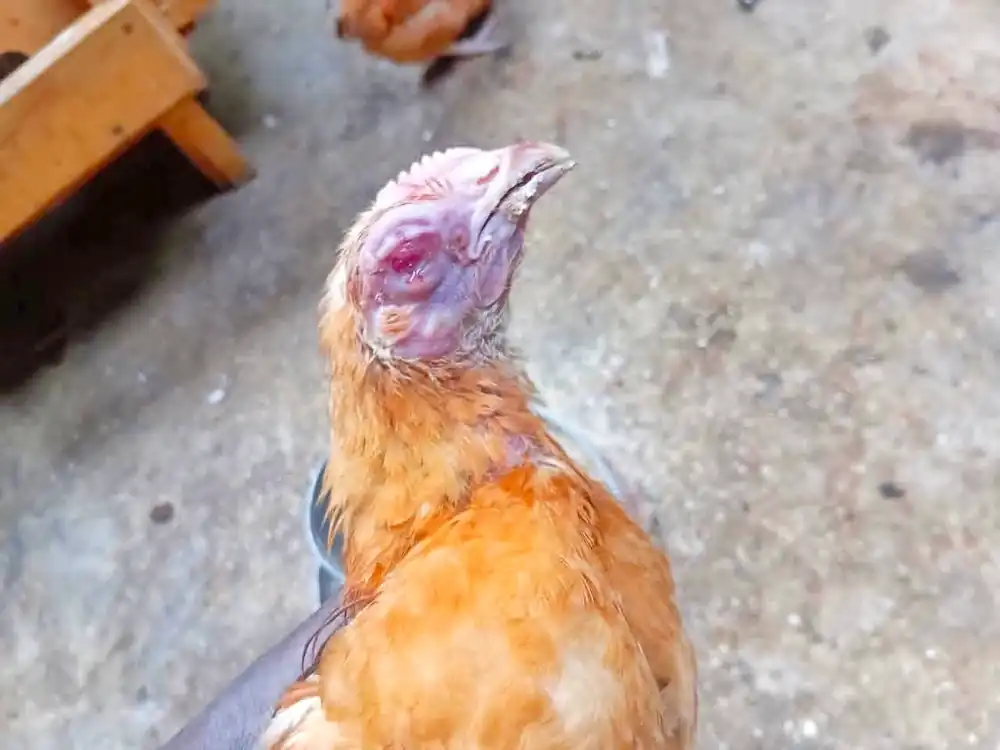
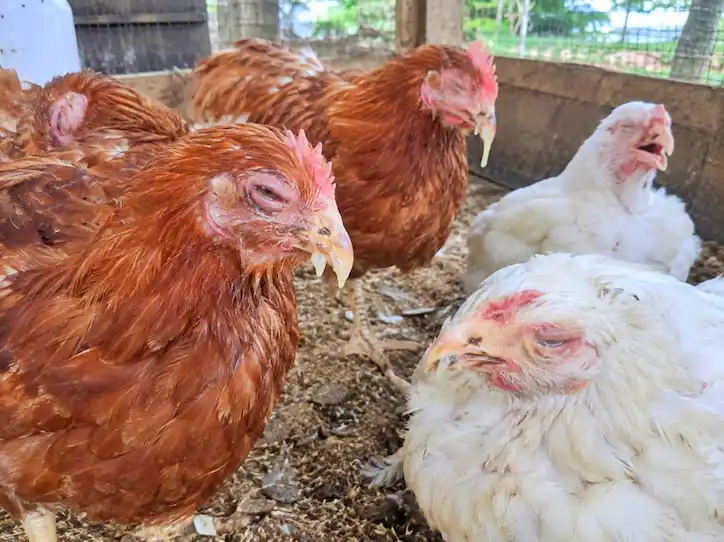
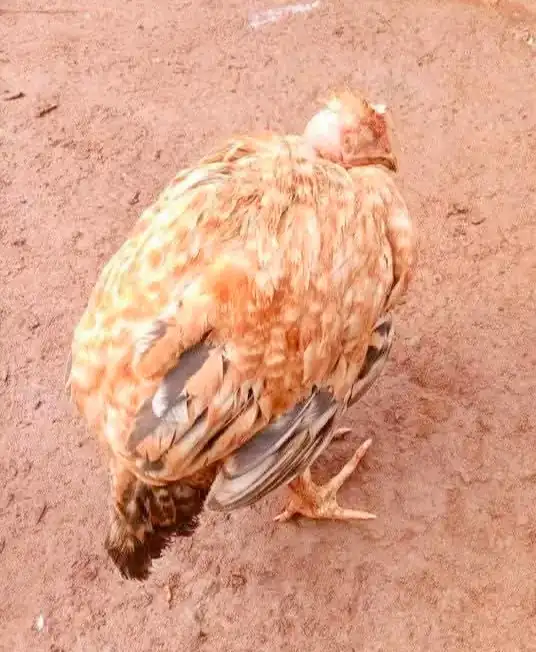
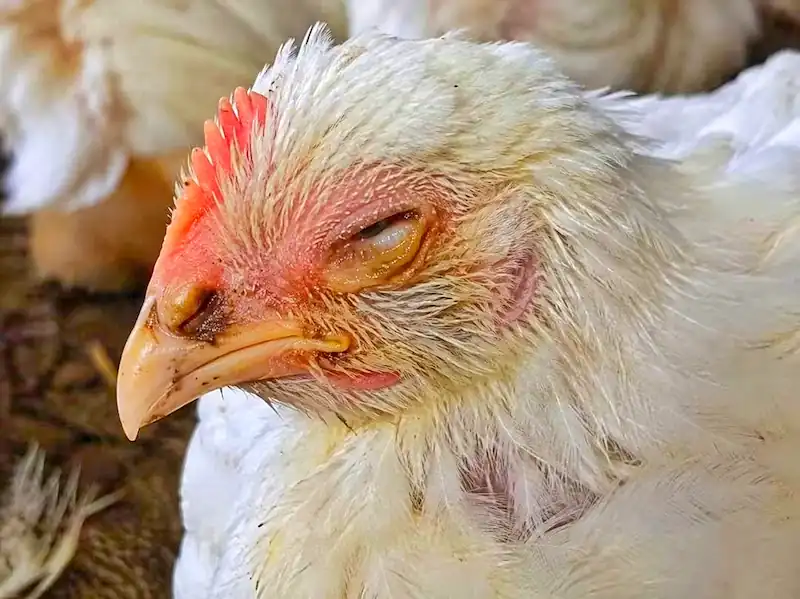
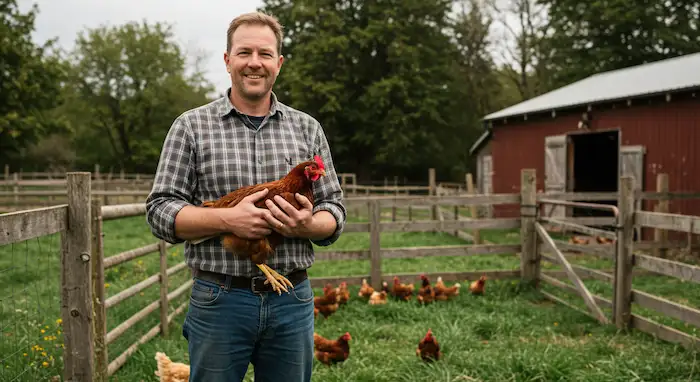
You walk into the coop and notice one hen standing off by herself. Her feathers are ruffled, her head is tucked in, and she isn’t acting like the rest of the flock. Now you’re left wondering what’s wrong, if the others are at risk, and what you should do next.
That matters because some chicken diseases spread quickly through shared feeders, waterers, droppings, and the air.
Marek’s disease has no cure once a bird develops the disease. Avian influenza can require immediate reporting and, in serious outbreaks, the loss of an entire flock. Waiting to see what happens can mean losing more birds.
This guide starts with the signs you can actually see. You’ll find a quick-reference table, practical guidance on when to treat, cull, or report a suspected disease, and steps for reducing the risk of disease spreading through your flock.
The information is based on the Merck Veterinary Manual, university extension resources, and state and federal animal health agencies.
Symptom-Based Quick Reference
Symptom
Possible cause
Action
Sneezing, coughing, nasal discharge
Bronchitis, Mycoplasma, AI
Isolate; seek advice
Bloody droppings
Coccidiosis
Act quickly; isolate
Paralysis or weak legs
Marek’s, injury, deficiency
Isolate; get diagnosis
Twisted neck or poor balance
Marek’s, Newcastle
Urgent veterinary advice
Sudden death
AI, Newcastle, fowl cholera
Report; don’t move birds
Purple/swollen comb or wattles
AI, other serious illness
Urgent veterinary advice
Pale comb and lethargy
Parasites, coccidiosis, illness
Isolate; check cause
Weight loss or poor growth
Worms, coccidiosis, poor nutrition
Check droppings and diet
Scaly legs or visible insects
Mites, lice
Treat bird and coop
Viral Diseases: What You Need to Know
Most viral chicken diseases don’t have a drug that clears the virus. That puts the focus on prevention, vaccination where appropriate, good biosecurity, and spotting trouble early.
Some diseases also need to be reported. If you see sudden deaths, severe respiratory problems, or several birds becoming sick at once, don’t assume it’s something you can treat in the coop.
1. Marek’s Disease
Marek’s is a highly contagious virus that spreads mainly through infected feather dander and dust. It is especially important in young chickens, although birds can develop disease at other ages.
Signs to Watch for
Progressive weakness or paralysis
One leg forward and the other stretched backward
Trouble walking or standing
Weight loss and poor condition
Listlessness
Treatment
There is no treatment for Marek’s disease. A bird with suspected Marek’s should be isolated and assessed rather than treated with random antibiotics or supplements. A definite diagnosis may require a necropsy and laboratory testing.
Prevention
Vaccinate chicks against Marek’s at hatch.
Reduce exposure to contaminated dust and dander.
Keep new birds separate before adding them to the flock.
Maintain good coop hygiene and biosecurity.
Marek’s vaccination is one of the most important disease-prevention steps for backyard chickens. The vaccine helps prevent tumors and clinical disease, but vaccinated birds can still become infected and shed the virus.
2. Avian Influenza
Avian influenza is a contagious viral disease that can move quickly through poultry. Some forms can cause severe illness and sudden death. In the U.S., suspected cases of highly pathogenic avian influenza need to be reported to animal-health authorities.
Signs to Watch for
Sudden death
Severe breathing problems
Swollen head
Purple or dark comb and wattles
Drop in egg production
Diarrhea or weakness
Several birds becoming sick at once
Treatment
There is no approved treatment for avian influenza in U.S. backyard poultry. If you suspect it, don’t move birds, eggs, equipment, or manure off the property. Contact your veterinarian or animal-health authority for instructions.
Prevention
Keep wild birds away from the flock.
Protect feed and water from contamination.
Quarantine new birds.
Clean and disinfect shoes, clothing, and equipment.
Limit visitors around the flock.
Don’t wait for several birds to die before asking for help. Sudden deaths or a fast-moving illness across the flock deserve an immediate call.
3. Newcastle Disease
Newcastle disease can affect the respiratory, digestive, and nervous systems. Severe forms can spread rapidly and cause high mortality.
Signs to Watch for
Coughing, sneezing, or gasping
Greenish, watery droppings
Twisted neck
Loss of balance
Paralysis
Sudden death
Treatment
There is no medication that stops virulent Newcastle disease. Supportive care may help with secondary infections in some cases, but suspected virulent disease needs veterinary and animal-health involvement.
Prevention
Keep new birds separate.
Limit contact with other poultry.
Clean and disinfect equipment.
Keep feed and water protected from contamination.
Ask a poultry veterinarian whether Newcastle vaccination fits your local risk.
Don’t assume every chicken with a twisted neck has Marek’s. Newcastle disease and other problems can cause similar neurological signs.
4. Fowlpox
Fowlpox spreads slowly compared with many other flock diseases. Mosquito bites and contact with infected birds or lesions can spread it. It has a dry form that affects the skin and a wet form that affects the mouth and upper respiratory tract.
Signs to Watch for
Scabs on the comb, wattles, or around the eyes
Mouth or throat lesions
Trouble eating or breathing
Reduced egg production
Poor appetite
Treatment
There is no specific treatment that clears fowlpox. Keep affected birds separated, provide easy access to food and water, and watch closely for problems caused by mouth or throat lesions.
Prevention
Control mosquitoes.
Remove standing water where possible.
Isolate affected birds.
Consider vaccination where fowlpox is a known problem in your area.
The skin form often looks worse than it is. The wet form deserves more attention because lesions in the mouth or throat can interfere with eating and breathing.
5. Infectious Bronchitis
Infectious bronchitis is a highly contagious viral respiratory disease. It can move through a flock quickly and can cause problems with egg production and shell quality in laying hens.
Signs to Watch for
Sneezing
Coughing
Nasal discharge
Gasping or noisy breathing
Drop in egg production
Thin, rough, or misshapen eggs
Treatment
There is no treatment that eliminates the virus. Supportive care can help birds through the illness. If secondary bacterial infections develop, a veterinarian may recommend appropriate treatment.
Prevention
Keep new birds separate.
Avoid mixing birds from multiple sources.
Keep housing clean and well ventilated.
Ask a poultry veterinarian whether vaccination makes sense for your flock.
Don’t diagnose infectious bronchitis from sneezing alone. Several chicken diseases cause similar respiratory signs, so a spreading respiratory problem may need veterinary testing to identify the cause.
Bacterial Diseases
Bacterial infections can move quickly through a flock. Some respond to the right treatment, while others leave birds as long-term carriers. A few can also make people sick.
The first step is not reaching for an antibiotic. Isolate the sick bird, look at what is happening in the rest of the flock, and get a diagnosis when the signs point to a serious infection.
6. Salmonella
Salmonella is one of the bacterial diseases backyard keepers need to take seriously because a chicken can carry and shed the bacteria without looking sick. People can pick it up from birds, droppings, eggs, or contaminated equipment.
Signs in Chickens May Include
Diarrhea
Weakness and ruffled feathers
Poor appetite
Weight loss
Reduced growth in young birds
But a healthy-looking bird does not rule out Salmonella.
Treatment
Don’t try to clear a suspected Salmonella infection with leftover antibiotics. Treatment decisions should come from a veterinarian and, where appropriate, testing.
Antibiotics may not eliminate the carrier state and can also complicate efforts to control Salmonella.
Keep sick birds away from the flock, control rodents and wild-bird access, and keep feeders and waterers clean. Wash your hands after handling birds, eggs, droppings, or anything inside the coop.
CDC also recommends keeping poultry and poultry equipment outside the home.
A note for the family: Children under 5, older adults, and people with weakened immune systems have a higher risk of serious Salmonella illness.
7. E. coli
E. coli is not one single disease in chickens. Different strains can cause different problems, and E. coli infections may occur alongside other diseases or stressors.
Signs Can Include
Breathing problems
Depression and weakness
Poor appetite
Diarrhea
Swollen joints in some infections
A bird with these signs needs more than a guess at which antibiotic to use.
Treatment
A veterinarian may prescribe an appropriate antimicrobial after assessing the bird and, when needed, testing the infection. Supportive care can help keep a sick bird hydrated while the underlying problem is addressed.
Keep drinking water clean, remove wet or heavily soiled litter, avoid overcrowding, and deal with respiratory or other infections before they spread through the flock.
Good water and litter management are basic but important parts of poultry disease control. University of Minnesota Extension recommends keeping waterers clean, removing wet litter, and maintaining ventilation to control moisture and ammonia.
8. Fowl Cholera
Fowl cholera is caused by Pasteurella multocida. It can be devastating because the acute form may kill birds before you have much warning.
Acute Cases May Look Like
Sudden death
Severe weakness
Loss of appetite
Diarrhea
Breathing problems
Birds that survive an outbreak can develop more chronic problems, including swollen joints or wattles.
Treatment
Antibiotics may reduce illness when the infection is diagnosed and treated early, but they are not a guarantee that the flock is cleared. Birds that recover can remain carriers and become a source of infection for others.
That changes the decision-making. If fowl cholera is suspected in a flock with repeated deaths, involve a veterinarian rather than repeatedly treating birds one at a time.
Prevention
Keep rodents and wild birds away from feed and water, clean contaminated equipment, and avoid bringing birds from unknown sources into the flock.
9. Mycoplasma
Mycoplasma is different from many bacterial infections because the problem can become a long-term flock issue. Mycoplasma gallisepticum (MG) commonly causes chronic respiratory disease in chickens.
Look for
Sneezing
Coughing
Nasal discharge
Foamy or watery eyes
Swollen sinuses
Reduced egg production
Signs often become worse when birds are stressed or when another respiratory infection is present.
Treatment
Antibiotics can reduce clinical signs, but they do not reliably eliminate MG from an infected bird. A bird that improves can still carry and spread the infection.
That is why treating the sick bird and then putting her straight back with the flock can create a bigger problem.
If you’re buying new birds, ask about the flock’s disease-testing status before bringing them home. In the United States, the USDA National Poultry Improvement Plan (NPIP) is a voluntary federal-state testing and certification program. It includes testing standards for M. gallisepticum and several important poultry diseases.
Quarantine still matters. A certificate or hatchery status does not remove the need to keep new birds separate while you watch for signs of illness.
If a new chicken starts sneezing a few days after joining the flock, don’t assume it’s just dust from the coop. Keep her separate and watch the rest of the birds closely. A chronic respiratory problem can become a flock problem quickly.
Don’t Reach for Antibiotics First
A sick chicken does not automatically need an antibiotic.
Antibiotics won’t treat viruses, and choosing the wrong drug or dose can delay the diagnosis you actually need. Some bacterial infections also leave birds carrying the organism after their symptoms improve.
For a backyard flock, the better sequence is simple:
Isolate → assess the flock → identify the likely cause → get veterinary advice when needed → treat the confirmed problem.
That approach also matters for food safety. CDC continues to report Salmonella outbreaks linked to backyard poultry, and birds can carry Salmonella without appearing sick.
Parasitic Diseases: Common Problems That Can Get Serious
Parasites are common in backyard flocks, but they are not all managed the same way. Coccidia damage the intestine. Worms live inside the bird. Mites and lice stay on the outside.
The signs can overlap, so look at the bird, the droppings, the litter, and the rest of the flock before deciding what you’re dealing with.
10. Coccidiosis
Coccidiosis is caused by microscopic parasites called coccidia. They multiply in the intestinal tract and damage the lining. Young chickens are especially vulnerable, and a serious outbreak can kill birds within days.
The signs are usually hard to miss:
Bloody or watery droppings
Ruffled feathers and weakness
Weight loss
Poor growth
Pale comb
Reduced appetite
Bloody droppings are a warning sign, but they do not prove coccidiosis. Diagnosis can involve fecal testing or examination of the intestines after death.
What to Do
Separate obviously sick birds and get treatment advice quickly. Anticoccidial drugs are used for prevention and treatment, but the right product and its approved use depend on where you live. Sick birds may also need supportive care because they can become dehydrated.
Prevention starts with the litter. Coccidia build up where droppings, moisture, and crowding come together. Keep bedding dry, keep feed and water away from fecal contamination, and avoid overcrowding.
Medicated Feed or Vaccine?
Both approaches are used, but don’t assume you can use them together. Chickens vaccinated against coccidiosis should not receive feed containing coccidiostats because the medication can interfere with the vaccine.
11. Worms
Roundworms, cecal worms, and tapeworms are among the internal parasites found in chickens. A bird with a heavy burden may lose condition even though she continues to eat.
Look for
Weight loss
Poor growth
Diarrhea or abnormal droppings
Reduced egg production
Pale comb
Worms in droppings in some heavy infections
Don’t assume every thin hen has worms. Poor nutrition, coccidiosis, chronic infection, and other diseases can look similar.
What to Do
A fecal examination can help identify parasite eggs and guide treatment. Merck recommends routine fecal examinations for backyard poultry rather than relying entirely on guesswork.
Dewormers are not interchangeable, and their approved uses differ by country. If you’re keeping laying hens, meat birds, or both, check the product label and withdrawal requirements before using anything.
Keep parasite pressure down
Reduce heavy contamination of the run, avoid overcrowding, and keep feed and water from sitting where birds are constantly walking through droppings.
12. Mites
Mites are external parasites, but they can cause much more than an itchy chicken. Heavy infestations can cause blood loss, anemia, restlessness, and reduced production.
Red mites are especially troublesome because they hide in cracks and crevices during the day and feed on birds at night.
Check for
Pale comb and wattles
Restlessness at night
Excessive preening
Feather damage
Mites around the vent or under the wings
Tiny parasites or dark spotting in coop cracks
What to Do
Don’t treat only the chicken and ignore the coop. Some mites spend much of their time off the bird, so the housing needs attention too.
Inspect roosts, nest boxes, cracks, and other hiding places. Follow the label of any approved poultry parasiticide carefully. Merck specifically warns that products approved for dogs or cats are not automatically safe or legal for food-producing poultry.
13. Scaly-Leg Mites
Scaly-leg mites are different from the mites that commonly feed on the bird’s skin or blood. These tiny mites burrow under the scales of the legs and feet.
The giveaway is the legs. Scales become raised, thickened, crusty, and rough instead of lying flat against the leg. Severe cases can make walking painful.
What to Do
Treat affected birds with a product approved for poultry in your area and follow its label. Clean contaminated housing and check the rest of the flock because more than one bird may be affected.
Don’t pull the damaged scales off. They can be painful and may bleed.
14. Lice
Chicken lice feed mainly on skin debris and feather material rather than blood. They spend their lives on the bird, which makes finding them easier than finding red mites hiding in the coop.
Look around the vent and under the wings for:
Moving insects
Clusters of eggs attached to feather shafts
Broken or ragged feathers
Feather loss
Excessive scratching or preening
Restlessness
Reduced production in heavy infestations
What to Do
Use a poultry-approved treatment and repeat it when the label calls for a second application. One treatment may not remove newly hatched lice.
Check other birds at the same time. Lice spread easily through close contact, so treating one bird while leaving the rest unchecked is a good way to end up with the same problem again.
The Simple Parasite Check
When a bird starts losing weight or looking rough, check three things before guessing:
Look at the droppings. Blood, diarrhea, mucus, or other changes can point you in a direction.
Look at the bird. Check the vent, feathers, skin, legs, comb, and body condition.
Look at the housing. Wet litter, heavy manure buildup, rodents, and parasites hiding in cracks can tell you what is happening beyond the individual bird.
For backyard flocks, good litter management and regular observation do more than simply make the coop look cleaner. They reduce parasite exposure and can help you catch problems before several birds are affected.
Prevention and Biosecurity: Your First Line of Defense
Good biosecurity reduces the chance of bringing disease into your flock and helps stop problems from spreading. The basics are isolation, traffic control, sanitation, and watching your birds for early warning signs.
The Four Basics of Flock Biosecurity
Isolation: Keep chickens away from other poultry and limit contact with wild birds. Waterfowl deserve extra attention because they can carry and spread avian influenza. Keep feed and water where wild birds cannot reach them, and clean up spilled feed.
Traffic control: Disease can hitch a ride on shoes, clothing, equipment, and visitors. Use dedicated coop boots, limit visitors, and avoid sharing poultry equipment with other flock owners. Wash your hands after handling birds.
Sanitation: Keep feeders and waterers clean. Remove wet litter and manure before they build up. Clean organic matter from equipment and surfaces before applying a disinfectant, because dirt and manure can reduce how well disinfectants work.
Watch for warning signs: Know what your birds normally look and act like. A sudden change in appetite, activity, droppings, breathing, egg production, comb color, or posture deserves attention. Isolate a sick bird instead of letting it remain with the flock.
Quarantine New Birds
New chickens can look perfectly healthy and still bring disease or parasites into an established flock. Quarantine gives you time to watch them before they share the same space and equipment. Extension sources commonly recommend 3–4 weeks or about 30 days.
Step 1: Keep new birds in a separate area away from your main flock. Give them their own feeder, waterer, and other equipment.
Step 2: Quarantine them for at least 30 days. Keep them separated even if they look healthy.
Step 3: Care for your established flock first. Handle the quarantine birds afterward, then wash your hands and change or clean footwear and clothing as needed.
Step 4: Check the new birds every day. Watch for sneezing, coughing, diarrhea, poor appetite, lethargy, weight loss, parasites, or other unusual signs.
Step 5: If they stay healthy through quarantine, you can start the introduction process. Quarantine reduces the risk of disease introduction, but it does not guarantee that a bird is disease-free.
If a quarantined bird becomes sick, keep it separated and get veterinary or diagnostic advice before adding it to the flock.
A Five-Minute Daily Health Check
You don’t need a complicated routine. Look at the flock every day and pay attention to changes.
Droppings: Look for unusual diarrhea, blood, or a major change from what you normally see. Droppings can vary normally, so don’t diagnose a disease from one dropping alone.
Comb and wattles: Pale, purple, swollen, or unusually dry tissue can be a warning sign, especially when combined with other symptoms.
Posture: A healthy chicken should be alert and moving normally. A bird that stays hunched, stands apart, or keeps its feathers fluffed needs a closer look.
Appetite and activity: Notice which birds are eating, drinking, scratching, and moving with the flock. A bird repeatedly hanging back from the feeder is worth checking.
Breathing and behavior: Sneezing, coughing, gasping, nasal discharge, weakness, or unusual behavior should not be ignored.
The goal isn’t to diagnose a disease from these signs. It’s to notice when something has changed early.
Biosecurity Supplies Worth Keeping
You don’t need a large collection of equipment. A few simple items can make your routine easier:
Dedicated coop bootsthat aren’t worn elsewhere
Footwear disinfectant or a properly maintained footbath
Hand-washing supplies or hand sanitizer
Separate feeders and waterers for quarantine
Rodent-resistant feed storage
Poultry-safe disinfectant
Separate cleaning tools for quarantine
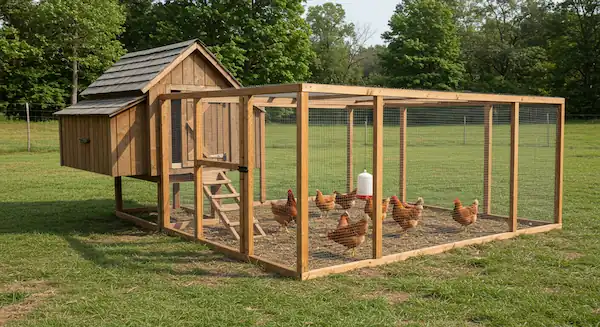
A designated quarantine area
USDA recommends dedicated footwear, limiting visitors, cleaning and disinfecting equipment, protecting feed from wild birds and rodents, and keeping health records.
One Simple Rule to Remember
Don’t let anything that has been around other poultry walk straight into your flock.
That includes new birds, dirty boots, borrowed equipment, visitors, and contaminated clothing. Biosecurity works best as a daily habit rather than something you start after a bird gets sick.
Alabama Cooperative Extension’s Biosecurity for Backyard Poultry Flocks is particularly useful here because it is recent and peer-reviewed, and it was reviewed by poultry extension specialists at Auburn University. Dr. Jacquie Jacob’s University of Kentucky material also defines biosecurity and emphasizes isolation, traffic control, sanitation, and ongoing health monitoring.
Vaccination and Prevention Schedule by Bird Age
There isn’t one vaccination schedule that fits every backyard flock. Disease pressure, local rules, exposure to other birds, and the vaccines available in your area all matter.
For most backyard chickens, Marek’s vaccination at hatch is the main routine vaccination to discuss, while other vaccines are used when local disease risk justifies them.
Day-Old Chicks
Marek’s vaccine: This is the key vaccine for backyard chickens. Marek’s disease is common, has no treatment once a bird develops clinical disease, and spreads through infected feather dander.
Vaccination should be done at hatch or as soon as possible after hatching, before chicks are exposed to contaminated dust.
If you’re buying chicks, ask the hatchery if they were vaccinated against Marek’s disease and when the vaccine was given. Some hatcheries vaccinate in ovo or at hatch.
Coccidiosis: If the chicks received a coccidiosis vaccine, don’t assume medicated starter is compatible with it. Coccidiostats can interfere with the vaccine’s ability to establish protective immunity. Follow the hatchery’s instructions and the feed label.
Brooder care: Keep the brooder clean, dry, and properly heated. Good management matters because young chicks are especially vulnerable to coccidiosis and other infections.
If you want Marek’s vaccination, arrange it before the chicks arrive. Waiting until they are several weeks old can leave them exposed before the vaccine has a chance to protect them.
Around 6 Weeks
There isn’t a universal 6-week vaccination for backyard chickens.
This is a better time to check how the flock is doing rather than automatically giving another vaccine.
Check body condition: Look for poor growth, weight loss, weakness, or birds that are falling behind the rest of the flock.
Check for parasites: Inspect feathers, skin, legs, and the area around the vent for mites or lice.
Watch for Marek’s signs: Weakness, leg problems, paralysis, or progressive weight loss need attention. Marek’s can cause clinical disease in young birds, but vaccination at six weeks is too late to rely on as the primary preventive measure.
Review the feed: If you’re moving from chick starter to grower feed, follow the manufacturer’s feeding instructions rather than switching because the birds have reached an exact universal age.
Before Point of Lay
Point of lay is a useful time for a flock health check, but it isn’t a universal vaccination milestone.
Check body condition: Make sure pullets are growing normally and aren’t thin or carrying a heavy parasite load.
Review vaccination needs: Ask a poultry veterinarian or local extension service if your flock needs vaccines for diseases such as Newcastle disease, infectious bronchitis, or fowlpox. These are not automatically recommended for every backyard flock. MSD specifically advises against vaccinating birds for diseases that aren’t a local concern.
Review biosecurity: Check your quarantine setup, footwear, cleaning routine, wild-bird exposure, and how new birds enter the flock.
Check your records: Keep track of vaccinations, illnesses, treatments, deaths, and recurring problems. This history can help you and your veterinarian decide what prevention is actually worthwhile.
What About Newcastle, Fowlpox and Infectious Bronchitis?
Don’t add these vaccines to a backyard schedule simply because they are commonly used in commercial poultry.
Newcastle disease: Vaccination may be recommended in areas where the disease is a concern or for birds that frequently attend shows or come into contact with other poultry.
Infectious bronchitis: Vaccines are available, but backyard birds generally aren’t vaccinated unless their exposure risk makes it worthwhile.
Fowlpox: Whether vaccination makes sense depends on local disease pressure and mosquito exposure. Discuss it with a poultry veterinarian or local extension service rather than following a fixed age-based schedule.
A Simple Backyard Vaccination Plan
Bird age
Main prevention step
Day old
Marek’s vaccine; establish good brooder hygiene
First weeks
Follow coccidiosis vaccine/feed instructions
Around 6 weeks
Check growth, parasites, and signs of illness
Before laying
Health check and review local vaccine needs
Adult flock
Maintain biosecurity and vaccinate only when appropriate
vaccination doesn’t replace biosecurity. Marek’s vaccination, for example, helps prevent clinical disease but does not completely prevent infection or shedding of the virus.
For a backyard flock, a good vaccine plan is the one that matches the diseases actually present in your area and the way your birds are kept, not a copied commercial poultry schedule.
When to Call a Vet vs. Treat at Home
Not every sick chicken needs an emergency vet visit. But some signs should never be watched for several days.
When Home Care May Be Reasonable
Home care can be appropriate when you know what you’re dealing with and the problem is minor or already diagnosed.
Mild external parasites such as lice or mites
A previously diagnosed condition with an established treatment plan
A bird that is still eating, drinking, and alert
No other birds are showing similar signs
Start with the basics: isolate the bird, provide clean water, keep it somewhere quiet and appropriately warm, and monitor its condition closely. Keep a record of symptoms and anything you give the bird.
Don’t use leftover antibiotics or medication meant for another animal.
Call a Vet
Get veterinary advice when:
You aren’t sure what is making the bird sick
The bird stops eating or drinking
It becomes very weak or cannot stand
There is paralysis, circling, tremors, or a twisted neck
Breathing becomes difficult
The bird is getting worse instead of better
Several birds develop similar signs
Neurological signs and severe respiratory problems can occur with serious contagious diseases, including virulent Newcastle disease.
Report Suspected Serious Disease
Don’t wait to see what happens if you find sudden unexplained deaths, several sick or dying birds, severe breathing problems, purple combs or wattles, swelling of the head, or neurological signs affecting multiple birds. These signs can occur with avian influenza or virulent Newcastle disease.
Isolate the affected birds and avoid moving birds, eggs, equipment, manure, or litter off the property until you get advice.
Reporting requirements differ by country and region. In the U.S., USDA APHIS advises poultry owners to contact a veterinarian, State veterinarian, or USDA when these signs occur.
One rule worth remembering: If you can’t confidently identify the problem, don’t guess with medication. Isolate the bird and get advice.
There isn't one disease that is most common in every backyard flock. Coccidiosis, Marek's disease, and respiratory infections are frequent problems. Coccidiosis is especially important in young birds, while Marek's can affect chickens of different ages and has no treatment once clinical disease develops.
Call a vet if the diagnosis is unclear, the bird is becoming weak or unable to stand, stops eating or drinking, has breathing difficulty, or develops neurological signs such as paralysis or a twisted neck. If several birds become sick or die, seek advice promptly rather than treating birds individually.
Marek's vaccination is strongly recommended for backyard chickens, with vaccination normally given at hatch. Other vaccines, including those for Newcastle disease, infectious bronchitis, or fowlpox, depend on local disease risk and how the flock is kept. Coccidiosis prevention also needs to be planned around either vaccination or an appropriate coccidiostat program.
Don't give leftover antibiotics without knowing what you're treating. Antibiotics do not work against viral diseases, and the wrong drug or dose can delay proper treatment. Some poultry infections can also leave birds as carriers even after signs improve. Get veterinary advice before using antibiotics.
Keep new birds separated for at least 30 days before introducing them to your flock. Use separate feeders, waterers, and equipment, and watch the birds daily for illness or parasites. A quarantine period lowers the risk of introducing disease, but it cannot guarantee that a bird is disease-free.
Yes. Some poultry diseases are zoonotic, meaning they can spread from animals to people. Salmonella is an important example, and some avian influenza viruses can also infect people. Wash your hands after handling birds, eggs, feeders, waterers, or coop equipment, and keep poultry and their equipment away from areas used for food preparation.
Isolate affected birds and stop moving birds, eggs, equipment, manure, or litter off the property. Sudden deaths, severe respiratory signs, swollen heads, purple combs or wattles, and neurological signs can occur with serious reportable diseases such as highly pathogenic avian influenza or virulent Newcastle disease. Contact your veterinarian or the appropriate animal-health authority for instructions.
David Carter, founder of Farmstead Guide, has over 20 years of hands-on homesteading experience. From raising poultry to practicing sustainable farming, he shares practical tips and insights to help others live a more self-sufficient lifestyle.