An electric fence for goats can be one of the most effective ways to keep goats contained, but only when it delivers a strong, consistent shock. Goats are persistent escape artists.
They climb, crawl, lean against fences, and quickly find weak spots in a setup. A poorly powered fence may slow them down, but it won’t keep a determined goat home.
The problem is usually not electric fencing itself. It’s using the wrong energizer, poor grounding, incorrect wire spacing, or putting goats behind an electric fence without proper training.
Get those parts right, and even stubborn goats learn to respect the hot wire.
For most small herds, electric net fencing, polywire, or a properly installed multi-strand fence can work well.
Portable setups are useful when you rotate grazing areas, while permanent high-tensile or woven wire fencing makes more sense for a fixed pasture. Solar energizers can also work where running power to the fence is difficult.
The key is matching the fence, energizer, grounding system, and training to your goats and your property.
I’ll cover the different electric fence options, how many strands you need, the right joule rating, installation, training, and the common mistakes that cause electric fences to fail.
Types of Electric Fences for Goats
Electric Netting: The All-in-One Portable Solution
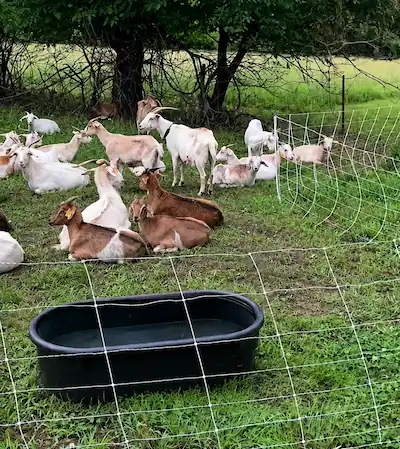
Electric netting is about as close as you can get to an instant goat fence. The horizontal conductive strands and vertical plastic posts are already connected, so there’s no need to measure out individual wires or install separate insulators. Push the posts into the ground, connect the energizer, and you’re ready to train the goats.
That makes it particularly useful for rotational grazing, temporary paddocks, and small areas where the fence needs to move often.
1. Premier 1 ElectroNet Electric Fence for Sheep & Goats
The Premier 1 ElectroNet (Shop on Amazon) makes the most sense when you want to divide pasture without committing to a permanent fence.
I’ve used the 35-inch, 164-foot version with goats, and the part that stands out is how quickly I can change a grazing area. There are no separate line posts or insulators to measure out. The posts are already built into the netting.
I find the 164-foot roll useful for rotational grazing because I can reshape a paddock without having to join several short pieces of fencing.
Its built-in struts also help keep the mesh standing between posts, although the posts themselves are flexible.
That flexibility is both useful and a limitation. On uneven ground, I can work with it instead of fighting rigid posts.
At corners or on difficult soil, though, I prefer adding support rather than putting all the tension on the included posts.
What I would pay attention to:
Keep vegetation away from the bottom of the fence. Wet grass and weeds can pull power away from the hot strands. Mowing a narrow strip before setting up the netting saves a lot of troubleshooting later.
Buy the energizer separately. This fence doesn’t include one, and the energizer needs to be properly sized for the job. I cover how to choose one, including output and sizing, further down.
Don’t use a continuous-output energizer. Electric netting should be powered by a suitable pulsed energizer.
Train the goats before leaving them unattended. I watch new goats around the fence at first. Once they get a proper shock from the hot strands, most learn quickly to stay clear. An untrained goat can push into the mesh and become tangled.
Give corners extra attention. The lightweight posts are convenient for moving the fence, but they aren’t meant to take the same abuse as permanent fence posts.
The Premier 1 isn’t the cheapest way to fence a large permanent pasture. For portable goat fencing and rotational grazing, though, the built-in posts and nine-strand mesh make it a very practical system.
The main thing to remember is that you’re buying the fence itself, not a complete powered kit, so the energizer and grounding system need to be planned separately.
2. Starkline 35″ x 164′ Electric Netting All-in-One Solar Kit
If you need to move a goat fence around the property and don’t have an electrical outlet near the pasture, the Starkline 35″ x 164′ Electric Netting All-in-One Solar Kit (Shop on Amazon) is a convenient option.
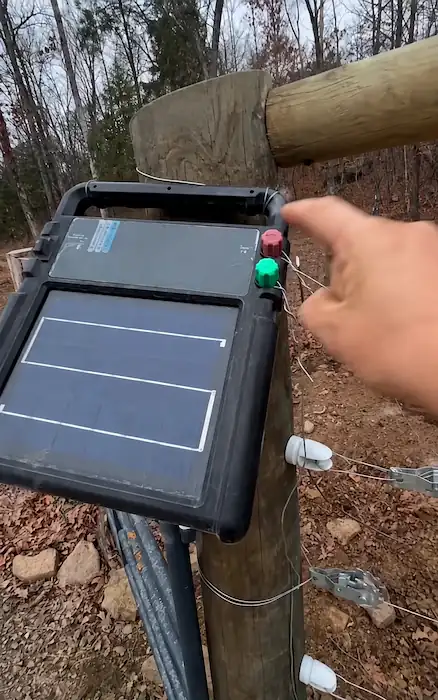
The fence and solar energizer come together, so there’s no need to buy a separate power source or run an extension cord across the pasture.
I like this setup for rotating my Nigerian Dwarf goats between grazing areas. Once the solar energizer is charged and the grounding system is installed, I can move the fence without having to rebuild the electrical setup each time.
A few things are worth knowing before buying:
35 inches is not especially tall. Most trained goats will respect the shock, but determined or athletic goats can jump it.
Training still matters. I wouldn’t put untrained goats behind it and assume the fence will do all the work.
The solar energizer deserves attention. Check that it is charged and producing adequate voltage. A solar fence is only as good as the energizer powering it.
The netting can tangle during removal. Taking a little care when rolling it up saves frustration when you set it up again.
The anchoring cords could be easier to handle. They can fray and aren’t particularly convenient when you’re trying to secure the fence.
If you want a portable solar electric fence for goats without having to choose and buy the energizer separately, this is where the Starkline kit has an advantage. The main compromise is the 35-inch fence height, so I’d choose something taller if you have goats that are persistent jumpers.
Polywire / Polybraid: The Flexible, Budget-Friendly Option
3. YCFERESY 3,366-Foot Electric Fence Polywire
If your main concern is fencing a large area without spending netting prices, this YCFERESY polywire (Shop on Amazon) is the type of product I’d look at first.
The 3,366-foot spool gives you enough material to build a long multi-strand goat fence, and the six stainless-steel conductors give the wire better conductivity and rust resistance than basic single-conductor polywire.
Feature
YCFERESY Electric Polywire
Length
3,366 feet / 1,026 meters
Diameter
1/8 inch
Conductors
6 stainless-steel strands
Color
Yellow and black
Construction
UV-stabilized polymer with stainless-steel conductors
What I like about this spool is the amount of fence you get. With four strands, 3,366 feet of polywire is enough for roughly 840 linear feet of fence before allowing for connections and waste. Drop to three strands and you can cover even more ground. That makes the cost per foot much more attractive than electric netting.
The wire is also light enough to handle without the equipment you’d need for heavy steel fencing. I can run it through temporary step-in posts, wind it back onto a reel, and reuse it when I change the paddock. That flexibility is the main reason I’d choose polywire over netting for a longer fence.
The six stainless-steel conductors are another worthwhile feature. Stainless steel doesn’t oxidize like bare aluminum, and the six conductive strands give the fence multiple paths for the electrical pulse.
That doesn’t mean you can ignore the rest of the system, though. A poor ground, weak energizer, bad connection, or vegetation touching the wire can still leave you with a weak fence.
There is one tradeoff I wouldn’t overlook with goats: polywire is much less visible than electric netting. The yellow and black outer material helps, but I would still make the fence obvious during training.
Once the goats understand where the hot wires are, visibility becomes less of a concern.
Before you buy it, consider these points:
Posts and insulators are separate purchases. Unlike electric netting, this spool only provides the conductive fence material.
I’d add a reel to the setup. Trying to move and store 3,366 feet of loose polywire gets frustrating quickly.
Your strand count matters with goats. I wouldn’t rely on just one or two strands for a typical goat enclosure. Multiple wires create a much better psychological barrier.
Grass is one of the easiest ways to weaken the fence. Keep vegetation from touching the energized wires to avoid unnecessary voltage drop.
Pay attention to every connection. A long spool only saves money if the connections between sections remain electrically reliable.
Training should come before full-time use. Polywire won’t physically stop a goat that hasn’t learned to respect the shock.
For a homesteader building a portable fence for goats on a budget, this is where polywire starts to make a lot of sense.
You’re giving up the built-in posts and physical visibility of electric netting, but in return you get thousands of feet of reusable fencing material at a much lower cost per foot.
4. Gallagher 48-Inch Fiberglass Step-In Electric Fence Posts
Polywire is only as useful as the posts holding it in place, and these Gallagher 48-inch fiberglass step-in posts make a practical match for a portable goat fence.
The 50-pack gives you enough posts to build a fairly long temporary enclosure without buying them individually.
Feature
Gallagher Step-In Posts
Height
48 inches
Pack size
50 posts
Material
Fiberglass
Wire compatibility
Polywire, polytape, polyrope
Wire clips
4 per post
Installation
Step-in foot peg
Main use
Portable fencing and rotational grazing
The four built-in clips let you run multiple strands without adding separate insulators. I also like the fiberglass construction for temporary fencing because the posts won’t rust, and they’re light enough to pull out and relocate when you move the paddock.
For a polywire fence for goats, this is the type of post I’d pair with the YCFERESY wire above. The 48-inch overall height gives you enough room to position several strands at different levels while keeping the fence easy to move.
High-Tensile Permanent Fence: The Long-Term Perimeter Solution
If you’re fencing a pasture that isn’t going to move for years, high-tensile electric fencing is a different proposition from the portable systems above. You’re not really buying a “fence kit” and unfolding it.
You’re building the fence from individual components: high-tensile wire, permanent posts, corner and end braces, insulators, tensioners, a grounding system, and an energizer.
That sounds like more work because it is. But once the fence is properly built and tensioned, there is very little to take apart or replace.
Agricultural fencing guidance puts particular emphasis on the corner and brace assemblies because they carry the tension from the wires.
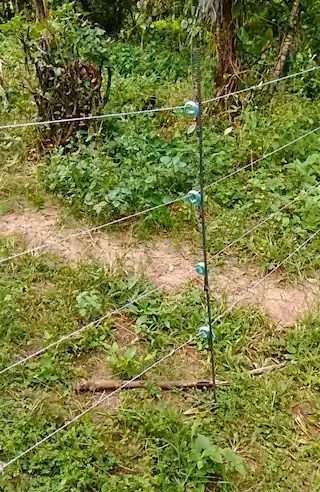
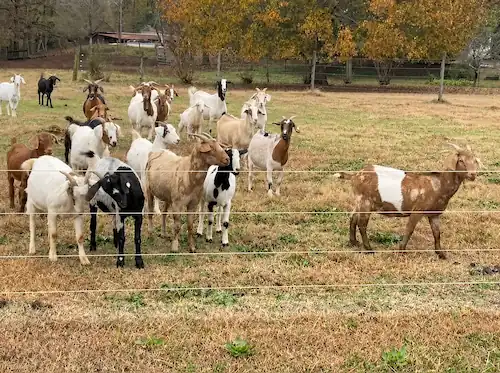
For a goat pasture, I’d build around a 5-strand layout with the lower wires close enough to discourage goats from crawling underneath.
A practical starting point is approximately 6, 5, 5, 8, and 10 inches from the ground upward, with the exact spacing adjusted for your goats and terrain.
You can also combine the electric wires with woven wire fencing if you want a physical barrier underneath the electric deterrent. That is worth considering if you have kids, predator pressure, or goats that like leaning against fences.
You can buy most of the smaller components separately, including high-tensile fence wire, electric fence insulators, wire tensioners, grounding hardware, electric fence energizers, and fence voltage testers.
The posts, corner braces, and other structural pieces are better chosen according to your fence length, terrain, and soil rather than buying a generic kit. That approach also gives you more control over the strength of the corners and the spacing of the wires.
What Energizer Do You Need for a Goat Fence?
The energizer is what gives an electric goat fence its bite. Choose it based on the total fence length, number of strands, vegetation, and available power source, rather than simply buying the unit with the biggest mile rating.
How Many Joules Does an Electric Fence for Goats Need?
Joules indicate the energy delivered by each pulse. A short portable fence can work with a relatively small energizer, while a long, multi-strand fence with weeds and brush needs considerably more output.
I would also look for a low-impedance energizer. It is designed to maintain a stronger pulse when the fence has some vegetation contact, although keeping grass and weeds off the wire is still essential.
Don’t choose an energizer from the advertised fence-mile rating alone. A long fence with several strands has much more electrical load than a short single-wire setup.
What Voltage Should a Goat Fence Have?
Voltage is what you measure on the fence, not just what the energizer claims to produce. Check the voltage at the far end of the fence with a fence tester.
If the reading drops significantly, check for vegetation, loose connections, poor grounding, or an undersized energizer before replacing the whole fence.
For the electric netting discussed above, use a proper pulsed fence energizer and follow the manufacturer’s instructions. Do not connect a continuous-output energizer to electric netting.
The energizer doesn’t need to be the most powerful one available. It needs to be powerful enough for the fence you actually built.
Step-by-Step Installation Guide for an Electric Goat Fence
Before buying more wire or driving the first post, decide where the goats will actually move. I like to mark the gate, water point, shelter, and any awkward corners first. A fence that looks simple on paper can become annoying to manage if the gate ends up on the wrong side of the paddock.
1. Plan the Fence Layout
For a typical goat enclosure, I’d start with four or five strands of polywire. Keep the lower strands close enough to stop goats from ducking underneath, then increase the spacing as you move upward.
A useful starting layout is approximately 6, 5, 5, 8, and 10 inches from the ground up, but I adjust it for the size and behavior of the goats.
Temporary fences can use step-in posts. Permanent corners need much stronger support, usually with substantial wood posts and proper bracing.
One thing I always plan first is the gate. If I’m moving goats regularly, I want the entrance somewhere I can reach easily with feed, water, and equipment like goat toys.
2. Install a Temporary Polywire Fence
This is the simplest setup when the fence needs to move with the goats. Start with the corners. Push your step-in posts or drive suitable corner posts firmly into the ground. On longer sections, add line posts at intervals that keep the wire from sagging or drifting.
Next, install the insulators at your chosen wire heights. Make sure each one holds the polywire away from the post. I don’t let the wire rub directly against metal posts.
Run the polywire through the insulators, working from one end of the fence to the other. Pull it reasonably tight, but don’t try to make polywire behave like high-tensile steel. It has some stretch, and overtightening serves little purpose.
Once all the strands are in place, connect them to the fence circuit and then connect the energizer according to its instructions.
Ground the Energizer Properly
Grounding is not the part I’d rush. Poor grounding can make a powerful energizer perform like a weak one.
Use the number, length, spacing, and grounding method specified by your energizer manufacturer. Soil conditions matter, too. Dry or rocky ground can make grounding more difficult than moist soil.
After everything is connected, test the fence at the energizer and again at the farthest point.
If the voltage is much lower at the end, start looking for weeds touching the wire, poor connections, damaged polywire, or grounding problems.
3. Set Up Electric Netting
Netting is considerably faster because the posts and conductive strands are already part of the fence. I normally lay the rolled netting along the intended boundary first rather than trying to carry it around while installing it. Then I work down the line, stepping each post firmly into the soil.
Keep the mesh reasonably straight and avoid twisting the posts. On uneven ground, take a little extra time to keep the bottom of the net from forming low spots where goats can push underneath.
Once the complete section is standing, connect the netting to the pulsed energizer. Before putting goats inside, walk the entire perimeter with a fence tester.
Pay particular attention to the bottom of the net. Grass and weeds touching the electrified strands can pull voltage down quickly. And don’t connect a continuous-output energizer to electric netting.
4. Build a Permanent High-Tensile Fence
Permanent high-tensile fencing starts with the structure, not the wire. The corner and end assemblies need to be properly braced because they carry the tension from every strand.
I would rather spend extra time making a solid H-brace than discover six months later that a corner post has started leaning.
Once the posts and braces are secure, install the insulators and run the high-tensile wire through them. Keep the same basic goat-friendly spacing used for the polywire layout, adjusting it to the animals and terrain.
Then tension each strand using the appropriate strainer or tensioning system. Don’t simply pull the wire as tight as possible. High-tensile wire is designed to operate under tension, but excessive tension can damage components or create a dangerous failure when something hits the fence.
For a permanent installation, I also pay close attention to the grounding system and lightning protection. Follow the energizer manufacturer’s grounding requirements and check local agricultural fencing recommendations before finalizing the installation.
5. Test the Fence Before Adding Goats
This is the step I would never skip. Walk the entire fence with a digital fence tester. Check the voltage near the energizer and then check it at the farthest point of the fence. A strong reading at the charger doesn’t tell you what the goat will actually encounter at the other end.
If the reading is low, don’t immediately buy a bigger energizer. First look for vegetation, loose connections, damaged wire, poor grounding, or a strand accidentally touching another conductive material.
Once the fence is working properly, train the goats to it before giving them unrestricted access. A goat that understands what the hot wire does is much easier to contain than one encountering an electric fence for the first time while already determined to get out.
Training Goats to Respect an Electric Fence
Electric fencing works because goats learn to avoid the fence after experiencing the shock. I don’t put untrained goats straight into a large pasture surrounded by electric wire. If one panics and runs through the fence, the situation can turn into a tangled animal and a damaged fence very quickly.
Start with a Small Training Pen
I prefer a small training area where I can see every goat. Something around 20 × 20 feet works well for a small group. Put feed and water toward the middle of the pen so the goats have no reason to stand beside the fence.
Make sure the fence is properly energized before the goats go in. I check the voltage with a fence tester rather than assuming the energizer is doing its job.
Then I let the goats investigate it. Most goats need very little convincing. One touch is often enough for them to jump backward and give the fence considerably more respect.
Day 1: Let Them Figure It Out
Keep the first session supervised. Don’t drag a goat toward the wire or deliberately make it touch the fence. Let the goats move around naturally. When one approaches the wire and receives a shock, watch its reaction. The important thing is that the goat can move away freely.
I pay particular attention to horns and legs around electric netting. If a goat becomes tangled, switch the energizer off before attempting to free it.
Day 2: Test Their Curiosity
The second session is less about introducing the fence and more about seeing whether the goats remember it. Fresh grass just beyond the fence can be a useful temptation, especially for goats that like reaching through barriers. I stay nearby and watch rather than assuming they have learned the lesson.
If they repeatedly ignore the fence, I stop and check the voltage before blaming the goats. A weak fence can teach them the wrong lesson.
Day 3 and Beyond: Give Them More Space
Once the goats are consistently avoiding the training fence, move them into a larger paddock. I still watch them closely during the first few hours. Check the corners, gates, low spots, and any place where vegetation makes the fence less visible.
Some goats learn quickly. Others need more time. Don’t move on because the calendar says three days. Move on when the goats are respecting the fence.
Mistakes That Can Ruin Training
Check the voltage at the fence itself before blaming the energizer.
Keep the training pen small enough that goats cannot build up running speed.
Stay nearby during those first encounters in case a goat becomes tangled or panics.
Make sure the energizer delivers a consistent pulse throughout the training period.
Give polywire a visual cue with flagging or highly visible tape so goats can clearly identify the boundary.
Clear grass and weeds from the fence line so vegetation does not weaken the initial shock.
The goal isn’t to make goats afraid of the fence. It’s to give them a clear, consistent boundary that they understand and choose not to challenge.
How I Maintain My Electric Fence
Electric fencing doesn’t take much work once it’s set up, but I make a few quick checks regularly to catch problems before a goat finds them.
What I Check Regularly
Fence voltage: Test the fence at the farthest point from the energizer. A digital tester such as the Gallagher Smartfix can show both voltage and current flow.
Fence line: Walk the perimeter and look for fallen branches, loose wires, damaged insulators, or leaning posts.
Vegetation: Keep grass, weeds, and brush away from energized strands. Heavy contact can pull voltage down.
Grounding: If the fence suddenly loses power, inspect the ground system before replacing the energizer.
If Goats Are Getting Out
Start with the actual voltage rather than immediately adding more wire. Aim for roughly 4,000–5,000 volts at the fence, then check the lower strand height and whether the goats need retraining.
If the voltage is good but goats are still escaping, look for obvious jumping points, gaps under the fence, or vegetation that has weakened one section.
When the Energizer Stops Working
AC: Check the outlet, fuse, connections, and ground.
Solar: Clean the panel and check the battery and charging conditions.
Battery: Check battery voltage and replace a weak battery.
Seasonal Checks
Spring is a good time to repair winter damage and retension permanent wire. During summer, vegetation control becomes the main chore. Before winter, I check the ground system and clear debris from the fence line.
Adding Predator Protection
An electric fence helps, but I wouldn’t treat it as an impenetrable predator barrier. Coyotes and loose dogs can jump or dig under fencing when they are motivated.
For higher-risk areas, an additional hot wire 12–15 inches outside the main fence can give predators a shock before they reach the physical barrier. Closer-spaced netting and a buried wire apron can provide another layer of protection.
Motion lights, alarms, and livestock guardian animals can also supplement the fence when predator pressure is serious.
For a typical goat fence, I use roughly 6, 5, 5, 8, and 10 inches from the ground upward. That keeps the lower wires close enough to discourage crawling while giving the upper strands enough coverage to discourage jumping. Larger goats may need the top strand raised closer to 48 inches.
Yes. I would pay closer attention to voltage with sheep because their wool can reduce the effectiveness of the shock. Keeping the fence around 5,000 volts or higher and using appropriate strand spacing usually gives you a better margin.
A properly installed livestock electric fence delivers a brief, high-voltage, low-current pulse. It is designed to deter rather than injure, but I still treat it as a serious electrical fence. Warning signs should be posted where required, and children should be taught not to touch it.
This is one of the jobs I wouldn't ignore. Keep grass and weeds trimmed beneath the energized strands, particularly after rain and during fast summer growth. A low-impedance energizer can handle some vegetation contact, but it isn't a substitute for keeping the fence line clear.
That depends on where you live. Before installing a permanent fence, I'd check your local zoning, property, and livestock-fencing rules. Rural properties often have fewer restrictions than residential areas, but I wouldn't assume that applies everywhere.
For most goats, I recommend 5 to 6 energized strands, with the fence reaching roughly 40–46 inches high. I’d use tighter spacing for Nigerian Dwarf goats and young kids, since smaller animals can find gaps in a standard setup. Electric netting is another good option when you want closer strand spacing without installing each wire separately.
David Carter, founder of Farmstead Guide, has over 20 years of hands-on homesteading experience. From raising poultry to practicing sustainable farming, he shares practical tips and insights to help others live a more self-sufficient lifestyle.