A duck coop can look spacious in a product listing but turn out to be awkward to clean, difficult for your ducks to enter, or impossible to keep dry around the doorway.
Ducks sleep on the floor, splash water around, and carry moisture into their bedding, so choosing a shelter takes a little more thought than picking a chicken coop.
You need a dry sleeping area, enough usable floor space, and a secure run where your ducks can move around safely.
At Carter Farm, we know that the layout matters just as much as the size, especially when you’re trying to keep bedding clean and daily chores manageable.
So, we’ll look at how much indoor space your ducks need, how to plan a separate run, where to place water and manage drainage, and what to check when comparing predator-proof designs.
We’ll also compare DIY builds with ready-made duck houses, standalone runs, and complete coop-and-run setups, including a practical planning example for four ducks.
Before you start shopping, sketch the space available in your backyard and mark where the doors, cleanout access, and water drainage will go. That simple step will help you narrow down the options and avoid buying a coop that looks good but doesn’t work well for your flock.
At Carter Farm, we keep chickens and ducks, so we look for shelters that are easy to clean and practical for both types of poultry.
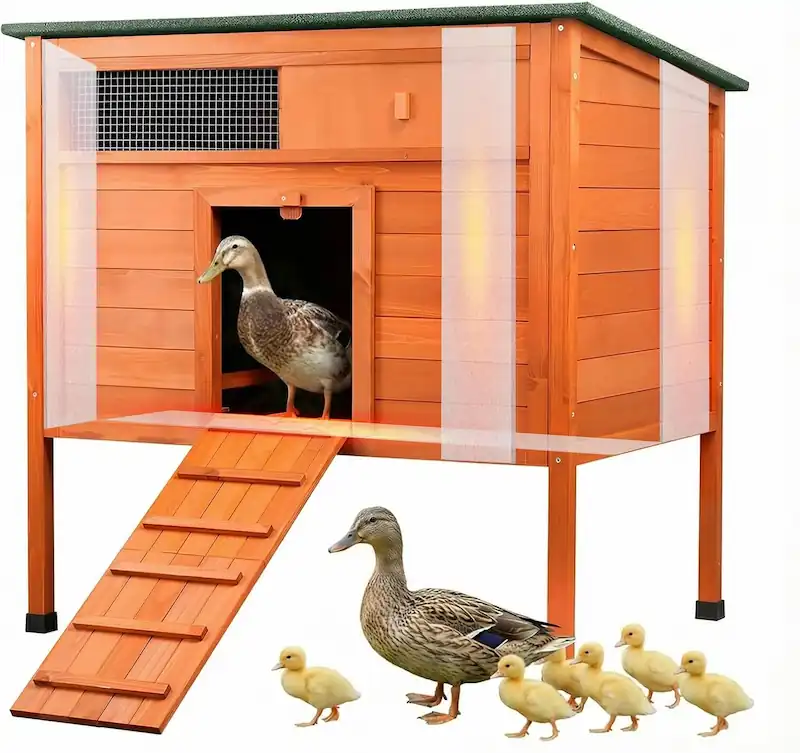
The Lovinhut insulated duck coop is a wooden option worth considering if you want a separate sleeping house for a small flock. It measures 41.2 × 27.6 × 39.2 inches and has sliding windows, an openable roof, and a black PVC floor liner.
The built-in insulation of this duck coop is a useful feature for colder weather. Its sloped asphalt roof also helps rainwater run off instead of pooling on top.
You can use this house for ducks or chickens, but remove the two wooden perches if you’re setting it up primarily for ducks. Ducks sleep on the floor, so the extra bars take up space without offering much benefit.
One thing to check before buying is the height. The elevated legs may make the entrance awkward for shorter or smaller ducks.
You may need to adjust the legs or ramp to make access easier. The automatic-door-compatible entrance is another practical feature if you want the coop to open and close on a schedule.
If you’re building the shelter yourself, our guide on how to build a chicken coop offers another starting point for planning a poultry structure. Adapt the design to ducks, with floor-level sleeping space, easy-clean access, good ventilation, and careful control of moisture around the water station.
The KFY duck coop takes a different approach from a traditional wooden house. It measures 32.2 × 25.12 × 24.13 inches and uses a combination of plastic materials and metal components.
The raised floor helps separate the sleeping area from ground moisture, while the air vents provide openings for ventilation.
At our farm, we keep chickens alongside our ducks, so a shelter that accommodates either type of poultry can be useful.
You can use this coop for ducks or chickens, provided the interior dimensions suit the birds you intend to house. Its opening roof should also make it easier to reach inside for removing wet bedding and cleaning up droppings.
Its compact size is the main limitation. For instance, a Pekin duck needs enough room to turn around, settle down, and rest without crowding.
Don’t assume that a product described as spacious will comfortably house several large ducks. Measure the interior and account for the bedding before deciding how many birds it can hold.
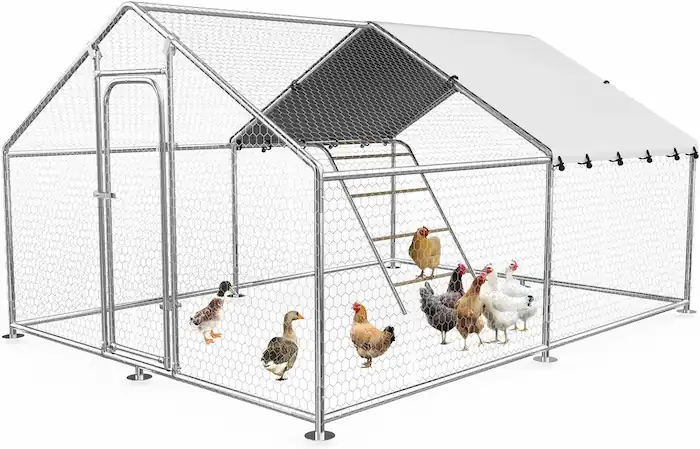
Ducks need room to walk, forage, and explore, and this Rupzen enclosure gives you considerably more outdoor space than a small prefabricated house.
It measures 157 × 118 × 78 inches, providing a walk-in run with a metal frame, PVC-coated hexagonal mesh, and a waterproof Oxford fabric roof cover.
The enclosure is designed for chickens and other backyard poultry, including ducks. You can use it alongside a separate duck coop, keeping the sleeping shelter and outdoor exercise area as two distinct spaces.
That arrangement also gives you more flexibility when deciding where to place bedding, feeders, and water containers.
However, the supplied mesh should not be treated as a complete predator-proof barrier. Its lightweight frame and mesh may need reinforcement, especially if dogs, foxes, or other predators are a concern in your area.
So, you should secure the frame to the ground, reinforce vulnerable sections with suitable hardware cloth, and protect the perimeter against animals that may dig underneath.
The cover provides shade and rain protection, but it does not make the entire enclosure weatherproof.
Its walk-in design is convenient for collecting eggs, refreshing water, and cleaning the run without crawling inside. Just make sure the frame is anchored properly and can handle the wind and weather at your property.
4. VIXZEN Outdoor Duck and Chicken House, Compact Resin Model
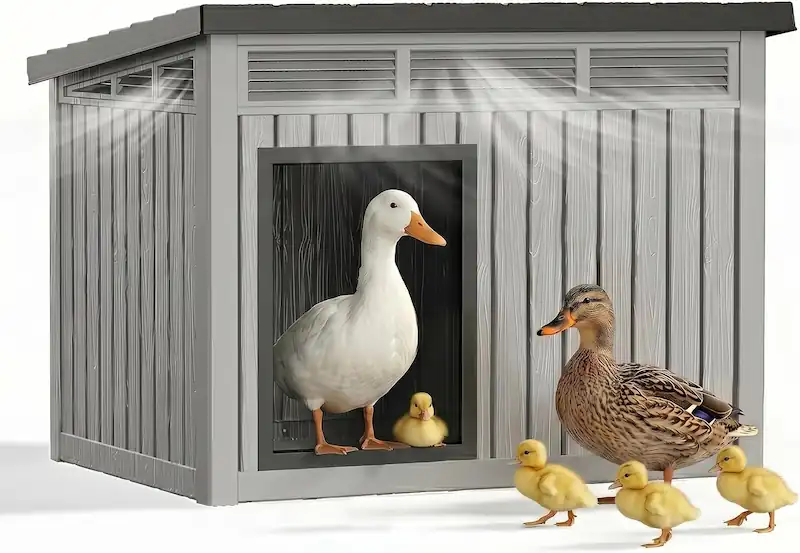
This VIXZEN model has a wood-grain finish, a sloped roof, and a compact plastic body measuring 32.2 × 25.1 × 24.1 inches.
Its polypropylene and polyethylene components offer an alternative to wooden coops that need regular attention to the condition of their surfaces.
The roof opens fully with gas struts to support it, making access easier when you need to remove soiled bedding or check the inside.
Ventilation louvers around the shelter also help air circulate. These are useful features for ducks because damp bedding and trapped moisture can quickly make a sleeping area unpleasant.
You can keep ducks or chickens in this shelter, but its small footprint deserves attention. The exterior dimensions alone do not tell you how much floor space remains available once you account for the walls and bedding.
For adult ducks, check the actual interior measurements and doorway clearance before purchasing.
The resin construction may simplify routine cleaning, but you’ll still need to remove wet bedding and keep the surrounding ground from becoming muddy.
Place the house on a stable, well-drained base rather than directly in a spot where water collects.
If you need more room than the compact VIXZEN house offers, this larger version measures 42.87 × 32.95 × 31.61 inches.
It has a polypropylene body, a sloped roof, louvered vents, and a gas-strut opening top. The larger footprint gives you more floor area to work with, although the usable interior dimensions are what matter when deciding how many ducks can sleep inside.
Its plastic construction is worth considering if you want a shelter that doesn’t require the same surface maintenance as a wooden house.
The sloped roof helps rain drain away, and the opening top gives you better access when changing bedding or cleaning the floor. Its vents also provide airflow, which is important in a duck sleeping area.
You can use this house for ducks or chickens, including as part of a mixed backyard poultry setup.
However, don’t rely on the product’s size label alone to decide whether it suits your flock. Large Pekins need more room than smaller Call ducks, and every bird should be able to settle down without being pressed against its flockmates.
Also, plan for security separately. A weather-resistant plastic body does not automatically make a coop predator-proof.
Check the door closure, ventilation openings, and the way the house sits on the ground. A secure run and a suitable base remain important.
What a Duck Coop and Run Need to Do
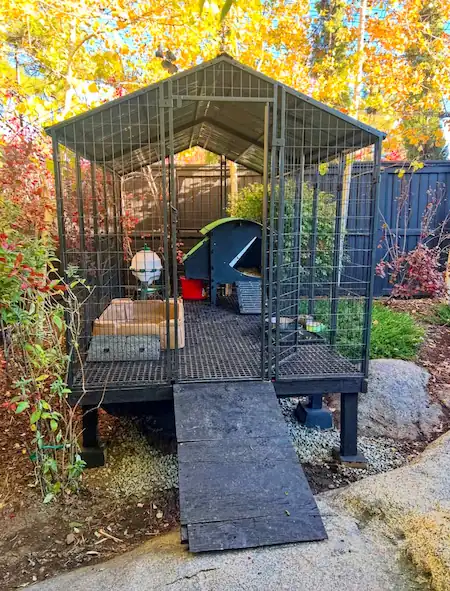
A duck coop is where your ducks rest and sleep, while the run gives them a secure outdoor area to move around. Unless your ducks already have access to a suitable enclosed yard, plan for both.
Setup
What to consider
Duck house only
You’ll need a separate secure area for daytime activity.
House with attached run
Check the indoor floor space and the size of the enclosed run.
Standalone run
Provides outdoor space but doesn’t replace a dry sleeping shelter.
At Carter Farm, we check the ground and drainage before settling on a layout. Rain can run beneath a doorway, and splashing water can leave the bedding damp even when the roof doesn’t leak.
So, you should look at where water lands, where puddles form, and whether runoff flows toward the entrance.
What Do Ducks Need in a Coop
Ducks need a dry floor with suitable bedding, enough room to rest, good ventilation, and an entrance they can use comfortably.
Ducks sleep on the floor, so roosting bars aren’t necessary. A ground-level doorway is often easier to use than a raised entrance with a steep ramp.
If the shelter must be elevated, add a broad ramp with a gentle slope and a nonslip surface. Watch how your ducks use it, especially when several are entering together. A narrow doorway or awkward ramp can make an otherwise suitable house difficult to use.
Make Cleaning and Ventilation Practical
Choose a shelter you can clean without struggling to reach the corners. An opening roof can work well on a small duck house, while a walk-in design gives you more room to remove dirty bedding. A removable floor is useful only if it’s easy to take out and wash.
Ducks bring moisture into their shelter on their feet and feathers, so provide high ventilation openings to let damp air escape. Position them to avoid a direct cold draft across the resting area.
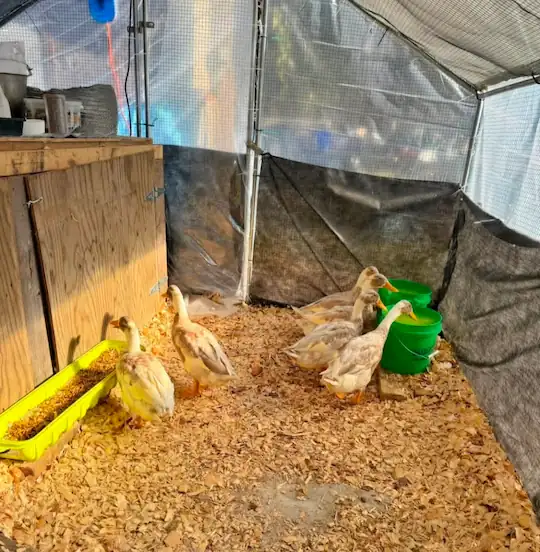
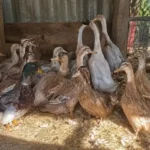
For bedding, consider straw, wood shavings, or horse pellet bedding as you can see in above picture. Remove wet and soiled patches regularly rather than covering them with fresh material.
If the floor keeps getting wet, check for leaks, poor drainage, or a water station that’s too close to the entrance.
How Much Space Should You Plan?
Calculate Indoor Floor Space Separately
For initial planning, allow around 4 to 5 square feet of indoor floor space per duck. This is a planning range, not a universal requirement. Breed size and how long your ducks stay inside also matter.
You may see other estimates ranging from 2 to 6 square feet per bird. Smaller Welsh Harlequins may need less room than larger Pekins, which may need around 5 to 6 square feet each. Consider your flock’s size and behavior before choosing a coop.
Measure the usable floor area, not just the outside dimensions. Ramps, awkward entrances, and interior fittings can reduce the space your ducks have to rest.
Breed size is one factor to consider when planning your shelter. If you’re still deciding which ducks to keep, our articles on Welsh Harlequin ducks and Indian Runner ducks can help you learn more about these breeds before settling on a coop size.
Plan the Run Separately
Indoor space and outdoor run space serve different purposes. The figures available for run planning vary considerably, from 15–20 square feet per duck to 125 square feet per duck. These figures shouldn’t be treated as equivalent recommendations.
Before choosing a run size, establish which guidance suits your setup and whether you want a compact protected enclosure or a more generous exercise area. The calculations below illustrate the difference; they aren’t universal minimums.
A Four-Duck Planning Example
Using 5 square feet per duck for indoor space gives you this starting point:
Indoor house: 4 ducks × 5 sq. ft. = 20 sq. ft.
Run using 15–20 sq. ft. per duck: 4 ducks × 15–20 sq. ft. = 60–80 sq. ft.
Run using 125 sq. ft. per duck: 4 ducks × 125 sq. ft. = 500 sq. ft.
That’s a big difference in the outdoor space required. Resolve which run-space guidance applies to your intended setup before using either figure to make a final purchase or building decision.
Keep Water Out of the Sleeping Area
A duck coop and run work better when the sleeping house stays dry and the messy water stays outside.
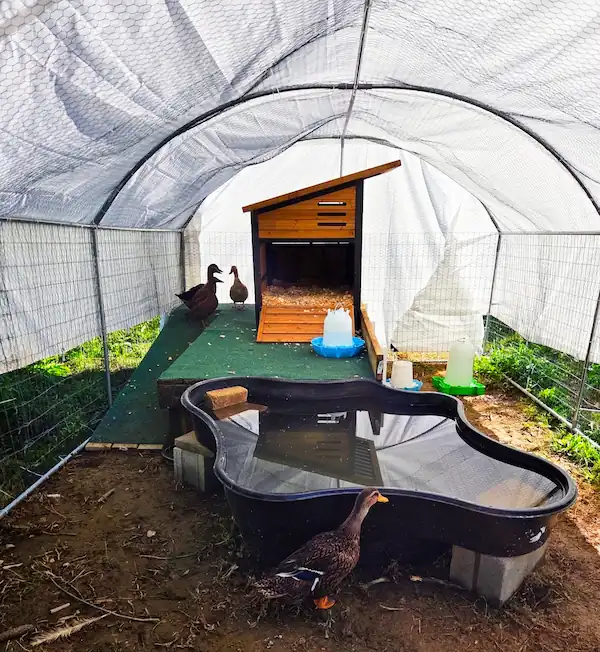
Put the drinking station where you can refill and clean it easily, then choose a separate spot for an optional splash tub or pool.
Keep both away from the coop entrance so wet feet and muddy ground don’t turn the doorway into a soggy mess.
Drinking water and swimming water serve different purposes. University of Wisconsin–Madison Extension explains that growing ducks need fresh drinking water, while swimming water isn’t essential for them.
Pools and small ponds can also become dirty quickly without regular flushing. Your setup should provide suitable drinking water regardless of whether you offer a pool.
If you want to add a swimming area, plan it separately from the sleeping shelter so splashing and muddy ground don’t become daily problems. Our article on pond ideas for ducks covers options to consider when planning a suitable outdoor water area.
Do a Water-Path Check
Before settling on your coop and run layout, trace where water will travel. Check the area after rain or mark the likely routes on your site plan.
Where does rainwater land on the roof and drain off?
Does water splash toward the sleeping house?
Are there low spots where puddles or mud will collect?
Could runoff cross the doorway or carry dirty bedding toward the house?
Can you reach the drinking station and clean the area without walking through mud?
Direct runoff away from the entrance, and keep the water station on a surface that you can clean and maintain. A well-placed station is easier to manage than one that constantly soaks the ground around it.
What a Wet-Weather Layout Can Teach You
Picture a keeper checking the duck coop after a rainy morning. The bedding is dry, but a muddy strip runs from the drinking station toward the gate. Adding more bedding inside won’t solve that problem.
Instead, the keeper moves the water station farther into the outdoor splash zone and redirects surface runoff away from the doorway. On the next check, the entrance is no longer in the wettest path.
This is an illustrative example, but the principle is practical. When planning a duck coop and run, follow the water before deciding what needs fixing.
A better layout can reduce mud around the entrance, protect dry bedding, and make daily cleaning easier.
Make the Shelter Difficult for Predators to Enter
A duck coop and run need more than a sturdy-looking frame. Check the mesh, corners, door edges, and ground perimeter for openings a predator could squeeze through or dig under.
The supplied guidance recommends ½-inch, 16-gauge hardware cloth over exposed openings, including windows and gaps.
A buried perimeter barrier can help stop animals from digging beneath the run. Chicken wire is better suited to marking boundaries than providing dependable predator protection.
Before buying a ready-made coop or building your own, check:
Are the mesh opening size and material specified?
Is the mesh firmly attached at every edge and join?
Are gaps around doors and windows covered?
Can predators dig beneath the run perimeter?
Do doors and cleanout panels close securely?
Does your location require protection from predators approaching overhead?
Expert tip: Match the mesh, ground barrier, and enclosure design to the predators in your area. These features improve protection, but no single design guarantees a predator-proof coop.
Check Latches and Access Points
A simple lift-hook may be easy for an animal to move or knock loose. A two-step latch, which requires more than one movement to open, adds another layer of security.
Check the main door, windows, and cleanout panels, not just the run entrance. Make sure each latch closes fully and stays secure when the door is pushed or pulled.
How We Build a Duck Coop
When planning a duck coop at Carter Farm, we focus on three things first: a dry sleeping area, enough room for the flock, and a secure run.
You can build the shelter to suit your backyard and the number of ducks you keep, but plan the layout before buying materials.
1. Choose a Dry, Well-Drained Location
We place the coop on ground that doesn’t collect standing water after rain. Leave enough room around the shelter to open doors, remove dirty bedding, and reach the outside walls for repairs.
Plan the drinking station and any splash tub in the run, away from the sleeping area.
2. Plan the Floor Space and Layout
Measure the available space and estimate how much usable indoor floor area your ducks need.
A planning range of 4 to 5 square feet per duck is a useful starting point, but breed, flock size, and how long the ducks stay inside all affect the layout.
Draw the sleeping area, entrance, ventilation openings, and cleanout access on paper first. Then plan the attached run separately, allowing room for the ducks to move around without crowding.
3. Build a Weather-Resistant Shelter
Use a sturdy frame, weather-resistant exterior materials, and a roof that directs rain away from the entrance.
The floor should be easy to clean and designed to stay dry. A ground-level doorway makes access easier for ducks, which sleep on the floor rather than on roosting bars.
If you raise the house, include a broad ramp with a gentle slope and a nonslip surface.
4. Add Ventilation and Easy-Clean Access
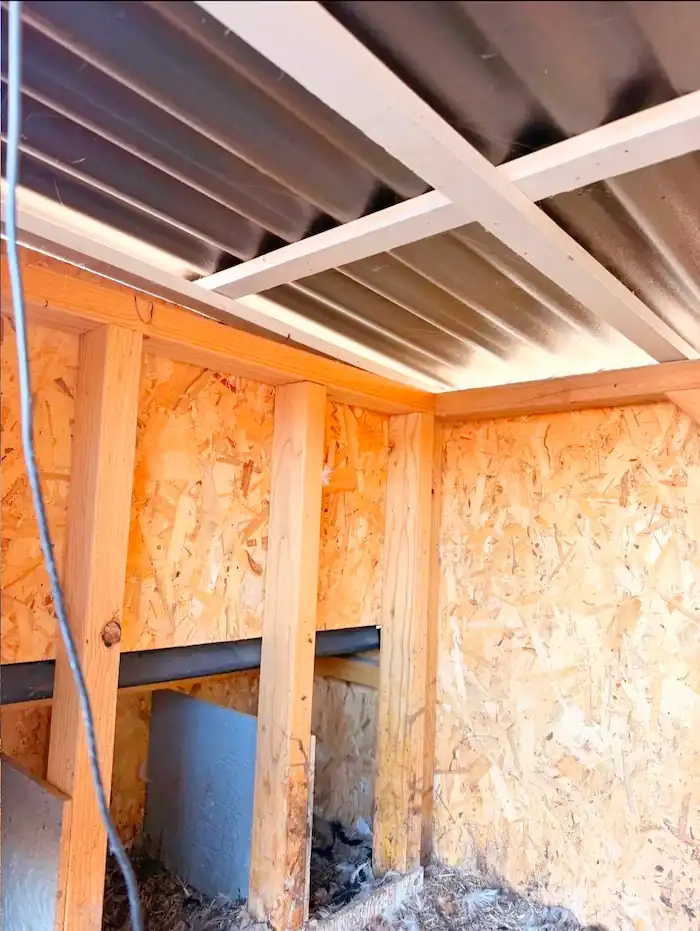
Ducks bring moisture into the coop on their feet and feathers. We add ventilation openings high on the walls to let damp air escape without directing a cold draft across the resting area.
Make at least one opening large enough for you to remove soiled bedding and clean the floor properly.
An opening roof can work on a small shelter, while a walk-in design may be easier to maintain if you have a larger flock.
5. Secure the Coop and Run Against Predators
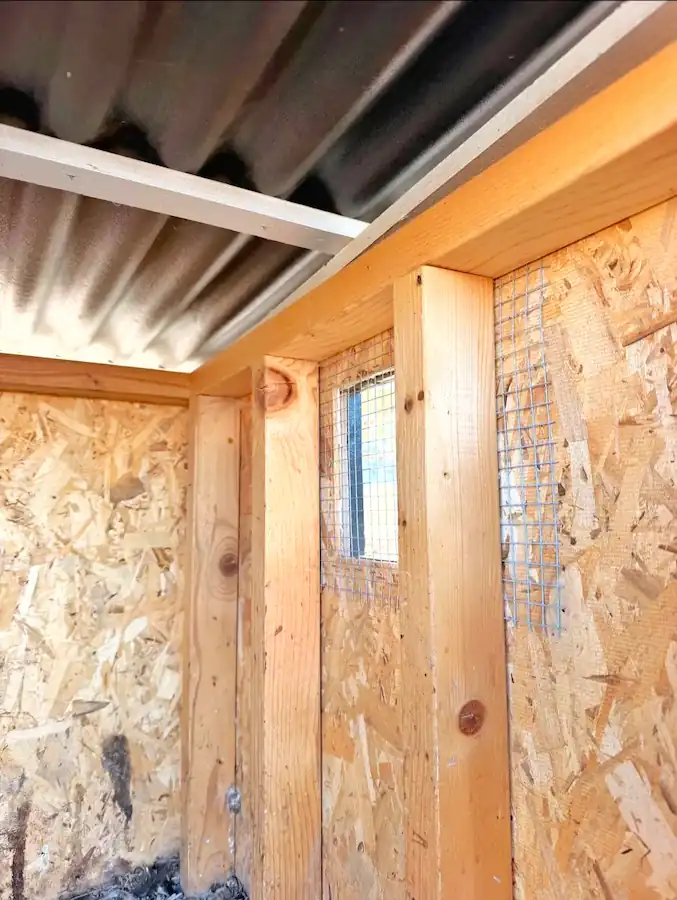
Cover windows and other openings with suitable hardware cloth, fasten the mesh securely at the edges, and protect the run perimeter against digging animals.
A buried barrier or outward-facing ground apron can help, depending on the site and local predators.
Fit secure latches to the main door, windows, and cleanout panels. A two-step latch is harder to open accidentally than a simple hook. Chicken wire alone should not be treated as dependable predator protection.
6. Add Bedding and Set Up Water
Spread suitable bedding, such as straw or wood shavings, across the sleeping floor.
Remove wet patches regularly and investigate any recurring dampness rather than continually adding fresh bedding.
Keep drinking water easy to reach and clean, but position it where splashing won’t soak the sleeping area.
If you provide a swimming tub or pool, place it in a separate part of the run where water can drain without creating mud around the coop entrance.
Before buying materials, check your measurements, local predator risks, drainage, and access for cleaning. Building your own duck coop gives you control over the layout, while a ready-made house with a separate run may save construction time.
Either way, the finished setup needs to keep the sleeping area dry, provide adequate space, and secure the ducks at night.
No. Ducks sleep on the floor, so roost bars aren't necessary. Provide dry bedding, enough floor space, and an entrance they can use comfortably. If the house is raised, use a broad ramp with a gentle slope.
A planning range of 4 to 5 square feet per duck is a useful starting point, but breed, size, and time spent indoors affect the space required. Measure the usable floor area rather than relying on the advertised capacity of a duck house.
The estimates in our planning context vary considerably, from 15 to 20 square feet per duck to 125 square feet per duck. For four ducks, that's 60 to 80 square feet under the first estimate or 500 square feet under the second. These figures aren't interchangeable standards, so assess your flock's needs, outdoor access, and local recommendations before settling on a run size.
No. A swimming pool doesn't belong in the sleeping shelter, and swimming water isn't essential for growing ducks. Fresh drinking water is essential, however. If you provide a pool or splash tub, keep it in the run and plan for frequent cleaning and proper drainage.
Possibly, but check the design before buying. Ducks need a comfortable floor-level sleeping area, suitable ventilation, easy-clean access, and a low entrance. You'll also need to manage splashing and wet bedding. Make sure the coop and any attached run have secure barriers and reliable latches.
Not necessarily. A standalone metal poultry run provides an outdoor enclosure, but it doesn't replace a dry sleeping shelter unless a suitable house is included. Check the product listing for the exact dimensions, mesh specifications, roof coverage, and included components. Don't assume a run is predator-proof simply because it's covered or made of metal.
David Carter, founder of Farmstead Guide, has over 20 years of hands-on homesteading experience. From raising poultry to practicing sustainable farming, he shares practical tips and insights to help others live a more self-sufficient lifestyle.