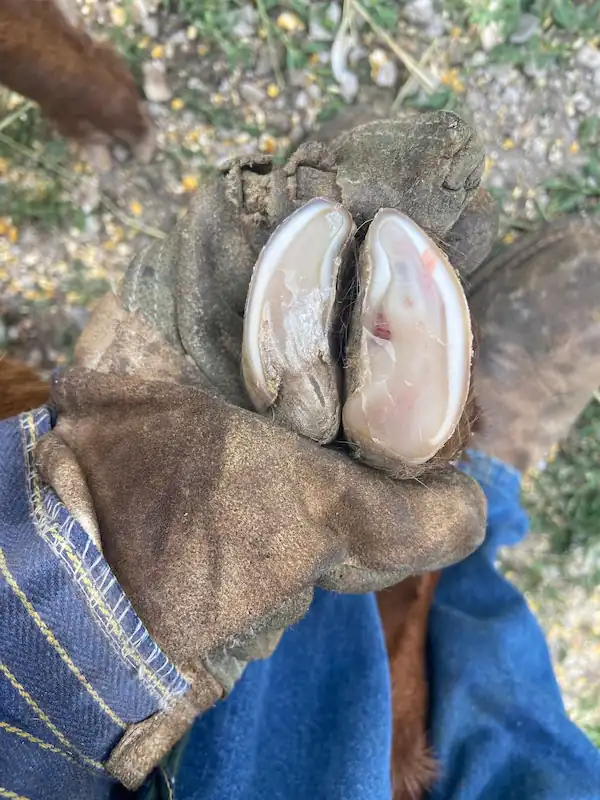
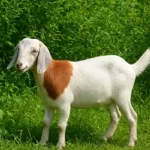
A goat with overgrown hooves won’t stay comfortable for long. Curled or neglected hooves can lead to lameness, hoof rot, and painful infections. The biggest challenge for most owners isn’t trimming the hooves. It’s finding a trimmer that cuts cleanly and feels comfortable to use.
Walk into any farm store or browse online, and you’ll find everything from hoof shears to knives, rasps, and grinders. Some hold a sharp edge for years. Others become dull after just a few trims. A poorly made trimmer can slip, crush the hoof instead of slicing through it, and leave both you and your goat frustrated. If you’ve ever nicked the quick, the sensitive tissue inside the hoof that contains blood vessels and nerves, you know how stressful that moment can be.
I’ve trimmed hooves on everything from Nigerian Dwarf goats to thick-hoofed Boer bucks. I’ve also tested plenty of hoof trimmers over the years. Some have earned a permanent place in my tool kit. Others didn’t last long. Here, I’ll compare the best goat hoof trimmers, show where each one performs best, and cover the basics of trimming and tool care. That way, you can choose a trimmer that fits your herd, your hands, and your budget.
Types of Goat Hoof Trimmers
No single hoof tool is perfect for every job. Most goat owners start with a good pair of manual shears, then add other tools as their herd grows or their trimming routine changes. Here’s what each type does best.
1. Manual Hoof Shears
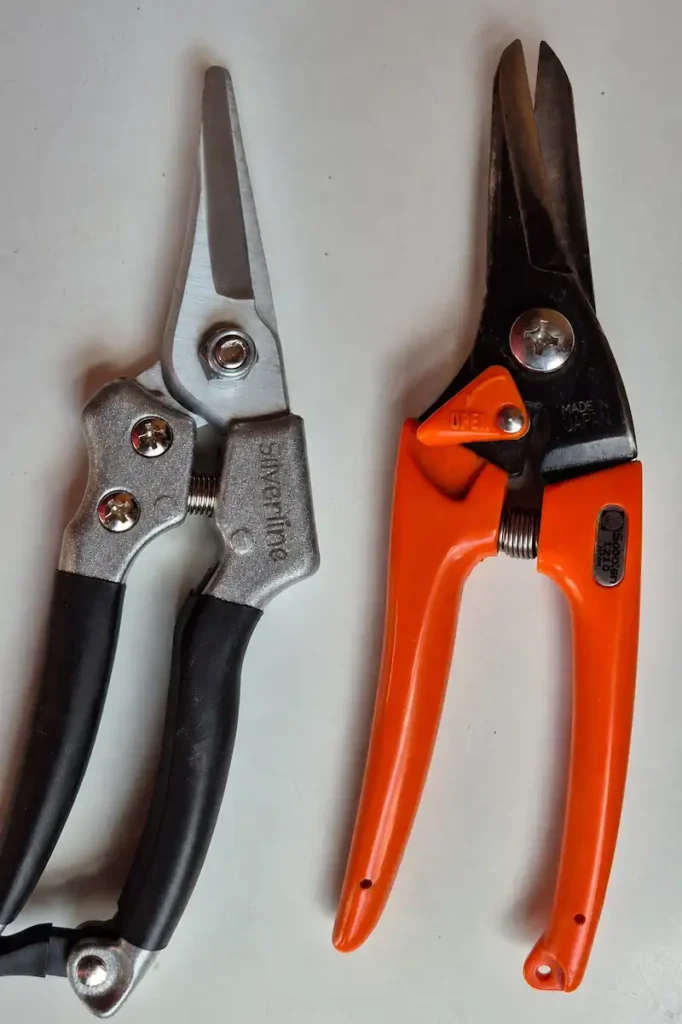
If you’re buying your first hoof trimmer, start here. Manual shears give you the most control, which is why they’re still the first choice for many experienced goat keepers. A good pair should have:
Serrated blades that grip hard or wet hooves instead of sliding.
Comfortable, non-slip handles that reduce hand fatigue.
A spring that reopens the blades after each cut.
High-quality steel that holds its edge. Replaceable blades are a bonus, though not common on most models.
These shears work well for routine trims on every breed, from small Nigerian Dwarfs to large Boer goats.
ARS 140DXR Smooth Blade Hoof Trimmer – My Top Pick
I’ve been using the ARS 140DXR Smooth Blade Hoof Trimmer (Shop on Amazon) for regular hoof trims on my Nigerian Dwarf and Boer goats, and it’s the pair I reach for every time. After trying cheaper hoof shears that either slipped or went dull too quickly, these were an immediate upgrade.
The first thing I noticed was how sharp the Japanese high-carbon steel blades are. They slice through overgrown hoof walls with one clean squeeze instead of crushing the hoof. That means less effort for me and less time with a goat standing on the milk stand. The smooth blades also make it easy to shave off thin layers when I’m working close to the quick, so I feel like I have much better control.
I especially like these for Nigerian Dwarfs, Mini Nubians, Alpine, Nubian, and Boer goats. They’re compact enough for smaller dairy breeds but still have plenty of cutting power for the thicker hooves on mature Boer bucks.
The handles fit comfortably in my hands, and the spring action keeps the blades opening after every cut. That doesn’t sound like a big deal until you’re trimming a dozen goats in one afternoon. By the end of the job, my hands aren’t nearly as tired as they used to be. This is something many reviewers mention, especially those with arthritis or hand pain.
No tool is perfect, though. The ARS 140DXR costs more than many budget hoof trimmers, and if you have very large hands, it may feel a little small. I also wouldn’t use it for cutting branches or other farm chores. I keep it strictly for hoof trimming so the edge stays sharp for as long as possible.
Pros
Extremely sharp Japanese high-carbon steel blades.
Makes clean, precise cuts with very little effort.
Holds its edge much longer than most budget trimmers.
Comfortable, lightweight design that reduces hand fatigue.
Easy to control when trimming close to the quick.
Built well enough for years of regular hoof trimming with proper care.
Cons
Costs more than entry-level hoof trimmers.
Smooth blades don’t grip wet or muddy hooves as well as serrated blades.
May feel slightly small if you have very large hands
2. Electric Hoof Grinders
If you trim a lot of goats or your hands get sore after squeezing shears, an electric grinder is worth considering.
Instead of cutting the hoof, it slowly removes material with an abrasive disc. That gives you more control when working near the quick and leaves a smoother finish.
The trade-off is that grinders cost more, make noise, and need electricity or a battery. Some goats also need a few minutes to get used to the sound.
Goat Hoof Trimmers Basic Electric Set (110V) (Shop on Amazon)
I don’t reach for an electric grinder every time I trim hooves. My ARS manual trimmers handle most routine maintenance. But when I have a goat with hard, overgrown hooves or I’m cleaning up rough edges after trimming, this electric set saves me a lot of effort.
The grinder removes hoof gradually instead of cutting it all at once, so I can make small adjustments without worrying about taking off too much. I also like using it on my mature Boer bucks, whose hooves are much thicker than those on my Nigerian Dwarfs. The different grinding discs make it easy to switch between removing excess hoof and smoothing the final shape.
One thing I learned quickly is not to rush. Let the grinder do the work and keep it moving. Holding it in one spot for too long creates heat, which can make the goat uncomfortable.
It is louder than hand shears, so I always let a goat hear the motor before I start grinding. After a minute or two, most settle down and stand just fine.
3. Hoof Knives
A hoof knife isn’t something you’ll reach for during every trim. Its job is detail work. The curved blade lets you clean packed dirt, remove loose sole, and open up small pockets where bacteria can collect. It’s especially useful when dealing with hoof rot or badly neglected feet.
If I were adding a hoof knife to my trimming kit, this is the one I’d choose. It includes both left- and right-handed knives, making it easier to clean the sole and trim around the heel from either side of the hoof. The stainless steel blades arrive sharp, and the ergonomic handles provide a secure grip. It’s a practical choice for goat owners who want more control when doing detail work after the main trim.
Hoof Trimmers Goat Hoof Trimming Shears – Best Budget Pick
If you only trim a few goats each year, you don’t have to spend a lot to get a decent pair of hoof shears. This carbon steel trimmer offers good cutting performance for the price and is one of the best-selling options on Amazon.
Its spring-loaded handles make repeated cuts easier, while the textured blade helps grip the hoof instead of sliding across it. It’s a practical choice for Nigerian Dwarfs, Pygmy goats, and other small to medium-sized breeds, though it can also handle routine trims on larger goats.
Rasps and Finishing Tools
Think of a rasp as the finishing touch. After you’ve trimmed the hoof, you may notice small ridges or rough edges. A few passes with a rasp smooth them out and help level the hoof.
Not everyone uses one every time, but it’s a handy tool if you want a cleaner finish or you’re preparing show goats.
Rural365 Mini Hoof Rasp – Best for Finishing Touches
After I’ve finished trimming with my hoof shears, I sometimes notice a few rough edges or small high spots. That’s when I reach for the Rural365 Mini Hoof Rasp (Shop on Amazon). Its compact size makes it easy to control, especially on my Nigerian Dwarf goats, where a full-size farrier rasp feels bulky. A few light passes are usually enough to smooth the hoof wall and leave a cleaner finish. I wouldn’t use it to remove a lot of hoof, but it’s a handy tool for the final touch.
How to Choose the Right Goat Hoof Trimmer
The best hoof trimmer isn’t always the most expensive one. It depends on how many goats you have, their hoof size, and what’s comfortable for you to use.
Think About Your Herd Size
The number of goats you trim has a big impact on which tool makes the most sense.
1–5 goats: A quality manual trimmer like the ARS 140DXR is more than enough. It handles routine trims without much effort.
6–15 goats: You’ll still want manual shears, but adding an electric grinder can save your hands during longer trimming sessions.
16+ goats: An electric grinder becomes a worthwhile investment. Keep a manual trimmer nearby for quick touch-ups or as a backup.
I trim most goats every 6 to 8 weeks, and manual shears work just fine. If you’re trimming more often, especially show goats, an electric grinder starts to earn its place.
Match the Trimmer to Your Goat’s Breed
Not every goat has the same type of hoof.
Nigerian Dwarfs and Pygmy goats: Their smaller hooves are easier to trim with lightweight manual shears like the ARS 140DXR or a compact rasp for finishing.
Boer and Kiko goats: These breeds often develop thick, hard hooves. A sturdy pair of shears works well, and an electric grinder helps with heavily overgrown feet.
Nubians, Alpines, and LaManchas: A sharp manual trimmer handles routine maintenance without any trouble.
Senior goats: Older goats often grow uneven or misshapen hooves. An electric grinder gives you more control when reshaping them.
If you keep both small dairy goats and larger meat breeds, it’s worth having both manual shears and an electric grinder. Different breeds can have noticeably different hoof size and growth rates, so choosing the right tool makes trimming much easier. If you’re not sure how different goat breeds compare, take a look at my guide to common goat breeds and their traits.
Choose Something Comfortable to Hold
You’ll notice the difference after trimming a few goats. If you have small hands, look for trimmers with slimmer handles that are easier to grip. If hand strength is an issue because of arthritis or wrist pain, an electric grinder reduces the amount of squeezing you’ll have to do.
Whatever tool you choose, wear a pair of padded work gloves. They improve your grip and make longer trimming sessions much more comfortable.
How to Trim Goat Hooves Step by Step
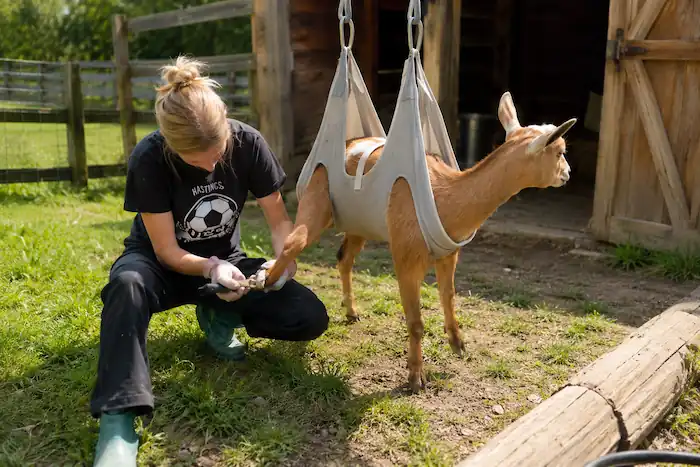
Trimming goat hooves isn’t difficult once you know what to look for. Take your time, make small cuts, and check your progress often. You can always trim a little more, but you can’t put hoof back once it’s cut.
1. Secure the Goat
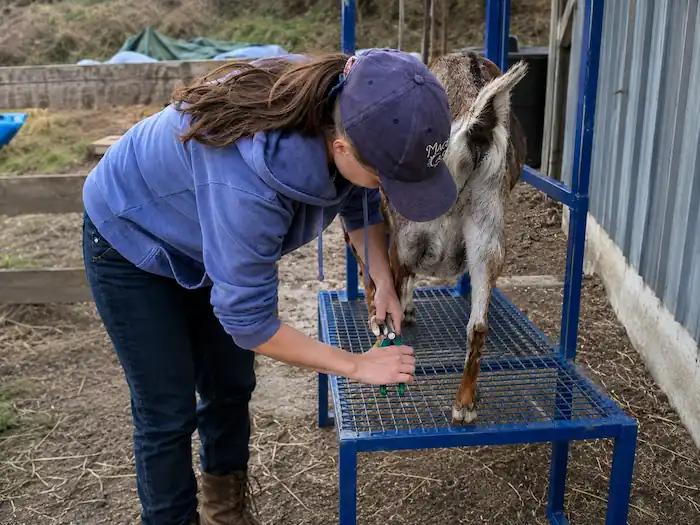
A calm goat is much easier to trim. A milking stand is the easiest option because it keeps the goat at a comfortable height. If you don’t have one, ask someone to hold the goat against a fence or in a corner. Gather your hoof trimmers, hoof pick, rasp, and styptic powder before you begin.
If the hooves are very hard, trim them after rain or wrap them in a damp towel for a few minutes. Softer hooves are much easier to cut.
2. Clean the Hoof
Before making the first cut, remove all dirt, manure, and small stones with a hoof pick. Once the hoof is clean, check for:
Overgrown hoof wall.
Cracks or loose areas.
Signs of hoof rot, such as a foul smell or soft tissue.
The quick, the sensitive part of the hoof that contains blood vessels.
3. Trim the Hoof Wall
This is where most of the trimming happens. Start at the toe and work toward the heel. Make several small cuts instead of one large cut. Trim until the hoof wall is level with the sole.
If you’re using manual shears, let the blades do the work instead of forcing them through the hoof. If you’re using an electric grinder, keep it moving to avoid creating heat in one spot.
4. Shape the Sole and Heel
The sole should stay slightly hollow, not completely flat. Trim away loose or overgrown areas, then even out the heel so the goat’s weight is balanced across the hoof. If you notice pink tissue or the goat reacts, stop trimming. You’re getting close to the quick.
5. Smooth the Edges
Use a hoof rasp to remove rough edges and level the hoof. This only takes a few passes but helps reduce cracks and leaves the hoof looking much cleaner.
6. Check Your Work
Set the hoof back on the ground and make sure it sits flat without rocking from side to side. Once you’re finished, clean your tools and spray the hoof with a disinfectant if you trimmed through dirty or damaged areas.
What If You Cut the Quick?
Even experienced goat keepers do it occasionally. If the hoof starts bleeding, apply styptic powder and hold gentle pressure for about 30 seconds.
Keep the goat on clean, dry bedding for the rest of the day and check the hoof again the following day. Most small nicks heal without any problems if they’re kept clean.
Common Hoof Problems and How the Right Trimmer Can Help
The right trimmer won’t cure every hoof problem, but it can make treatment easier and help prevent many issues from getting worse.
Overgrown Hooves
Overgrown hooves are usually caused by delayed trimming or goats spending most of their time on soft ground.
Trim a little at a time until the hoof wall is level with the sole. If the hooves are badly overgrown, spread the work over two or three trimming sessions instead of trying to fix everything at once.
Manual hoof shears for routine trims. An electric grinder gives you more control when reshaping severely overgrown hooves.
Hoof Rot
Hoof rot often starts when mud, manure, and bacteria get trapped inside cracks or overgrown hoof tissue. Keeping your goats on clean, dry ground with a well-designed shelter is just as important as regular trimming.
Trim away loose, damaged hoof, clean the area thoroughly, and apply a hoof rot treatment. Always disinfect your trimmers before moving to another goat to avoid spreading the infection.
Use a sharp hoof trimmer for removing damaged hoof and a hoof knife for cleaning infected pockets.
Cracks and Splits
Small cracks can quickly collect dirt and moisture if they’re left untreated. After trimming, smooth the hoof with a rasp to remove rough edges. This helps stop cracks from getting worse and leaves fewer places for bacteria to hide. I use a hoof rasp for smoothing and a hoof knife if the crack needs to be cleaned.
If cracks keep coming back even with regular trimming, take a closer look at your goat’s diet. A balanced mineral program plays an important role in healthy hoof growth. I cover the essentials in my guide to choosing the right minerals for goats.
Lameness
If a goat suddenly starts limping or avoids putting weight on one foot, check the hooves first. An overgrown hoof, a trapped stone, or the early stages of an abscess are often the cause. Regular trimming keeps the hoof balanced and reduces extra strain on the joints.
While overgrown hooves are a common cause of limping, they’re not the only reason a goat may struggle to walk. Certain plants that are toxic to goats can also affect their movement and overall health.
To address the problem, use any sharp, well-maintained hoof trimmer that lets you make clean, controlled cuts without causing unnecessary discomfort.
Trimmer Maintenance and Sharpening
A sharp, clean trimmer is safer to use and makes hoof trimming much easier. A few minutes of maintenance after each session will keep your tools working for years.
Clean After Every Trim
Brush off any hoof clippings and dirt, especially around the pivot joint. Then wipe the blades with rubbing alcohol or a diluted disinfectant to reduce the risk of spreading hoof diseases between goats.
If you use an electric grinder, remove the sanding drum and brush away the fine hoof dust before putting it away.
I disinfect my trimmers before moving to the next goat, especially if I suspect hoof rot.
Oil and Store Them Properly
After cleaning, add a drop of light machine oil to the pivot joint and open and close the shears a few times. Wipe away any extra oil so it doesn’t collect dirt.
Store your tools somewhere dry. Leaving them in a damp barn is a quick way to end up with rusty blades.
Keep the Blades Sharp
Sharp blades make clean cuts. Dull ones crush the hoof and require much more effort. For smooth-blade trimmers, use a fine sharpening stone and follow the original edge.
If you’re using serrated blades, it’s usually better to have them professionally sharpened. Hoof knives can be touched up with a small sharpening rod or fitted with a new blade if they’re replaceable.
If your trimmers struggle to cut a sheet of paper cleanly, it’s time to sharpen them.
Look After Electric Grinders
Replace sanding drums once they become smooth or clogged, and clean away any dust after each use.
For cordless grinders, store the battery in a cool, dry place and recharge it before the next trimming session. A fresh sanding drum often restores cutting performance better than simply swapping batteries.
Most goats need a trim every 6 to 8 weeks. If your goats live on soft ground or their hooves grow quickly, you may need to trim every 4 to 6 weeks. The best schedule is to trim before the hooves start curling.
If goat hooves aren't trimmed regularly, they continue to grow and eventually curl over. This changes the way the goat walks, putting extra strain on its joints and increasing the risk of lameness, hoof rot, and infections. In severe cases, overgrown hooves can make it difficult for a goat to stand or move comfortably.
No, not when it's done correctly. The hoof wall is similar to a human fingernail, so trimming the excess growth doesn't hurt. It only becomes painful if you cut into the quick, the sensitive tissue inside the hoof that contains blood vessels and nerves. Taking small cuts and using sharp trimmers helps keep the process safe and comfortable.
For most backyard goat owners, manual hoof shears are the better choice. They're affordable, quiet, and easy to control. An electric grinder is worth considering if you trim a large herd or struggle with hand fatigue.
Trim a little at a time and check the hoof often. If you notice pink tissue or your goat reacts suddenly, stop trimming. You're getting close to the quick.
Clean the blades after every trimming session, dry them well, and add a drop of oil to the pivot joint. Sharpen smooth blades when they begin to lose their edge, and have serrated blades professionally sharpened if needed.
Yes. An electric grinder removes the need for repeated squeezing, making it a good option if you have arthritis, wrist pain, or reduced hand strength. For most beginners, though, a quality pair of manual hoof shears is still the best place to start.
David Carter, founder of Farmstead Guide, has over 20 years of hands-on homesteading experience. From raising poultry to practicing sustainable farming, he shares practical tips and insights to help others live a more self-sufficient lifestyle.