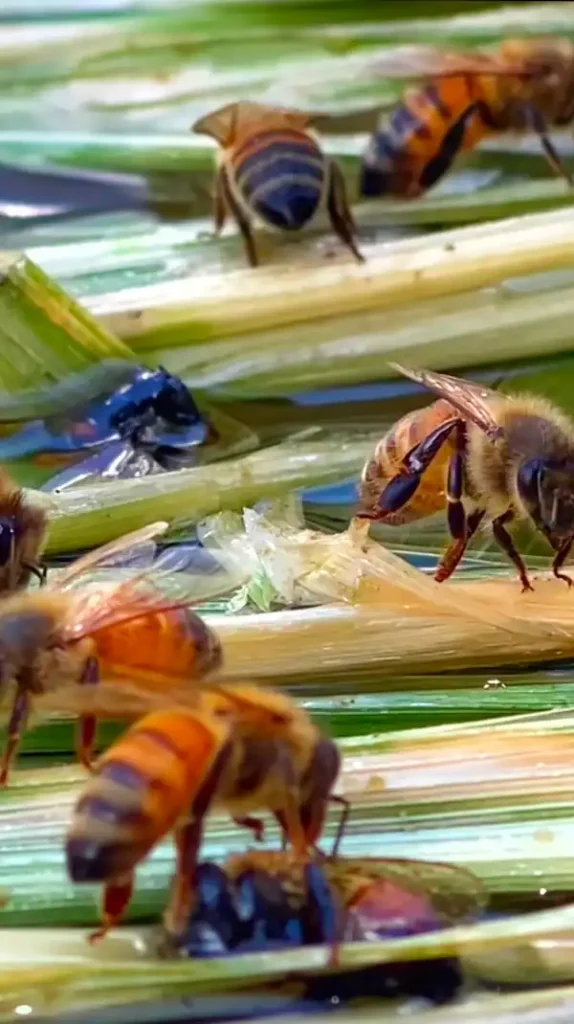
Healthy honey bee colonies get most of their nutrition from natural nectar and pollen, but when forage is scarce, bee feed provides supplemental food to help meet a colony’s nutritional needs.
Bee feed includes carbohydrate sources such as sugar syrup and solid sugar feeds, as well as protein-rich supplements and pollen substitutes used to support honey bee nutrition and colony development.
We’ve fed my bees different types of honey bee feed during nectar dearths, early spring buildup, and winter preparation, and we’ve found that the right choice depends on the season, colony strength, and available forage.
Supplemental feeding should support natural forage rather than replace it, so we focus on choosing bee food that addresses what my colonies actually need.
Below, we’ll share the products we consider for different feeding situations and what we look for when choosing feed for our own hives.
Best Bee Feed for Honey Bees
The right bee feed depends on what your colony actually needs. Sugar-based liquid feed can help when nectar is scarce, while pollen substitutes provide supplemental protein.
Fondant is useful during cold weather, and liquid additives can be mixed into syrup for additional supplementation.
We’ve selected the products we use for different feeding situations at Carter Farm, so you can choose based on your colony’s needs rather than simply buying the most expensive option.
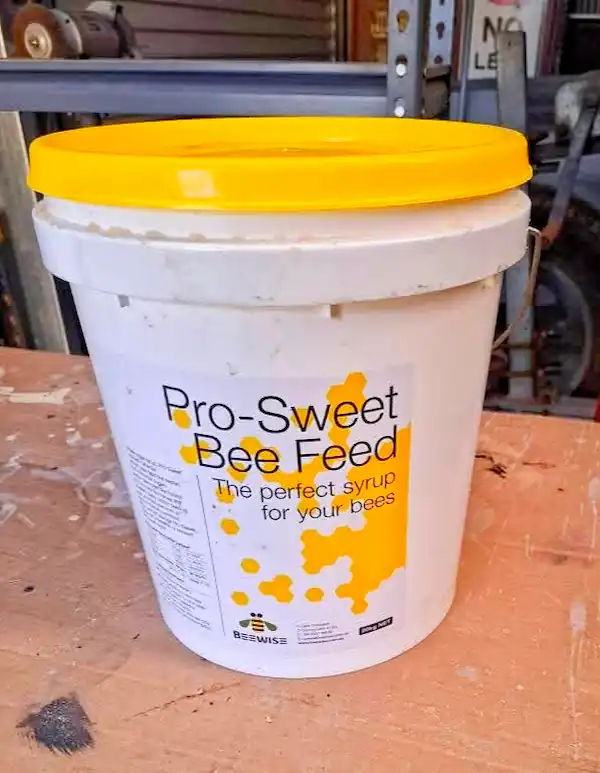
1. Mann Lake Pro-Sweet Liquid Bee Feed
Type: Ready-to-use liquid feed Best for: Nectar dearths and convenient feeding
If you don’t want to spend time mixing your own sugar syrup, Mann Lake Pro-Sweet is a convenient alternative. It’s a ready-to-use liquid bee feed designed to provide carbohydrates similar to those bees normally get from nectar and honey.
We use Pro-Sweet when my colonies aren’t getting enough nectar from the surrounding forage.
It gives them a reliable source of carbohydrates during a nectar dearth, and we find a ready-to-use liquid feed especially handy when cooler weather limits normal foraging.
One feature we appreciate about Pro-Sweet is that it is formulated to resist both fermentation and crystallization.
Its high sugar content and low pH are designed to help slow bacterial growth and fermentation, which can make storing and feeding the product more convenient.
That can be useful when you’re feeding several colonies. You don’t want to prepare a large quantity of syrup only to have it ferment or crystallize before the bees finish it.
The 2.5-gallon jug is a practical size for feeding multiple hives, although smaller and larger options are available.
2. Mann Lake Ultra Bee Pollen Substitute Dry Feed
Type: Dry pollen substitute Best for: Supplemental protein and brood support
Sugar syrup provides carbohydrates, but it doesn’t provide the protein bees get from pollen. That’s where Mann Lake Ultra Bee Pollen Substitute comes in.
We look at this type of high-protein bee feed when natural pollen is limited and the colony needs supplemental protein.
Ultra Bee contains a reported 58% crude protein, along with amino acids, vitamins, lipids, and minerals.
This can be particularly useful during spring buildup or other periods when the colony is expanding but natural pollen isn’t keeping pace.
The main advantage of dry pollen substitute is flexibility. You can offer it as needed without having to use a pre-formed patty every time you want to provide supplemental protein.
The 10-pound package also makes more sense if you’re managing several colonies. For a single hive, you may prefer the smaller 1-pound option.
3. Mann Lake Ultra Bee Pollen Substitute Patties
Type: Protein pollen patties Best for: Brood production and easy protein feeding
Sometimes we want to provide supplemental protein without dealing with loose dry feed. That’s where Mann Lake Ultra Bee Pollen Substitute Patties make things easier.
These ready-to-use patties contain 15% crude protein, along with amino acids, vitamins, lipids, and minerals.
They’re designed to support brood production and colony growth when natural pollen isn’t providing enough.
We use this type of protein feed at Carter Farm during spring buildup and whenever natural pollen is in short supply.
It’s also useful at other times when a colony could benefit from some extra protein.
The biggest advantage over dry pollen substitute is convenience. There’s no mixing or preparation. You simply place the patty where the bees can access it.
The manufacturer also states that the patties have a long shelf life, and unused patties can be stored in the freezer.
4. HIVE ALIVE Bee Food Fondant
Type: Solid carbohydrate feed Best for: Winter and emergency feeding
When temperatures drop, liquid syrup isn’t always the most practical way to feed a colony. That’s when bee fondant becomes useful.
HIVE ALIVE Bee Food Fondant is primarily sugar-based and also contains seaweed extract, thyme, lemongrass, yeast, amino acids, and vitamins.
It’s designed to give bees an accessible source of carbohydrates when cold weather makes outside foraging difficult.
For overwintering colonies at Carter Farm, this is the type of solid bee feed we keep available as a backup.
You can place it under the cover board, directly above the cluster, so the bees can reach it without needing to leave the hive.
That’s the main advantage over liquid syrup in cold weather. The bees can access the solid feed while remaining close to the cluster.
Fondant also introduces less moisture than liquid syrup, which can make it a more practical choice during cold periods.
You can use it in early spring, too, particularly when a cold snap hits while colonies are building up and natural nectar is still limited.
If you’re overwintering colonies, we also keep some fondant on hand. You don’t always know when a colony will run short of stores, and solid feed gives you a convenient emergency option.
5. HIVE ALIVE Liquid Bee Feed Concentrate
Type: Liquid feed additive Best for: Supplementing sugar syrup in spring and fall
If you’re already feeding sugar syrup, HIVE ALIVE Liquid Bee Feed Concentrate gives you a simple way to add a supplemental product without changing your normal feeding routine.
This isn’t a standalone carbohydrate feed. You mix it into your syrup before giving it to the bees.
At Carter Farm, we use this type of bee feed supplement during spring buildup and fall preparation when our colonies are already on syrup and need an additional nutritional boost.
Its formula contains seaweed extracts, lemongrass, and thyme oil. The manufacturer says these ingredients are intended to support bee gut health, colony strength, and overwintering.
The dosing is straightforward. Add 2.5 ml per liter of syrup, or about 2 teaspoons per gallon. The 100 ml bottle is designed to treat up to 10 gallons of syrup.
Another useful feature is that the product is designed to help prevent syrup from fermenting. That’s handy when a colony is taking its feed slowly.
You can also use the activated syrup as directed on frames or add the concentrate to fondant and patties.
6. Bountiful Bees Brood Booster
Type: Liquid syrup additive Best for: Colony buildup, nucs, swarms, and packages
Bountiful Bees Brood Booster falls into the liquid feed additive category. Like HIVE ALIVE Liquid, you mix it with sugar syrup rather than using it as the colony’s main source of carbohydrates.
The manufacturer describes it as a feeding stimulant that can be used with packages, nucs, swarms, and weaker colonies to encourage feeding and colony growth.
At our farm, we use a product like this to encourage colony buildup, especially with new nucs or colonies that need a little extra support.
The built-in measuring spout is a useful little feature. You can measure the product as you mix your syrup without needing another measuring device.
The manufacturer also says it can be sprayed on wax or plastic foundation to encourage acceptance and comb building. It’s designed to help prevent syrup from fermenting as well.
We see Brood Booster as a targeted feeding stimulant, rather than something every colony necessarily needs.
Good forage, adequate stores, and proper colony management still come first.
Types of Bee Feed
The type of feed you use should match what the colony is short on. Sugar syrup supplies carbohydrates, while pollen substitutes and protein patties are aimed at the protein side of the diet.
Solid feeds such as fondant are useful in situations where putting liquid syrup on the hive isn’t practical.
Sugar Syrup
Sugar syrup is the most common supplemental feed for honey bees. The two concentrations you’ll see most often are 1:1 and 2:1.
1:1 syrup contains equal parts sugar and water by volume. We use this thinner syrup mainly during spring buildup when we want to encourage foraging and brood rearing rather than simply load the hive with winter stores.
It is also easier for bees to take up and process as a liquid feed.
2:1 syrup is considerably thicker and contains more sugar with less water. This makes it better suited to fall feeding, when the goal is to help a colony build adequate carbohydrate stores before winter.
Bees have less water to remove from the syrup, so they can concentrate and store it more efficiently.
The distinction is simple: 1:1 is generally used as a stimulating feed, while 2:1 is better suited to building stores.
We wouldn’t choose between them simply because one is labeled for spring and the other for fall. Colony condition, existing stores, weather, and the availability of natural nectar all matter.
Pollen Substitutes
Pollen substitutes are designed to provide nutrients that bees normally obtain from pollen, particularly protein and amino acids. They become useful when the colony is raising brood but natural pollen is limited or unavailable.
You’ll find these feeds in several forms. Pollen patties are soft mixtures that can be placed directly inside the hive, while dry pollen substitutes are offered as loose material that bees can collect and carry into the colony.
We consider pollen substitute a targeted tool rather than something every hive needs. A strong natural pollen flow can make purchased protein feed unnecessary.
But when early-season brood rearing gets ahead of available pollen, or a prolonged period of poor forage leaves colonies short on protein, a good substitute can help bridge that gap.
One important point: a pollen substitute isn’t the same thing as real pollen. Natural pollen contains a wider range of nutrients, and bees should still have access to diverse natural forage whenever conditions allow.
Protein Patties
Protein patties are essentially a convenient way to put a concentrated protein supplement directly where the colony can use it. Their main value comes during periods when brood production continues but pollen coming into the hive is inadequate.
Early spring is a common example. Colonies can begin expanding rapidly as temperatures improve, yet natural pollen sources may still be inconsistent. The same problem can occur during a summer nectar dearth or any extended spell of poor forage.
Pay particular attention to colony strength before using protein patties. A small colony with little brood may have little use for a large patty, while a colony raising substantial amounts of brood can consume protein feed quickly when natural pollen is scarce.
Patties also need to be kept fresh. Excess feed that sits untouched can dry out, spoil, or attract pests. Prefer to provide an amount the colony can consume rather than putting a large supply on the hive and leaving it there.
Bee Fondant and Sugar Candy
Bee fondant and sugar candy provide concentrated carbohydrates in a solid form, making them particularly useful during cold weather. Unlike liquid syrup, they don’t require bees to evaporate large amounts of water before using the food.
That’s why solid feed has a place in winter feeding. During cold spells, bees may not be able to process or safely access liquid syrup in the same way they can when temperatures are suitable for normal hive activity.
A block or slab of fondant placed where the cluster can reach it gives the colony an accessible carbohydrate source.
We also regard fondant as an emergency feed rather than a routine replacement for stored honey.
If a colony is running short on food during winter, solid sugar can provide a valuable safety net without adding the moisture associated with liquid feed.
The same principle applies when weather makes frequent syrup feeding impractical.
If bees need carbohydrates but conditions aren’t suitable for liquid syrup, a solid feed can be the more practical choice.
Commercial Bee Feed Supplements
Commercial bee feed supplements take the guesswork out of preparing some forms of supplemental nutrition.
Depending on the product, they may be formulated as carbohydrate feeds, protein supplements, pollen substitutes, or broader nutritional supplements for honey bees.
When comparing these products, we look beyond the ingredient list and package size.
The real considerations are the nutritional need each feed addresses, how easily bees consume it, how well it stores, and whether the cost makes sense for the number of colonies being fed.
That’s particularly important with products marketed as complete or advanced bee nutrition. A supplement can have an impressive ingredient list and still be unnecessary for a colony with abundant natural forage.
For that reason, we separate products by their actual purpose rather than treating every packaged bee feed as interchangeable.
The best bee feed is the one that matches the colony’s immediate need, whether that’s carbohydrates before winter, protein during a pollen shortage, or emergency food when stored supplies are running low.
Which Bee Feed Is Right for You?
Choose your bee feed based on what your colony needs most:
For nectar dearths: Choose Mann Lake Pro-Sweet for a ready-to-use liquid carbohydrate feed without the hassle of mixing syrup.
For limited natural pollen: Choose Mann Lake Ultra Bee Dry Feed for high-protein supplemental nutrition.
For easy protein feeding: Choose Mann Lake Ultra Bee Patties for a convenient, ready-to-use pollen substitute.
For winter and emergency feeding: Choose HIVE ALIVE Bee Food Fondant for accessible solid food during cold weather.
For adding extra nutrition to syrup: Choose HIVE ALIVE Liquid Bee Feed Concentrate as a supplement to your regular sugar syrup.
For colony buildup: Choose Bountiful Bees Brood Booster to add a feeding stimulant to sugar syrup, particularly for nucs, swarms, packages, or weaker colonies.
How to Choose Bee Feed
Not every bee feed solves the same problem. We choose ours based on what the colony is missing and how we plan to deliver it.
A liquid carbohydrate feed makes sense during a nectar shortage, while a pollen substitute is a better fit when protein is the limiting factor. Getting that distinction right saves money and avoids feeding products that don’t address the actual need.
Feed Type
Start with the job the feed needs to do. Liquid feeds are primarily carbohydrate sources and work well when colonies need supplemental energy during nectar dearths.
Pollen substitutes and protein patties fill a different role by providing supplemental protein for brood production when natural pollen is limited.
Fondant is useful when liquid syrup becomes impractical, particularly during cold weather. It gives bees a solid food source that can be placed close to the winter cluster.
Then there are liquid additives and feeding stimulants. These aren’t replacement feeds. They’re mixed with syrup to provide additional supplementation or encourage feeding.
Colony Needs
The same feed isn’t necessarily right for every hive in the yard. A strong colony preparing for a major nectar flow may have very different needs from a small nuc or a colony coming out of winter.
We look at colony strength, brood production, season, and available forage before choosing a product.
For example, a colony expanding rapidly in spring may benefit from supplemental protein when pollen is scarce.
During a nectar dearth, carbohydrates become the bigger concern. In winter, the priority can shift toward keeping accessible food above the cluster.
Ingredients
The ingredient list tells us more than the marketing label. For carbohydrate feeds, we look for a suitable sugar source that provides the energy bees need.
Protein feeds should provide meaningful protein along with the amino acids and other nutrients needed for brood rearing.
You should also pay attention to what has been added beyond the basic feed. A long ingredient list isn’t automatically a sign of a better product.
If a supplement contains oils, extracts, vitamins, or other additions, there should be a clear reason for including them.
Ease of Feeding
A good feed can become a poor choice if it’s awkward to use with your hive setup.
Liquid feed needs a suitable feeder and regular monitoring for leaks, spoilage, and consumption. Dry pollen substitute needs a practical way to present it where bees can access it.
Patties are simpler because they’re already portioned and ready to place in the hive.
Fondant has another advantage in cold weather. We can position it directly above the cluster without relying on bees to travel to an external feeder.
Storage
Think about storage before buying a large quantity. Dry pollen substitutes generally need to stay protected from moisture, pests, and contamination.
Protein patties also deserve attention because heat and poor storage can affect their quality.
We prefer products that can be stored easily and used gradually, especially when buying larger packages for several colonies.
Freezer storage can also be useful for some patty products when we don’t plan to use the entire package at once.
Cost Per Colony
The sticker price doesn’t tell us what a feed actually costs to use. A $20 package might look cheaper than a $60 package, but that comparison means little without knowing how much feed each colony receives and how many hives the package covers.
We work out the approximate cost per colony before buying in bulk. That’s especially important with liquid feeds, protein supplements, and patties because package sizes and feeding rates vary considerably.
For a small backyard apiary, paying more for convenience may be worthwhile. With several hives, the cost per colony and cost per feeding can make a much bigger difference.
How to Feed Honey Bees
Feeding bees doesn’t need to be complicated. The key is matching the feed to the colony’s needs, using a suitable feeder, and keeping an eye on how the bees respond.
Choose the right feed. Use liquid carbohydrate feed when nectar is scarce, pollen substitutes or protein patties when natural pollen is limited, and fondant when colonies need solid food during cold weather.
Pick a suitable feeder. Frame feeders, top feeders, and entrance feeders all work for liquid feed, but each suits a different hive setup. For a detailed comparison, see our guide to bee feeders.
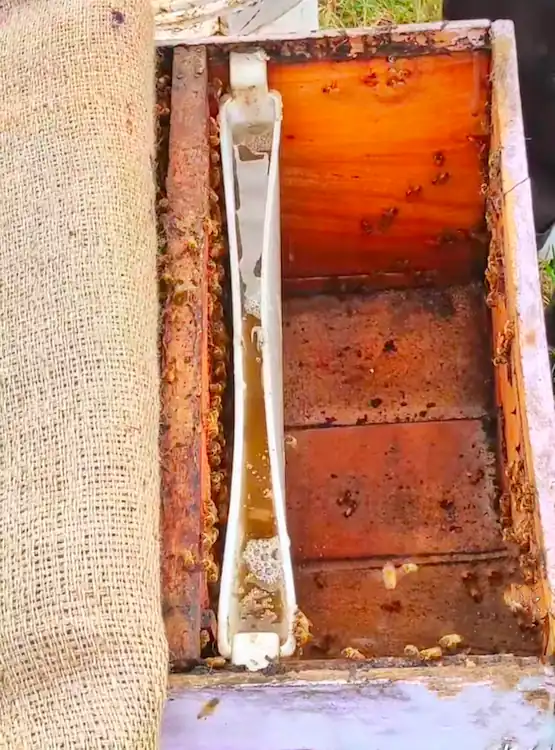
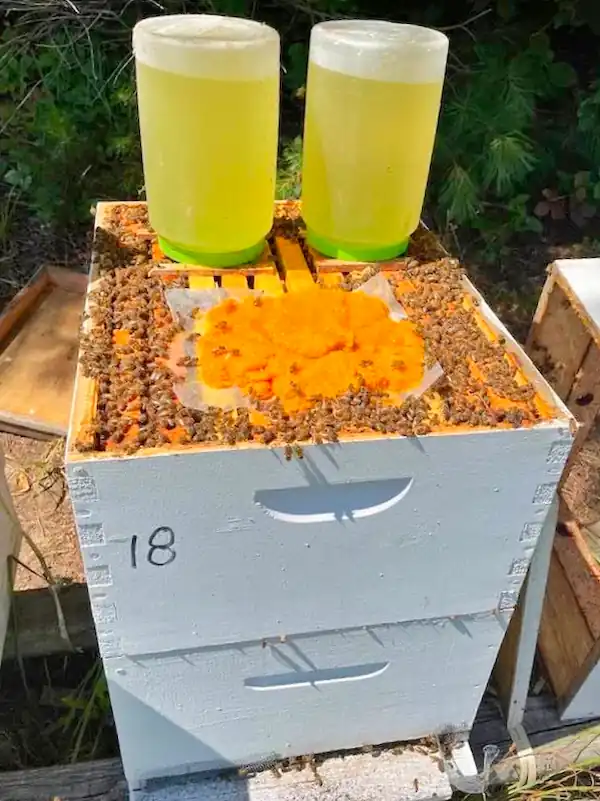
Position the feed safely. Keep liquid feeders stable and use a float or other safe surface to prevent drowning. Place fondant and protein patties where bees can reach them easily, especially above the cluster during cold weather.
Monitor consumption. Check how quickly each colony is using the feed. Strong colonies may consume it quickly, while smaller colonies may need much less.
Check for spoilage. Inspect liquid feed regularly for unusual odors, mold, bubbling, or other signs of fermentation. Clean feeders and avoid leaving large amounts of unused syrup sitting for too long.
Remove feed when it’s no longer needed. Once natural nectar and pollen are readily available and colonies have adequate stores, adjust or remove supplemental feeding. This also helps reduce unnecessary waste and the risk of attracting robbing or pests.
How Much Feed Do Bees Need?
There isn’t a fixed amount of bee feed that suits every colony. We adjust feeding based on what is happening inside the hive and what the bees can find outside it.
A small nuc with limited stores may need supplemental feed while a strong colony surrounded by good forage may need very little.
Several factors can change how much a colony consumes:
Colony size: A large, active colony will naturally use more food than a small or newly established one.
Season: Spring buildup, summer nectar dearths, and fall preparation can all create different feeding needs. Winter feeding is usually about making sure adequate stores remain accessible.
Existing honey stores: Check what the colony already has before adding more feed. Supplemental feeding should fill a shortage, not simply add food without purpose.
Nectar flow: When bees are bringing in plenty of nectar, they may slow down or stop taking supplemental syrup. During a dearth, consumption can increase.
Weather: Cold, rainy, or otherwise poor flying conditions can reduce access to natural forage and change how quickly bees use stored food.
Brood production: A colony raising large amounts of brood has greater nutritional demands, particularly for protein and other nutrients supplied by pollen or pollen substitutes.
Local forage: The plants flowering around your apiary matter. A colony in an area with abundant, continuous forage may need far less supplemental feeding than one surrounded by limited forage.
We prefer to monitor the colony rather than follow a universal feeding quantity. Check the stores, observe how quickly the feed disappears, and adjust accordingly. This gives you a much better indication of what a particular hive actually needs.
Common Bee Feeding Mistakes
Supplemental feeding can be useful when a colony is short on food, but feeding more doesn’t necessarily make a hive healthier. We look at the colony’s condition, available forage, and weather before deciding whether extra feed is actually needed.
One common mistake is feeding when bees already have plenty of natural nectar and pollen available. If forage is strong, supplemental feed may simply go unused.
On the other hand, using the wrong type of feed can leave a nutritional gap. Sugar syrup provides carbohydrates, while pollen substitutes and protein patties are intended to supplement protein. Fondant serves a different purpose again, particularly during cold weather.
Getting the sugar syrup concentration wrong is another issue. The appropriate ratio depends on the season and feeding purpose, so we don’t use the same mixture for every situation.
You should also avoid leaving syrup sitting around for too long. Fermented or spoiled syrup shouldn’t be fed to bees.
Feeder hygiene matters just as much. Dirty equipment can collect old syrup, mold, and other contaminants, so feeders should be cleaned before being refilled. We also make sure liquid feeders provide bees with a safe way to reach the syrup without drowning.
Robbing is another problem to watch for. Spilled syrup, exposed feeders, or food left outside the hive can attract bees from neighboring colonies and other pests.
Keeping feed contained and cleaning up spills quickly helps reduce the risk.
Finally, avoid feeding more than a colony can use and don’t overlook the food it already has.
We check existing honey and pollen stores before adding supplemental feed.
Once natural forage improves or the colony has adequate stores, continuing to feed may create more problems than it solves.
David Carter, founder of Farmstead Guide, has over 20 years of hands-on homesteading experience. From raising poultry to practicing sustainable farming, he shares practical tips and insights to help others live a more self-sufficient lifestyle.