Most new quail keepers make their first big mistake before they bring a single bird home: they treat quail like tiny chickens. A repurposed rabbit hutch, wooden coop, or wire cage with a flat floor may look perfectly fine, but the problems show up fast: broken eggs, sore feet, ammonia buildup, and panicked birds launching into the ceiling.
Quail flush straight up when startled, need the right floor slope for clean egg roll-out, and produce concentrated droppings that demand good ventilation. I’ve tested enough cage systems to know that getting these details wrong costs more than money.
If you’re raising quail, choosing the right cage is one of the first decisions to get right. A properly designed cage keeps the flock safer, eggs cleaner, and daily maintenance far easier, whether you buy a commercial cage or build one yourself with the right quail cage materials. What matters is getting the cage height, mesh, floor slope, ventilation, and waste management right before the birds move in.
But the Right Type of Quail Cage
There isn’t one best quail cage for every keeper. A 12-bird egg flock has very different housing needs from someone raising hundreds of birds for production or keeping a small group of different types of quail in an outdoor aviary. I’ve found that choosing the cage type first makes the rest of the buying decision much easier.
1. Stackable Battery Cages
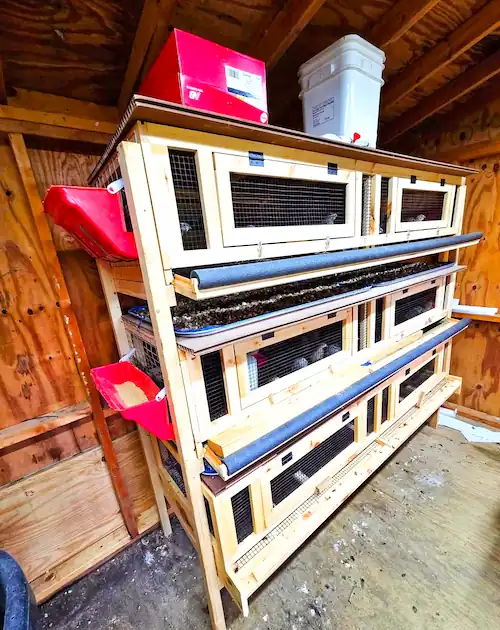
If you’re raising quail primarily for eggs or meat, this is the setup I’d look at first. Stackable cages use vertical space instead of spreading the flock across the floor, and the better designs include sloped wire floors, roll-out egg trays, and removable manure trays.
That last part matters more than it sounds. With a good stackable cage, eggs roll forward where you can collect them without reaching through the flock, while droppings fall away from the birds instead of building up underneath them. Less contact with waste means less mess on the birds and less scraping for you.
I especially like this style once a flock gets beyond a dozen birds. Adding another tier is much easier than finding another large section of floor space.
Hatching Time 5-Layer Quail Breeding Cage (Shop on Amazon)
Best for: Egg production, breeding, and larger indoor Coturnix flocks
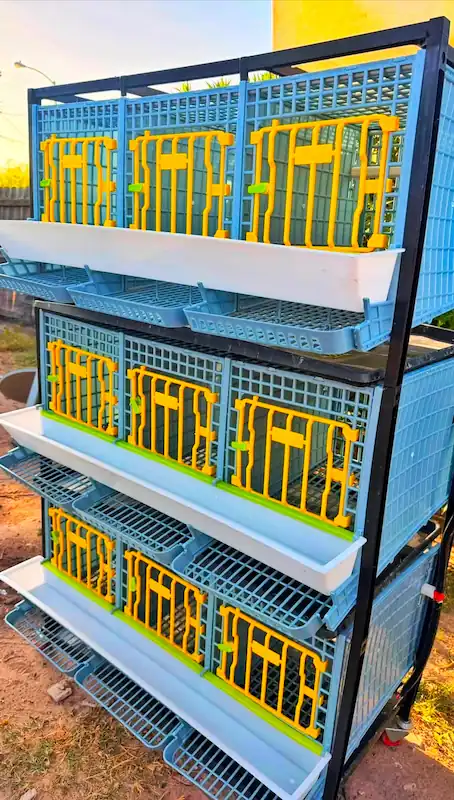
I’ve used the Hatching Time 5-Layer cage for my Coturnix, and what stands out most is how much flock capacity it gives you without taking up a huge amount of floor space. The five-layer setup has three sections on each level, so I can keep different groups separated while keeping the entire system organized. The angled roll-out egg trays have also made daily egg collection much easier. Eggs roll forward where I can grab them without reaching into the cage.
The polypropylene construction is another feature I appreciate. After dealing with cages that are difficult to clean around joints and corners, having a smooth, power-washable surface makes a noticeable difference. I can wash the sections thoroughly instead of constantly fighting built-up dirt and manure. It also avoids the rust issues you can eventually run into with metal cages.
I’ve also found the removable middle walls useful when changing how I manage the flock. I can keep sections divided for separate breeding groups or remove the walls when I need more room in a compartment. That flexibility is something I’d look for again if I were buying another larger cage system.
The biggest drawback is the price. At around $700 for the 3-section, 5-layer configuration, this isn’t where I’d send someone with six or eight quail. I think it makes much more sense for a keeper who is building a larger indoor flock and wants to save space while making feeding, cleaning, and egg collection easier.
Feature
Hatching Time 5-Layer
Capacity
Up to 75 quail
Configuration
3 sections × 5 layers
Dimensions
38.6 × 24 × 77.2 inches
Material
High-density polypropylene
Egg collection
Angled roll-out trays
Waste management
Pull-out waste trays
Dividers
Removable middle walls
Cleaning
Power-washable
Rust resistance
Rust-free plastic construction
Best use
Indoor breeding and egg production
Price
About $700 for this configuration
This is the cage I’d choose when space, sanitation, and fast daily egg collection are priorities. It’s expensive for a small flock, but once you’re managing a larger number of Coturnix, the vertical design and easy-clean construction make much more sense. I especially like that it was designed specifically for quail rather than adapting a generic bird cage.
Hatching Time 2-Layer Quail Breeding Cage (Shop on Amazon)
Best for: Small-to-medium Coturnix flocks and indoor egg production
I’d choose this Hatching Time 2-layer cage when I want the same basic design as a larger production system without committing to five levels of cages. The 3-section, 2-layer setup gives me six compartments while taking up only about 38.6 by 24 inches of floor space. That makes it a much more practical starting point for a smaller Coturnix flock.
What I like most is that it was built around quail rather than adapted from a generic bird cage. The removable walls let me keep breeding groups separated or open up sections when I need more room. The egg collection trays also make daily chores easier because I can collect eggs from the front instead of reaching into the cage.
The plastic construction is another reason I’d pick this over a basic wire cage. The PP plastic is rust-free, has smooth surfaces, and can be power-washed. I’ve found that easy sanitation matters more as the flock grows. A cage that takes five extra minutes to clean every day quickly becomes a chore you start putting off.
The main limitation is capacity. If I were planning a large flock from the start, I’d move up to the 5-layer version. But for a smaller indoor setup, I think this 2-layer model hits a much better balance between capacity, cleaning convenience, and upfront cost.
Feature
Hatching Time 2-Layer
Configuration
3 sections × 2 layers
Dimensions
38.6 × 24 × 35.8 inches
Material
Rust-free PP plastic
Egg collection
Roll-out egg trays
Dividers
Removable walls
Waste management
Extended pull-out tray
Cleaning
Power-washable
Best use
Indoor breeding and egg production
Footprint
About 6.4 sq. ft.
Price
About $400
This is the Hatching Time cage I’d pick for a smaller flock when I want a purpose-built quail system without paying for unused tiers. It gives me the same useful features I look for in a larger stackable setup, while keeping the initial investment and overall height more manageable.
2. Wooden or Hybrid Hutches
Hutches make sense when you want something that works outdoors and looks more at home in a backyard than a row of bare metal cages. A good hutch can also give you more flexibility with weather protection and placement.
But I would not buy one simply because it looks like a nice rabbit hutch. Quail need different housing from rabbits. A tall rabbit hutch can give a startled quail enough room to launch upward and injure itself, and untreated wood becomes a problem once urine and droppings soak into it.
When I’m choosing a hutch, I look for surfaces that can be wiped down quickly or swapped out when they get too dirty. The floor should also let droppings fall through instead of leaving the birds standing on waste.
Best for: Small flocks, indoor setups, and keepers who prefer a traditional hutch design
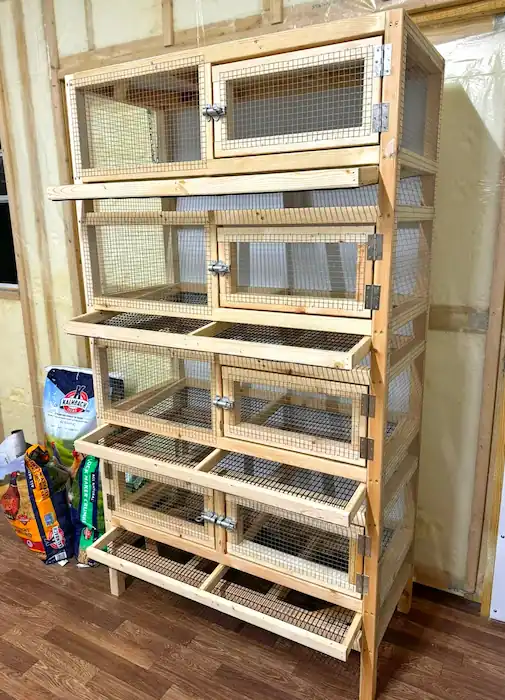
Wooden hutches can work for a small quail flock if you’re concerned about appearance in the garage, porch, shed or covered area, in comparison to bare wire cages. The GDLF 2-tier cage can be an example of this. Because it is a combination of a frame and mesh panels, I do not completely lose the hutch, but maintain airflow and visibility.
The biggest advantage is definitely the two-tier layout. Housing two cages side by side is so much bigger than using a vertical stack. Each tier has its own waste removal cleaning drawer tray, making cleaning a piece of cake. I can clean the tray without having to move the quail.
The number of access points is something nice, as I can check and feed the quail without opening most of the cage. The bottom storage shelf is a good addition as it gives space for bedding, feed, and supplies.
Like most things made out of wood, maintenance is the biggest downside. Quail waste and moisture will eventually soak into the wood and I would seal the wood before letting the quail in and mind the area around the trays and floor. If you are looking for something easy to clean and sanitize, I would go with the Hatching Time Plastic Cage instead.
Feature
GDLF 2-Tier Wooden Quail Cage
Dimensions
35.4 × 18.9 × 65 inches
Levels
2 tiers
Frame
Wood
Panels
Wire mesh
Cleaning
Pull-out trays on each tier
Ventilation
Large mesh panels
Access
Multiple doors
Storage
Lower shelf
Use
Indoor or covered outdoor
Best for
Small-scale quail keeping
Price
About $200
I’d choose this hutch if I wanted a compact, attractive setup for a small flock and didn’t mind doing a little more maintenance on the wood. It isn’t my first choice for high-volume egg production, but for a backyard keeper who wants something more substantial than a basic wire cage, the two-tier design and pull-out trays make it a practical option.
3. Aviaries and Flight Pens
An aviary is a completely different approach. Instead of keeping quail in compact production cages, you give them a much larger enclosure where they can move around, forage, and use the floor space.
This can be a good choice for breeding projects, display birds, or keepers who specifically want a more natural-style enclosure. It also gives you room for hiding areas and enrichment.
Maintenance is also a concern. More floor space means more bedding or substrate to manage, and collecting eggs is a slower process with a roll-out cage. A larger floor space also adds to the area that needs predator protection, since there are more potential entrances.
For production eggs, I would choose a well-designed cage before an aviary. For a small breeding group or a keeper who values space and natural behavior more than maximum production efficiency, an aviary can make much more sense.
4. DIY Modular Cages
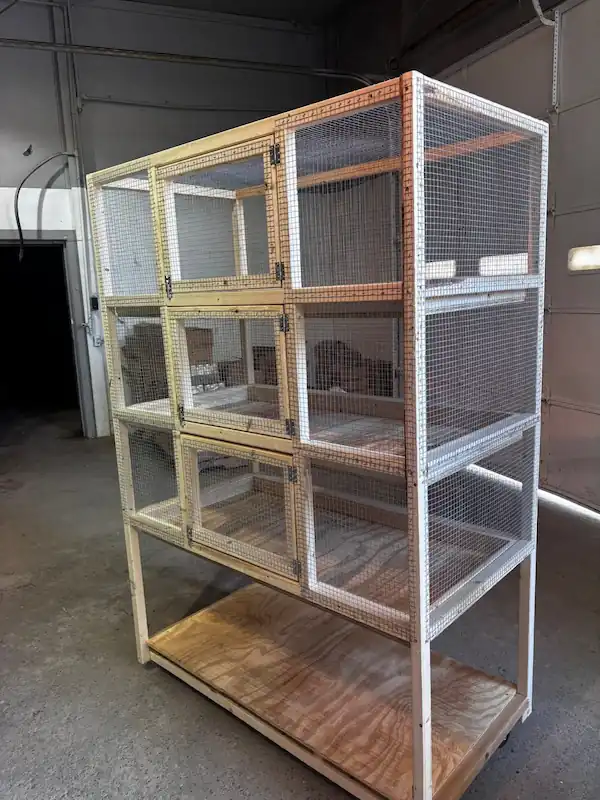
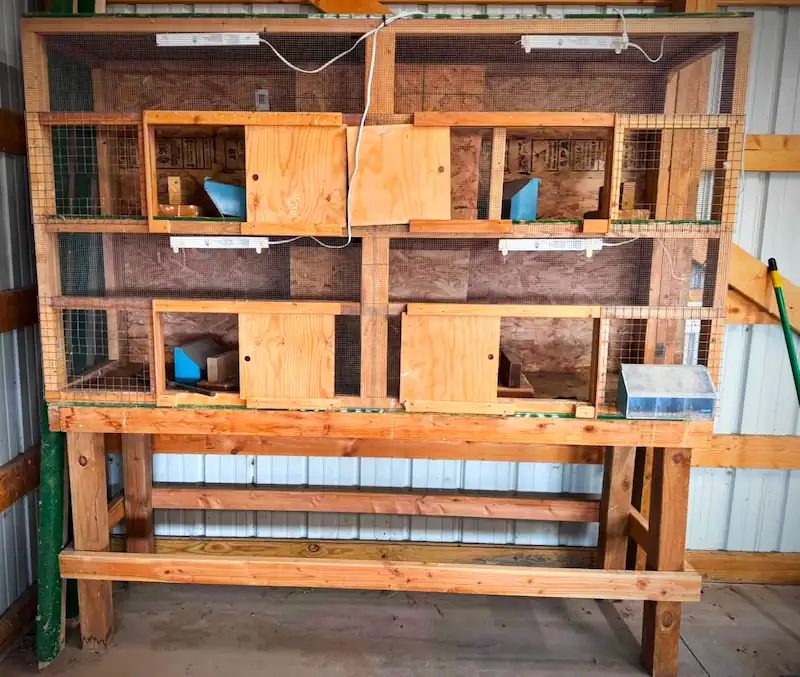
DIY is worth considering if you’re comfortable measuring, cutting, drilling, and fastening wire. It can also be the best way to build a cage around an awkward space instead of trying to make a commercial cage fit.
I like modular designs because you can start with one cage and add another as the flock grows. The mistake is treating DIY as an excuse to ignore the engineering details. You still need the right mesh, a safe floor, adequate ventilation, easy waste removal, and a ceiling height that reduces the risk of head injuries.
Commercial components can save you from reinventing the parts that are frustrating to get right. I’d rather spend a little more on good welded wire, a proper waste tray, and reliable fasteners than rebuild a cage because the mesh bends or the tray doesn’t slide properly. Build the frame around your available space, but don’t compromise on bird safety or daily cleaning.
Best for: Budget-conscious keepers, custom spaces, growing flocks, and anyone comfortable with basic construction.
Which Quail Cage Type Should You Choose?
The right quail cage depends on how many birds you keep, where the cage will sit, and how much time you want to spend building and maintaining it.
For most people raising Coturnix quail for eggs, a stackable cage or well-designed modular hutch is a practical starting point. Both can make good use of limited space while keeping feeding, egg collection, and cleaning relatively straightforward.
Choose a stackable cage if you’re keeping multiple groups of quail and want to make better use of vertical space.
Choose a hutch if the cage will stay outdoors and protection from rain, sun, and wind is a major concern.
Choose an aviary if you have plenty of space and want a larger enclosure that gives the birds more room to move.
Build a DIY cage if you have basic tools and want to customize the dimensions, egg roll-out, feeder placement, manure tray, or number of tiers around your available space.
There isn’t one cage style that works best for every quail keeper. The better choice is the one that gives your birds enough usable space while making feeding, watering, egg collection, cleaning, and predator protection easy for you to manage.
Protect Against Weather Without Blocking Ventilation
Quail need protection from harsh weather, but an outdoor cage should never become an airtight box.
During hot weather, prioritize shade and airflow. Keep the sides open where practical and use a roof or shade cloth to block direct sunlight. Make sure air can move freely through the enclosure.
During cold weather, protect the cage from prevailing wind and driving rain. A temporary windbreak or clear panel on the exposed side can help while leaving other areas open for ventilation.
During rainy weather, the roof should keep the birds and their bedding areas dry. Check the cage after heavy rain and look for water collecting around the floor, manure tray, feeder, or quail-specific waterer.
Don’t completely wrap an outdoor cage in plastic. Restricted airflow can allow humidity and ammonia to build up, creating a poor environment for the birds.
David Carter, founder of Farmstead Guide, has over 20 years of hands-on homesteading experience. From raising poultry to practicing sustainable farming, he shares practical tips and insights to help others live a more self-sufficient lifestyle.