
What to Feed Newborn Baby Chicks
Newborn baby chicks need a complete chick starter feed and fresh, clean water from their first day in the brooder. You don’t need to prepare a complicated homemade diet or offer treats to help them grow.
A good starter feed already contains the protein, vitamins, minerals, and other nutrients they need during their early weeks.
If you’re wondering what to feed baby chicks on their first day, start with these basics:
- Best food: A complete chick starter feed in fine crumbles or mash.
- Protein: Usually around 18–20% for ordinary laying-type chicks. Follow the feed label and your chick supplier’s recommendations.
- Water: Keep fresh, clean water available at all times in a shallow chick-safe drinker.
- Feeding frequency: Let chicks eat throughout the day rather than restricting them to set meals.
- Treats: Skip them at first. Starter feed should provide almost all their nutrition.
- Grit: Offer chick-sized grit if you introduce foods that need grinding, such as greens, whole grains, or insects.
Chicks that have just hatched can use nutrients from their absorbed yolk sac for a short time, but you should still provide feed and water as soon as they are moved to the brooder. If you’re buying day-old chicks, have both ready before they arrive.
What Do Newborn Baby Chicks Eat?
Newborn chicks eat a specially formulated chick starter feed. It comes in fine crumbles or mash that small chicks can peck up easily.
A complete starter feed supplies protein for muscle and feather growth, energy for daily activity, and the vitamins and minerals needed for healthy development.
You don’t need to balance these nutrients yourself when you’re using a suitable complete feed.
Choose a starter feed formulated for the type of chickens you’re raising.
For most laying-type chicks, a starter containing around 18–20% protein is a common choice, although some feeds contain more. Meat-type chicks may need a different feeding program.
Keep the following in mind:
- Buy feed specifically formulated for chicks, not adult chickens.
- Choose a crumble or mash that your chicks can eat comfortably.
- Keep the feed dry, fresh, and free from droppings.
- Don’t dilute a complete starter feed with corn, scratch grains, or other ingredients.
- Never use layer feed for newborn chicks because its calcium content is too high for their needs.
A complete starter feed is the simplest way to meet their nutritional needs without accidentally creating an unbalanced diet.
How to Choose the Right Chick Starter Feed
When buying starter feed, you don’t need to get caught up in every marketing claim on the bag. Focus on the nutritional label and whether the feed is appropriate for your chicks.
Check these three things before buying:
- Protein level: Choose a feed formulated for your chicks’ age and type. Around 18–20% protein is common for laying-type chicks, while meat birds may require a different ration.
- Feed form: Fine crumbles or mash are suitable for newly hatched chicks because they’re easy to peck and swallow.
- Complete nutrition: Look for a complete starter ration containing the required vitamins, minerals, amino acids, and energy.
You may also see organic, non-GMO, or other specialty starter feeds. These are options based on your preferences, but those labels alone don’t tell you whether a feed is nutritionally complete. Check the guaranteed analysis and feeding directions.
For most backyard flocks, a suitable commercial chick starter is easier and safer than mixing grains and supplements at home.
The Chick Starter Feed
The first ever feed to provide your chicks is called the starter feed. This is what helps them grow fast and stay healthy during their early weeks.

Starter feed is usually a fine mash or small crumbles packed with protein, around 18–24%. This high protein helps chicks build strong bodies and grow soft, shiny feathers.
Medicated vs. Unmedicated Chick Starter Feed
Chick starter feed comes in medicated and unmedicated versions. Which one you choose depends on your chicks’ vaccination history, the product’s active ingredient, and the advice of your hatchery or poultry veterinarian.
Medicated starter feed
Some medicated chick feeds contain amprolium, a medication used to help control coccidiosis, a chicken disease caused by intestinal parasites.
However, the word “medicated” alone doesn’t tell you which ingredient the feed contains or what it is intended to do.
Before buying medicated feed, check the label for the active ingredient and its directions. If your chicks received a coccidiosis vaccine, ask the hatchery which feed to use.
Medicated feed containing a coccidiostat may interfere with the development of immunity from certain live coccidiosis vaccines.
Medicated feed is not a substitute for dry bedding, clean water, good brooder management, or veterinary care when chicks become sick.
Manna Pro Chick Starter Feed
The Manna Pro Chick Starter Feed consists of small and non-dusty crumbles, making it easy for the chicks to eat.
We usually mix a little water into the feed and serve it in shallow pans. We clean the pans twice a day and keep the chicks warm at 85–90°F. To learn more about keeping your chicks warm, read our complete article on the best chicken heaters.
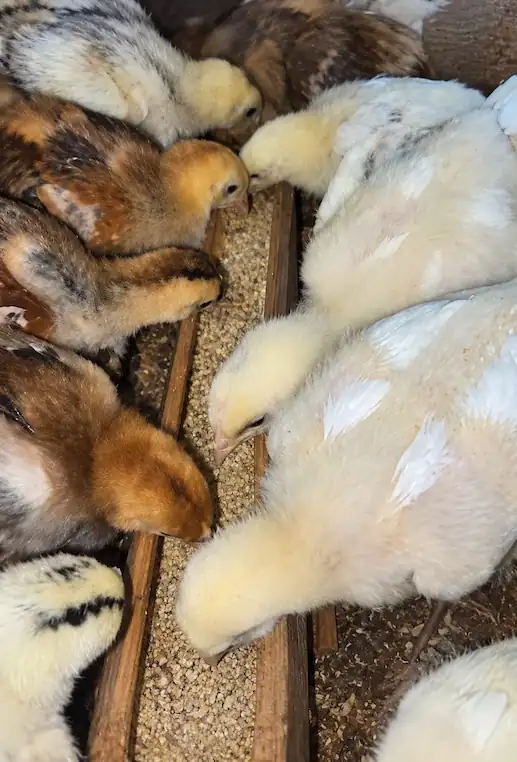
The best part is that it’s medicated, so it helps protect them from coccidiosis. We lost a few chicks before switching to Manna Pro, but since then, we haven’t had any issues. The bag lasts a long time and stays fresh if it is closed properly.
Unmedicated starter feed
Unmedicated starter feed contains no anticoccidial medication. It can be a suitable choice for chicks raised under a vaccination or disease-prevention program that calls for unmedicated feed.
Keep the brooder clean and dry, avoid overcrowding, and watch your chicks for changes in appetite, activity, and droppings. Good management remains important regardless of which starter feed you use.
For non-medicated, our first choice at Carter Farm is the Manna Pro (Shop on Amazon). We always stick to this one, and it has never disappointed us yet. Its bag is full of vitamins and minerals, providing complete nutrition for baby chicks.
You can also go with Purina non-medicated chick feed, as they have prebiotics and probiotics, which keep your chicks’ immune systems strong. This feed provides them with all the necessary nutrition, so you don’t need to add any extra supplements.
Which starter feed should you choose?
If your chicks came from a hatchery, ask whether they were vaccinated against coccidiosis and which feed the hatchery recommends. Then read the feed label before making your choice.
Both medicated and unmedicated starter feeds can provide complete nutrition when formulated for chicks. The important thing is to choose a suitable feed and use it according to the manufacturer’s directions.
Can Baby Chicks Eat Wet Feed or Treats?
Yes, chicks can eat starter feed moistened with a little clean water, but dry starter feed is usually the simplest option. Some keepers call the moistened mixture “grool.”
If you offer wet starter feed, prepare a small amount, serve it in a clean shallow dish, and remove leftovers promptly.
Don’t leave damp feed sitting in the warm brooder, where it can spoil.
Can newborn chicks eat scrambled eggs?
Fully cooked, plain scrambled egg can be offered in a small amount as an occasional treat.
However, it isn’t a replacement for complete chick starter feed. You don’t need to add eggs when your chicks are eating a suitable commercial starter.
Can baby chicks eat worms and insects?
Chicks naturally peck at insects, but they don’t need extra insects to grow when their starter feed is nutritionally complete.
If you introduce insects or other foods that require grinding, provide appropriately sized chick grit.
What if you don’t have chick starter feed?
Try to obtain a complete starter feed as soon as possible rather than relying on kitchen scraps or a homemade mixture. Eggs and grains alone do not provide the balanced nutrition chicks need.
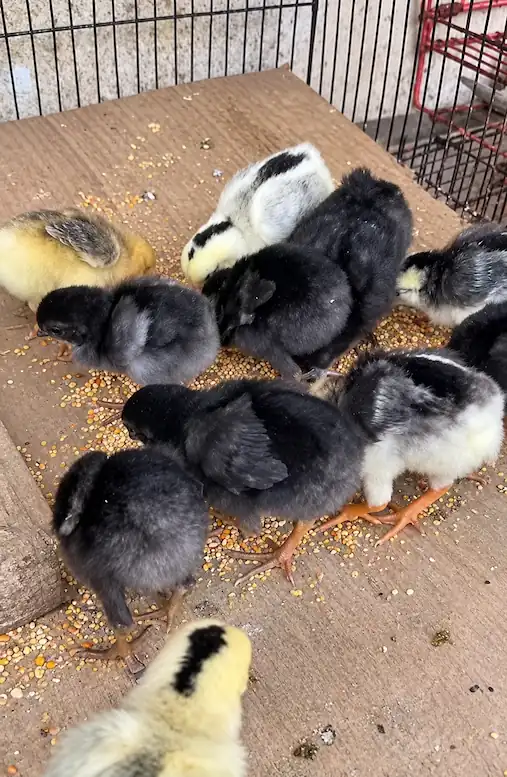
If your chicks are newly hatched, arrange their food and water before moving them into the brooder. Don’t intentionally delay feeding after they are ready to leave the incubator.
As your chicks grow, their diet changes quite a bit. You can check out our guide on what to feed chickens to learn how to keep them healthy as they mature.
Fresh water for newborn chicks
Yes. Baby chicks need fresh, clean water from the time they are placed in the brooder. Use a shallow chick drinker that lets them reach the water without climbing into it or getting soaked.
When chicks arrive, gently show them where the water is if they don’t seem to recognize the drinker. Check it several times a day, refill it as needed, and clean it regularly.
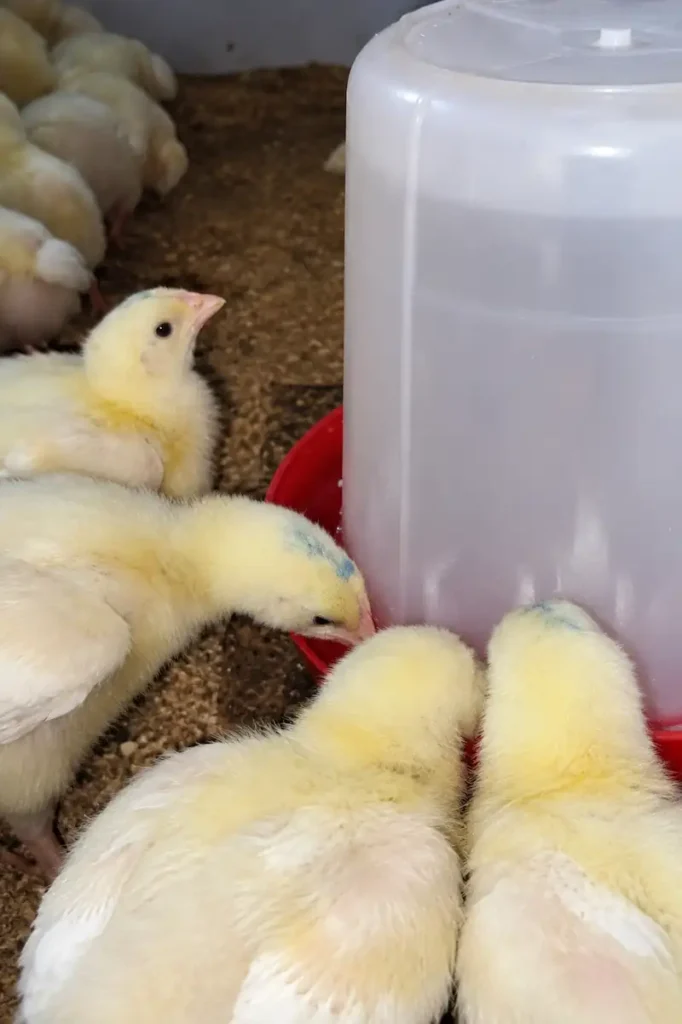
Keep the drinker at a height the chicks can comfortably reach. A stable design with a shallow drinking area helps reduce the risk of drowning and wet bedding.
Plain, clean water is normally enough for healthy chicks. Electrolytes or vitamin products may be useful in specific situations, but they aren’t automatically necessary for every new hatch.
Do baby chicks need grit?
It depends on what they eat.
Chicks eating only a complete commercial starter feed generally don’t need supplemental grit because the feed is already processed into a form they can digest.
If you offer whole grains, greens, insects, or other foods that need grinding, provide chick-sized insoluble grit.
Choose a size suitable for small chicks and offer it separately from their regular feed.
Don’t confuse grit with oyster shell. Grit helps grind food, while oyster shell supplies calcium.
Newborn chicks don’t need extra calcium from oyster shell or crushed eggshells when they are eating a complete starter feed.
What Treats Can Baby Chicks Eat?
A complete chick starter should remain the main food for growing chicks. You can introduce small amounts of suitable treats later, but they aren’t necessary for healthy growth.
Some options include:
- Scrambled egg: Fully cooked and plain, offered in small amounts.
- Leafy greens: Finely chopped pieces of suitable greens.
- Peas: Soft, cooked peas in small amounts.
- Fruit: Tiny pieces of suitable fruit, offered occasionally.
- Insects: Small, appropriately sized insects that are safe to feed poultry.
Introduce only a little at a time and remove leftovers before they spoil. Chicks can fill up on treats without getting the balanced nutrition supplied by starter feed.
If your chicks are only a few days old, there is no need to rush into offering extra foods. Give them time to establish a good feeding routine first.
Do baby chicks need vitamins or supplements?
Healthy chicks eating a complete starter feed generally don’t need additional vitamins, minerals, or calcium unless there is a specific reason to provide them.
Electrolytes may be useful during certain periods of heat or stress, while other supplements may be recommended by a poultry veterinarian. Follow the product label and avoid combining several supplements without checking their ingredients.
Never add oyster shell or crushed eggshells to a newborn chick’s regular diet. Extra calcium is intended for a different stage of a chicken’s life, not for growing chicks on complete starter feed.
Baby Chick Feeding Schedule by Age
Baby chicks need a complete diet throughout their growing period, but the feed changes as they mature.
The exact timing depends on the type of chicken and the manufacturer’s feeding program.
| Chick’s age | What to feed |
|---|---|
| First day | Complete chick starter feed and fresh water as soon as the chick is moved into the brooder |
| 1–6 weeks | Continue a complete chick starter feed |
| Around 6–8 weeks | Transition to an appropriate grower feed when recommended by the feed label |
| Growing pullets | Continue a grower or developer ration until they are ready for layer feed |
| Around 18–20 weeks or when laying begins | Introduce an appropriate layer ration according to the product’s directions and the birds’ development |
What should you feed chicks on their first day?
If you hatch chicks at home, they absorb the remaining yolk into their bodies before hatching. This provides temporary nourishment, so healthy chicks can remain in the incubator while they dry and become active.
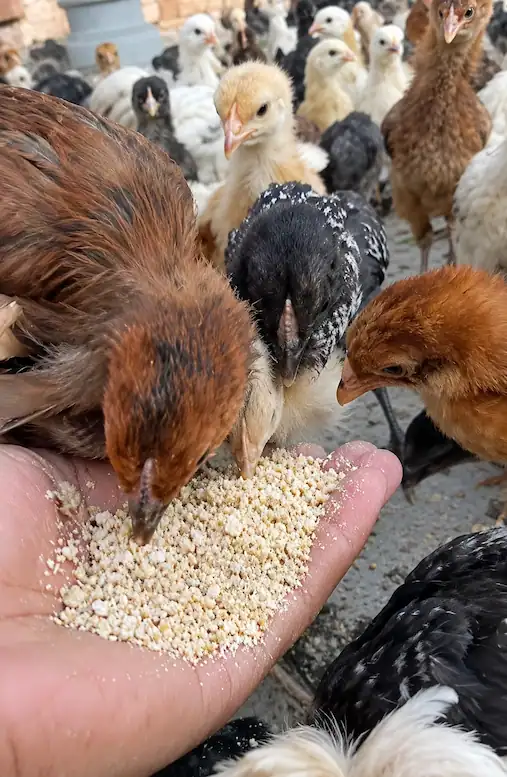
Once they’re ready to move to the brooder, provide chick starter and water. Don’t deliberately keep them without food after moving them into their new home.
If you buy chicks from a hatchery or farm store, have their starter feed and water ready before they arrive. Show them where the water is and make sure they can reach both the feeder and drinker.
When should you switch from starter to grower feed?
For many laying-type chickens, starter feed is used for approximately the first six to eight weeks. Grower feed then supports continued development with a nutrient balance suited to older chicks.
Follow the feed manufacturer’s directions because different products and chicken types can have different feeding schedules.
Meat birds, in particular, may require a separate starter and grower program.
When should chicks start eating layer feed?
Layer feed is for chickens approaching egg production, not young chicks. Many pullets move to layer feed around 18–20 weeks, depending on their development and the feed program.
Don’t give layer feed to newborn or growing chicks. Its calcium content is higher than they need and can harm their health.
Do you need to mix old and new feed?
Not every change requires a gradual transition. Follow the directions for the specific feed you’re using. If you choose to mix the old and new feed during a transition, make sure the mixture still meets the birds’ nutritional requirements.
Feeding’s just one part of raising healthy chicks. They also need a safe home. After reading what to feed baby chicks, don’t miss this step-by-step guide on how to build a chicken coop, even if you’re a total beginner.
How Much Should You Feed Baby Chicks?
Baby chicks should have access to complete starter feed throughout the day. Rather than giving them only a few scheduled meals, keep enough feed available so every chick can eat whenever it needs to.
The amount each chick eats increases as it grows, so there isn’t one daily quantity that fits every flock.
Use these practical tips to manage their feed:
- Keep the feeder filled enough for chicks to reach the feed easily, without filling it to the brim.
- Use a shallow feeder or tray that chicks can access without climbing into it.
- Provide enough feeder space so smaller chicks aren’t pushed away.
- Remove wet, dirty, or spoiled feed and refill with fresh feed.
- Check the chicks regularly to make sure they’re eating and drinking normally.
Don’t limit food to control growth unless you’re following a specific feeding program recommended for your type of chicken. Meat birds and laying-type chicks may have different nutritional requirements.
If a chick isn’t eating, seems weak, or falls behind the others, check that it can reach the feed and water. Persistent poor appetite, lethargy, or diarrhea warrants prompt advice from a poultry veterinarian.

Once your chicks grow up, thanks to the right diet you have provided to these cute birds. Now you’ll want to know how long they might live. It’s time to read our complete guide on chicken lifespan by breed to help you plan ahead.
What Not to Feed Baby Chicks
Newborn chicks have specific nutritional needs, so avoid foods that are toxic, spoiled, difficult to eat, or likely to replace their complete starter feed.
Never feed chicks the following:
- Layer feed: Its high calcium content is unsuitable for growing chicks.
- Moldy or spoiled food: It may contain harmful microorganisms or toxins.
- Raw or undercooked dried beans: Some beans contain natural toxins unless properly cooked.
- Chocolate and caffeinated foods: These can contain substances that are toxic to birds.
- Alcohol: Never give alcoholic drinks or foods containing alcohol.
- Avocado: Avoid avocado, particularly the skin, pit, and other parts that may contain harmful compounds.
- Green or sprouted potatoes and potato plants: These may contain elevated levels of toxic glycoalkaloids.
- Rhubarb leaves: Don’t feed them to chicks.
- Very salty, sugary, or heavily processed foods: These offer little nutritional value and can be harmful in excess.
- Large, hard, or stringy food pieces: These may be difficult for small chicks to swallow safely.
Avoid feeding large amounts of bread, grains, kitchen scraps, or other treats.
Even when an individual food is safe in a small quantity, too much of it can dilute the balanced nutrition provided by chick starter feed.
What if a baby chick eats something unsafe?
Remove the food and observe the chick. If you suspect it has eaten a toxic substance, contact a poultry veterinarian promptly and explain what the chick ate, how much, and when.
Seek veterinary help if a chick becomes unusually weak, stops eating or drinking, has persistent diarrhea, or struggles to stand or breathe.
Don’t assume that a feeding problem is the cause of every symptom..
Got your chicks eating right? Great! Now it’s time to make sure they have enough room to grow. Check out how much space chickens need for a happy, stress-free flock.