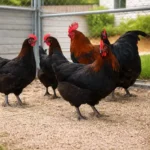
Telling a rooster from a hen is easier as chickens mature, but young chicks can be surprisingly difficult to sex.
The size of the comb, shape of the feathers, leg thickness, and behavior can all offer clues. The trick is knowing which signs to trust and when they usually appear.
At Carter Farm, we know that identifying young chickens correctly helps with flock planning, especially if you’re raising birds for eggs or live in an area with restrictions on keeping roosters.
Here’s what to look for at different ages, from day-old chicks to fully grown chickens.
Why Accurate Chicken Sexing Matters?
Knowing whether your chicken is a hen or a rooster isn’t just about satisfying curiosity. It actually makes a big difference when it comes to keeping a happy, healthy flock.
When you can tell the difference early on, it saves you a lot of stress and helps your birds live more peacefully.
For one, flock management gets a whole lot easier. Too many roosters can stir up trouble. They may fight with each other, chase the hens, and make the coop a stressful place.
If you know who’s who, you can keep the right balance, avoid unwanted breeding, and make sure your hens are calm and comfortable.
Then there’s the issue of local rules. Many neighborhoods don’t allow roosters because of the noise, and nobody wants to get into arguments with their neighbors over an early morning crowing contest.
By figuring out the sex of your chicks early, you can stay on the right side of the law and keep things peaceful at home.
Finally, there’s animal welfare and planning for the future. When you know early which chicks are roosters, you can rehome them before they cause problems, or plan for breeding if that’s your goal.
It’s all about making thoughtful decisions that are good for you, your flock, and even your community.
Basic Chicken Sexing Terms
Before comparing physical features, it helps to understand the terms used to describe chickens at different stages of life.
Chicken: The general name for a bird of the domestic chicken species, regardless of age or sex.
Chick: A young chicken of either sex.
Pullet: A young female chicken that has not yet reached full maturity.
Hen: An adult female chicken.
Cockerel: A young male chicken that has not yet reached full maturity.
Rooster: An adult male chicken, also called a cock.
Capon: A castrated male chicken, traditionally raised for meat.
Pullet and cockerel are useful terms when discussing young birds because their sex may be identifiable before they reach adulthood.
However, their appearance and development vary by breed, so age alone doesn’t confirm whether a bird is male or female.
Rooster vs. Hen: Quick Comparison
Feature
Rooster
Hen
Comb and wattles
Often larger and redder
Often smaller when young
Neck feathers
Usually long and pointed at maturity
Usually shorter and rounded
Saddle feathers
Usually long and pointed
Usually rounded
Tail feathers
Often long, curved sickle feathers
Usually shorter and more rounded
Crowing
Common
Rare, but possible
Egg laying
Does not lay eggs
Can lay eggs without a rooster
Behavior
May display courtship and mating behavior
May squat for mating and establish a pecking order
These differences are general patterns, not absolute rules. Breed, age, and individual development affect how easily chickens can be sexed. Use several clues together rather than relying on one feature.
Spotting the Physical Differences Between Hens and Roosters
Roosters and hens can be differentiated by their physical and behavioral differences. There are several features that help us to spot the difference between the two genders.
However, some clues show up early while others only become obvious as the bird matures. Let’s go over the main physical signs that help you tell them apart.
Combs and Wattles
The comb on top of a chicken’s head and the wattles beneath its beak can offer useful clues when sexing young birds. In many breeds, cockerels develop larger, redder combs and wattles earlier than pullets of the same age.
However, this isn’t a foolproof method. Some breeds naturally have small combs, while others have prominent combs in both sexes. A pullet’s comb may also become redder as she approaches laying age.
Compare birds of the same breed and similar age, and look for several signs rather than relying on comb size alone.
Hackle and Saddle Feathers
Feather shape becomes one of the more useful ways to distinguish males from females as chickens mature.
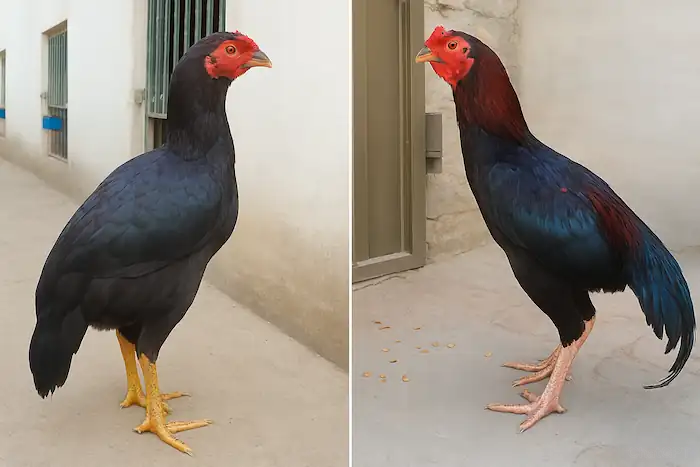
In most breeds, adult roosters develop long, narrow, pointed hackle feathers around the neck and pointed saddle feathers along the lower back, just ahead of the tail.
Hens generally have shorter feathers with rounded ends in these areas. These differences become more noticeable as the adult plumage develops, so they aren’t reliable for identifying every young chick.
A few breeds also have exceptions to the usual male and female feather patterns.
Tail Feathers
The tail is another easy spot once the birds are more mature.
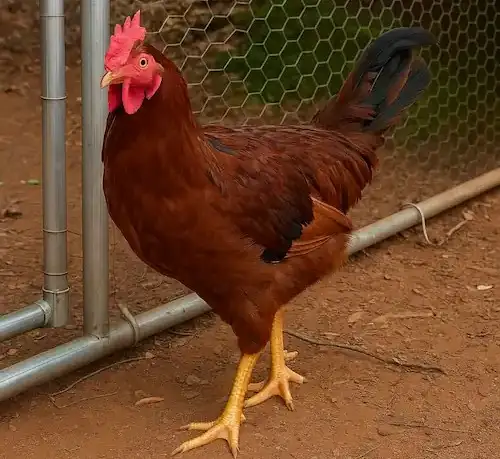
Roosters grow those dramatic, arched tail feathers, often referred to as sickles. They’re long, shiny, and curve gracefully over the rest of the tail. Hens don’t have those. Their tails are shorter, rounder, and more fan-like in shape.
Spurs on the Legs
If you take a close look at their legs, you might notice something sharp.
Roosters usually develop pointed spurs on the back of their legs. These get bigger with age and are used for defense or fighting other roosters. Most hens either don’t have spurs at all or just have tiny little nubs. But here’s the catch: some older hens can grow small spurs too, so this clue on its own isn’t always a sure thing.
Size and Posture
Even without focusing on details, the overall appearance of a chicken can provide numerous clues. But this is usually helpful when it becomes fully grown.
Roosters are usually bigger, heavier, and more muscular than hens of the same breed. They also tend to stand taller and prouder, almost like they know they’re in charge.
Their legs and feet are also thicker, contributing to their bulkier appearance. Hens, in comparison, are more compact, rounder, and have a flatter stance. They often look softer and less angular.
Size and posture should be treated as supporting clues, not proof of sex. A fast-growing pullet may be larger than a cockerel of the same age, and differences in breed, genetics, nutrition, and development can affect body size.
We usually compare birds of similar age and breed, then check their feathers, combs, wattles, and behavior before making a decision.
How Behavior Can Help You Identify a Rooster or Hen
Behavior can provide additional clues when you’re trying to sex a chicken, particularly as it approaches maturity. However, behavior alone isn’t enough to confirm sex.
Some cockerels develop slowly, and individual birds can behave differently from what you’d expect.
Crowing
Crowing is one of the clearest signs that a chicken is male, especially when it becomes a regular behavior as the bird matures.
Some cockerels begin attempting to crow at just a few weeks old, while others take longer to find their voice.
Hens don’t normally crow, but occasional crowing can occur in females, including some older hens experiencing hormonal changes.
Therefore, crowing is a strong clue, but unusual behavior should be considered alongside the bird’s physical features.
Courtship and Mating Behavior
As cockerels mature, they may begin performing courtship displays. These can include dropping one wing and circling a hen, tidbitting by picking up and dropping food while calling to nearby birds, and attempting to mount hens.
Pullets may squat when approached by a rooster as part of their mating-related behavior. These actions are more informative as chickens mature than they are in very young chicks.
Aggression and Flock Behavior
Roosters may alert the flock to perceived danger, call hens toward food, and display courtship behavior.
However, not every rooster is protective, and some can become aggressive toward other chickens or people.
At our farm, we had a free-ranging rooster that would chase and peck at visiting relatives and neighbors.
We eventually moved him to the farmhouse, where there was less human activity. That experience reminded us that temperament varies from one bird to another, even within the same flock.
Hens also establish a pecking order and can be territorial or aggressive.
Rather than using aggression or leadership as proof of sex, look at the bird’s overall development and several physical and behavioral signs together.
Age-Specific Identification Guide
As discussed above, the signs distinguishing the two genders become clearer as they grow, but at each stage, there are different things to watch for.
Let’s walk through what to expect, from the chick stage all the way to adulthood.
Day-Old Chicks
Telling a male chick from a female at hatch can be difficult, even for experienced chicken keepers. Most newly hatched chicks look very similar, and their sex usually cannot be determined reliably from general appearance alone.
There are three main approaches to chick sexing.
Vent sexing: Trained professionals examine the chick’s cloaca for subtle anatomical differences. This requires specialized training because the anatomy is delicate, and inexperienced handling can injure the chick.
It’s not a method beginners should attempt.
Feather sexing: Some chicks can be sexed by comparing their wing-feather development, but this works only when the birds come from breeds or crosses with the appropriate inherited feathering traits.
It isn’t a reliable method for every chicken breed, so don’t assume that a difference in wing-feather length automatically indicates sex.
Autosexing and sex-linked traits: Certain breeds and carefully planned crosses produce chicks with sex-related differences in down color or feather patterns at hatch.
These differences can help identify males and females when the birds’ genetics and the specific cross are known.
If you bought chicks from a hatchery, check whether they were sold as sexed pullets, sexed males, or straight-run chicks. Straight-run chicks haven’t been sorted by sex. Even professionally sexed chicks can occasionally be misidentified.
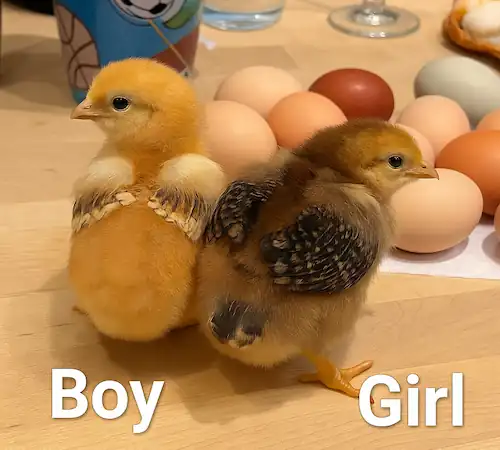
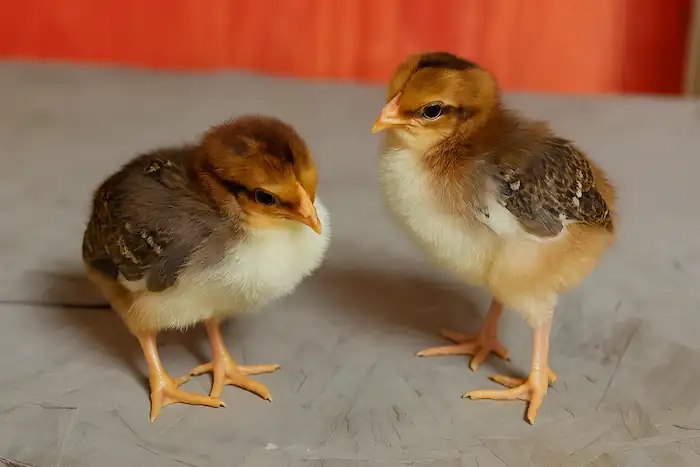
What about the chicks in your photos?
Side-by-side photographs can illustrate differences between particular chicks, but a photo alone may not establish their sex.
Unless the breed or cross has a known sexing trait, it’s better to label the birds as suspected males and females rather than present their sex as certain.
As the chicks grow, their combs, wattles, feathers, and behavior may provide stronger clues.
If you look at the above image, the two baby chicks look almost identical, but judging by the feather shape and overall stance, the one on the right is a rooster while the one on the left is a hen.
Juvenile Chickens: Around 4–16 Weeks
As chicks grow, the differences between cockerels and pullets often become easier to spot.
This is also the stage when you may start noticing differences in comb development, feather shape, leg thickness, and behavior.
Cockerels (Young Males)
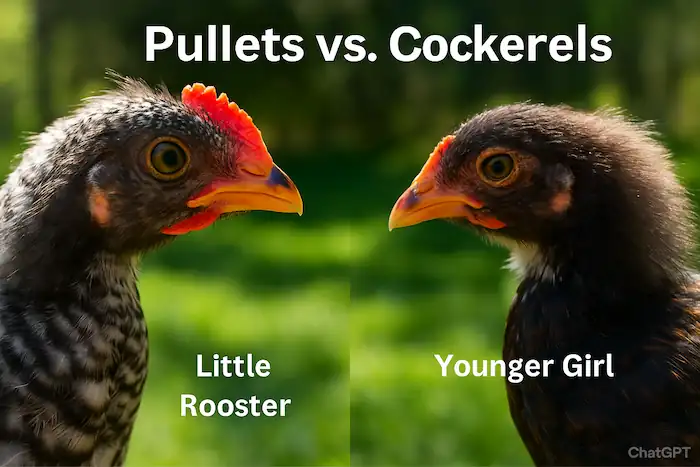
Cockerels of many breeds develop larger, redder combs and wattles than pullets of the same age. Their legs may appear thicker, and pointed neck feathers may begin to develop as they mature.
Some start attempting to crow or displaying courtship behavior.
However, not all cockerels develop at the same rate. A slow-developing male may look similar to a pullet for several weeks, so avoid making a final decision based on a single feature.
Pullets (Young Females)
Pullets often develop smaller, paler combs and wattles than cockerels of the same age. Their feathers generally remain rounded around the neck and back, although the differences become clearer as their adult plumage develops.
Some pullets develop red combs relatively early, especially as they approach sexual maturity. This is why comb color alone shouldn’t be used to determine sex.
Adult Chickens: Around 16 Weeks and Older
As chickens mature, several clues can help you distinguish males from females.
In many breeds, adult roosters have pointed hackle and saddle feathers, longer curved sickle feathers in the tail, and more prominent combs and wattles. Crowing and courtship behavior can provide additional evidence.
Hens generally have rounded hackle and saddle feathers and lack the long, curved sickle feathers typical of many roosters.
Laying an egg is definitive evidence that a bird is female, but not laying an egg doesn’t prove that a chicken is male. Pullets may not have started laying yet, and mature hens can stop laying temporarily or permanently.
Remember that these are general patterns rather than strict age-based rules.
Breed, genetics, health, and individual development all influence how quickly sex-related characteristics appear.
Breed-Specific Differences When Sexing Chickens
Chicken breeds vary in comb type, feather pattern, growth rate, and the timing of sexual maturity. These differences can make some birds easier to sex than others.
Sexing a chick depends on its breed, genetics, and age. Some breeds and sex-linked crosses can be identified by specific feathering or color patterns at hatch. For most chicks, comb development, feather shape, and behavior become more useful as they grow. General appearance alone cannot reliably identify every chick's sex.
Some cockerels show early signs within the first several weeks, including faster comb development and attempts to crow. Other males take longer to develop obvious characteristics. Pointed hackle and saddle feathers, curved sickle tail feathers, and courtship behavior become more useful as the bird matures.
Yes. Although crowing is much more common in roosters, some hens occasionally crow. This can occur in older hens experiencing hormonal changes. If a hen starts crowing unexpectedly, especially alongside other physical changes, consider asking a poultry veterinarian about possible underlying causes.
Leg thickness can provide a clue because males of many breeds develop thicker legs than females of a similar age. However, this isn't a reliable standalone test. Breed, growth rate, and individual variation can all affect leg size.
No. The eggs a hen lays cannot tell you the sex of the hen's chicks. Egg color and size are influenced by other factors, and an egg must be fertilized to develop into a chick. A hen laying an egg is, however, definitive evidence that the bird laying it is female.
No. Temperament varies between individual birds. Some roosters are calm around people and other chickens, while others may chase, peck, or show aggression. Handling, flock dynamics, genetics, and the individual bird all influence behavior.
David Carter, founder of Farmstead Guide, has over 20 years of hands-on homesteading experience. From raising poultry to practicing sustainable farming, he shares practical tips and insights to help others live a more self-sufficient lifestyle.