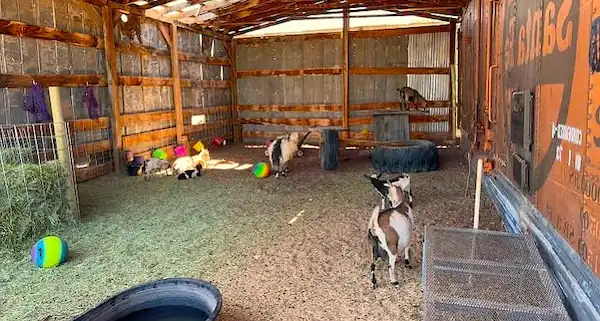
Damp bedding, musty smells, and heavy spring cleanouts are signs that your goat bedding setup may need a change.
The best bedding for goats depends on your barn floor, cleaning routine, budget, and the weather.
Straw is often affordable and provides a comfortable resting layer, while pine shavings are easier to spot-clean and hemp offers another option for managing moisture.
Pellets and other materials have their own trade-offs, especially in winter when keeping the resting area dry matters.
Before buying bedding in bulk, compare how each material absorbs moisture, holds up under goat traffic, and handles daily cleaning.
Bedding is only one part of a comfortable goat shelter. Your floor, drainage, and airflow matter too, so review these goat housing and pen ideas if you’re planning to improve the resting area.
The Short Answer: Choose Bedding That Fits Your Barn
At Carter Farm, we start with pine shavings if easy spot-cleaning and absorbency are our main priorities.
Straw is worth considering if we want a lower-cost bedding layer that helps provide insulation, but we need to keep an eye on damp spots because straw absorbs less moisture and can pack down underfoot. Neither is the best choice for every barn.
The floor, drainage, airflow, number of goats, and cleaning routine all affect how well bedding works. Changing the material won’t fix a damp floor or poor ventilation.
Which Bedding Should We Choose?
Pine shavings: A sensible starting point when we want absorbent bedding that’s easy to spot-clean.
Straw: A good option for a dry, insulating top layer when we can manage moisture and remove soiled bedding regularly.
Wood pellets: Worth comparing if we prefer a compact product, but we need to consider their cost and how comfortable the bedding is after use.
Hemp bedding: Compare the delivered price, local availability, and disposal options before buying a large quantity.
Deep-litter bedding for winter: Focus on how we’ll manage moisture, remove manure, and maintain airflow, not just which material we spread on top.
The floor, drainage, airflow, number of goats, and cleaning routine all affect how well bedding works.
Changing the material won’t fix a damp floor or poor ventilation. If you’re still planning your shelter, our advice on building a suitable shelter for goats can help you consider the setup alongside your bedding choice.
5 Goat Bedding Options Worth Buying
1. HealthiStraw FarmStraw Coarse Cut, 3 cu ft (25 lb)
Best for: Convenient straw storage and easy handling
At Carter Farm, we use HealthiStraw FarmStraw for our Pygmy goats. We like that it comes in a compact bag instead of a bulky straw bale.
The wheat straw is cut into short, coarse pieces that are easy to spread across the resting area. Once we open the bag and fluff up the straw, it expands to more than 10 cubic feet.
The packaging is handy when we don’t have much storage space in the barn. We can take out what we need and seal the remaining straw for later use.
HealthiStraw is also marketed as dust-free and absorbent, with natural insulation for colder weather.
The main drawback is the price. Locally available straw bales may cost much less if we need bedding for several goats.
You should choose this product for convenience rather than assume it offers the lowest cost per bedding area.
We like being able to remove wet and heavily soiled patches without throwing away all the clean bedding around them. That helps us keep the resting area tidy while topping up only where needed.
Aubiose comes in a compressed 44 lb bale. Its hemp material is processed to reduce dust, and the manufacturer describes it as absorbent and suitable for composting after use where appropriate.
These features make it worth considering for a goat shelter where we want to manage moisture through regular spot-cleaning.
The cost needs attention, though. Hemp bedding can be more expensive than straw, especially when we need to cover a large area or replace substantial amounts during wet weather.
Before buying several bales, we compare the delivered price and check whether we have a practical way to dispose of the used bedding.
This bedding is made from unbleached virgin paper fiber. It contains no added fragrances and is designed to absorb moisture while providing a soft surface.
Its 178 L pack expands to several times its compressed volume, so it provides more bedding than the packaging might suggest.
Paper bedding is worth considering for a small, protected area that needs a soft layer. However, this product is intended for small animals, not specifically for goats.
It would be expensive to use throughout a full goat pen, and damp patches would need frequent removal.
You should look for a bulk product intended for livestock before choosing paper bedding for regular barn use.
PETSPICK sells red cedar shavings for animal areas such as kennels, stalls, and dog runs. The 24 L package is small compared with the quantities needed for most goat shelters.
The product description highlights moisture absorption and odor control, along with the natural scent of cedar.
We would be cautious about using this bedding for goats. Cedar’s aromatic oils can irritate some animals, and a seller’s general pet-safety claim does not establish that a particular product is suitable for goats.
We would choose a bedding material specifically intended for livestock instead, particularly for an enclosed shelter where dust and scent can build up.
Aspen shavings are another wood-based bedding option. This product is advertised as low-dust, absorbent, fragrance-free, and easy to spot-clean.
Aspen is worth comparing with other wood shavings when looking for bedding without the strong aromatic scent of cedar.
The biggest concern is package size. The title lists 35 oz, but the product description mentions 88 oz, so you should confirm the actual weight before comparing prices.
Either way, a small pack designed for pets is unlikely to be economical for a full-size goat shelter.
If you want to use aspen for goats, look for a bulk product with clear livestock-use instructions and a price that makes sense for your bedding area.
Compare Goat Bedding Materials and Housing Setups
The best way to choose goat bedding is to look at how it handles moisture, how easy it is to clean, and what it costs to replace.
The main options compare as follows. These are practical guidelines, not results from controlled tests.
Material or setup
Best fit
Main trade-off
Pine shavings
Easy spot-cleaning
Absorbent and soft, but can cost more than straw and stick to clothing.
Straw
Lower-cost bedding and a dry insulating layer
Often less absorbent; can compact and hold damp patches.
Wood pellets
Keepers who prefer compact bedding
Absorbent, but may feel less comfortable and can cost more.
Hemp bedding
Keepers comparing alternative bedding
Dominion Hemp claims its product is absorbent, low-dust, and compostable. Check local availability and disposal options.
Clean, dry dropped hay
Reusing suitable leftover material
Only reuse hay that is clean and dry. Never use moldy or manure-soiled hay.
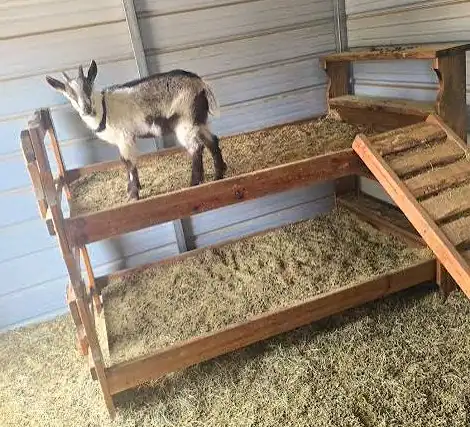
Raised sleeping platform
Some barns with mild, dry conditions
Can reduce bedding needs, but the platform and floor still need regular cleaning.
Bedding is easier to manage when the rest of the pen is set up well. Think about where your goats eat and rest, and keep feed away from soiled bedding.
If you’re still choosing equipment, compare these goat feeders for your feeding area.
Pine shavings are worth considering if we want to spot-clean regularly without removing all the bedding.
Straw can work well when we have an affordable supply, but we need to watch for compacted or damp areas.
Wood pellets and hemp are worth comparing with loose bedding, but the actual cost depends on the product, how much we use, and how often we replace it.
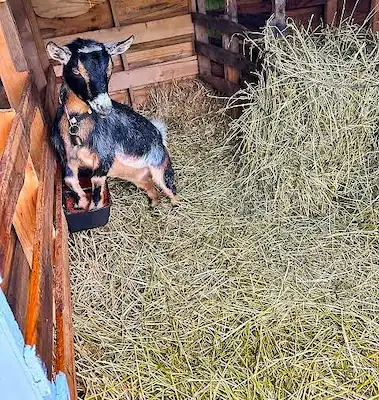
We can sometimes reuse clean, dry hay that goats have dropped, but it must be kept separate from soiled bedding. Goats may eat bedding, so moldy or contaminated material should be removed.
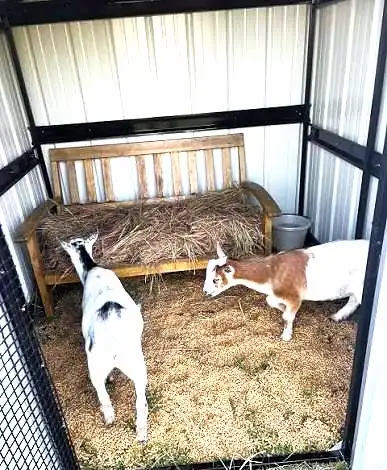
A raised sleeping platform is another option rather than a bedding material. GoatFarmers reports using smooth, raised platforms with its goats in a mild South Carolina climate. That setup may not suit every barn, especially in cold or wet weather.
Choose bedding that fits your floor, climate, budget, and cleaning routine. Whatever material we use, we still need to remove wet spots, keep the resting area dry, and maintain good airflow.
Choose a Bedding System That Fits Your Barn
The right goat bedding depends on more than the material. Your floor, weather, cleaning routine, and storage space all affect what works best.
A Four-Question Decision Path
1. What season and conditions are you managing?
Cold weather may call for a deeper, dry resting layer. In mild weather, regular bedding removal may be easier than maintaining a deep pack. Wet conditions need extra attention, no matter the season.
2. Does the resting area stay dry?
Check the floor and bedding before buying something new. If moisture keeps returning, look at drainage, leaks, and airflow. Adding more bedding won’t fix an ongoing moisture problem.
3. How often can you clean?
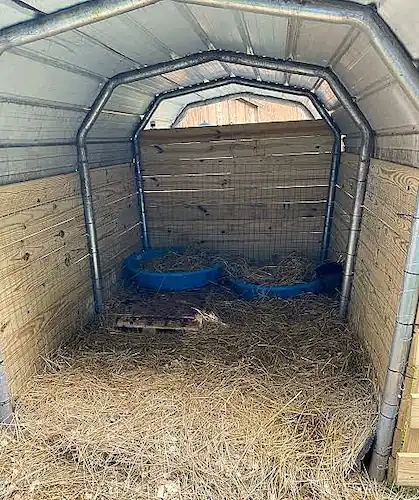
If you prefer frequent cleanouts, pine shavings may suit your routine. A managed deep-litter system can reduce how often you remove all the bedding, but it needs regular checks and a plan for the larger spring cleanout.
4. What can you store and dispose of?
Compare the delivered cost, storage space, effort needed to move the bedding, and where you’ll put the used material. A cheaper bale isn’t always the easiest choice if you have limited storage or disposal options.
These are starting points, not guarantees. Check how the bedding performs in your own shelter and adjust when conditions change.
A Simple Barn-Fit Selector
Use these four details to narrow down your options.
Season: Cold winter or mild weather?
Floor: Usually dry or often damp?
Cleaning preference: Frequent cleanout or a managed seasonal pack?
Available materials: Straw, pine shavings, wood pellets, hemp, or another suitable option?
Example: A cold winter with a dry raised sleeping area
Your setup: Cold winter, dry raised sleeping area, straw and pine shavings available.
Your routine: You can top up bedding through winter and handle a major spring cleanout.
A starting option: Compare a dry straw top layer over an absorbent pine-shavings base. Check the bedding and floor regularly for dampness, and make sure the shelter has adequate airflow.
When to change course: If the bed becomes wet, the goats’ feet aren’t staying dry, or the shelter lacks ventilation, don’t keep adding layers and hope the problem resolves.
This is a practical starting point for observation, not a tested product result or veterinary recommendation.
Shallow Cleaning vs. Deep Litter
These two systems differ mainly in how you manage used bedding.
Shallow bedding means removing soiled material regularly and replacing it with fresh bedding. It takes more frequent cleaning, but you can reset the resting area instead of building up older layers.
Deep litter means adding fresh bedding over older layers during a managed period. It can reduce interim cleanouts, but the pack needs monitoring and usually means a substantial cleanout later.
Goat Journal describes both weekly cleaning and a 10–14-day interval in its examples. These are the article’s examples, not a universal schedule. Your cleaning frequency will depend on moisture, stocking levels, the floor, ventilation, and how quickly the bedding becomes soiled.
The article recommends deep litter for colder months rather than warm weather or climates. It also stresses ventilation and dry footing, with a significant spring cleanout to plan for.
Before using a deep pack, ask yourself three things:
Can I keep the bedding and the goats’ feet dry?
Does the shelter have enough airflow?
Can I manage the extra work and used bedding when spring arrives?
If the answer to any of these is no, a different cleaning system may be more suitable. Wet bedding, damp feet, and poor airflow are reasons to reassess the setup, not simply add another layer.
Seasonal Choices, Raised Platforms, and Kidding
One bedding routine doesn’t necessarily suit every season.
Winter: A deeper, dry bedding layer may help provide insulation, but the shelter still needs protection from precipitation and adequate ventilation.
Mild weather: Regular removal may be easier when bedding dries quickly and the shelter stays clean.
Wet conditions: Focus on drainage, dry footing, and removing wet patches before choosing a deeper layer.
Kidding season: Prepare a clean, dry resting area and plan to remove soiled bedding promptly.
GoatFarmers describes its own experience in South Carolina using smooth, raised sleeping platforms without bedding during warmer months, then adding pine shavings in colder weather and during kidding season. That’s one farm’s reported practice, not proof that bare platforms will suit every goat shelter.
A platform’s suitability depends on the floor, climate, season, and how easily you can keep the surface clean and dry. Cold-weather bedding also cannot replace a dry, sheltered space with good airflow.
Pine shavings are absorbent and easy to spot-clean, while straw is often cheaper and easier to remove with a pitchfork. Straw is less absorbent and can compact under goat traffic, so damp spots need attention.
The better choice depends on your climate, floor, cleaning routine, and ability to keep the resting area dry.
Yes, goats may nibble or eat bedding, especially when it contains hay or straw. However, material that is contaminated with urine, manure, or mold should not be treated as safe forage just because it started as hay or straw.
Remove soiled or moldy material promptly, and keep clean, dry feed separate from bedding.
The Goat Journal recommends deep litter for cold months rather than warm weather or climates. It may suit some barns, but it requires good ventilation, dry footing, and a plan for the substantial spring cleanout.
Check the bedding regularly. If it stays wet or your goats cannot keep their feet dry, reconsider the system instead of continuing to add fresh layers.
Some can, depending on the setup and conditions. GoatFarmers describes using smooth, raised platforms without bedding during warmer months in its mild South Carolina climate, then adding pine shavings during colder months and kidding season.
That's one farm's experience, not a universal recommendation. Consider your climate, platform surface, floor conditions, and ability to keep the sleeping area clean and dry.
Dominion Hemp markets its bedding as absorbent and makes claims about its benefits. However, the supplied evidence comes from the seller, not an independent comparison of goat bedding materials.
Before buying, check the product specifications, delivered price, local availability, and disposal options. Treat marketing claims as claims, not proof that hemp is healthier or performs better than straw or pine shavings.
David Carter, founder of Farmstead Guide, has over 20 years of hands-on homesteading experience. From raising poultry to practicing sustainable farming, he shares practical tips and insights to help others live a more self-sufficient lifestyle.