Breeding chickens sounds exciting, but for many backyard keepers, it can also feel confusing. You might be wondering where to start, how genetics work or why your eggs are not hatching. Some people try breeding without a plan and end up with poor hatch rates, unhealthy chicks or aggressive birds. That frustration can make chicken breeding feel harder than it really is.
Now imagine knowing exactly how to breed chickens for your goals. Maybe you want more eggs, better meat birds, calmer temperaments or to protect a heritage breed. Picture a healthy flock, strong chicks and the confidence that comes from doing things the right way. With the right knowledge, breeding chickens becomes rewarding rather than stressful.
This guide will take you through the full process of breeding chickens step by step. You will learn how to choose the right birds, plan your breeding goals, manage fertility, hatch eggs successfully, and raise healthy chicks. Along the way, you will get practical tips, simple checklists, and solutions to common problems. The goal is to help you build a strong, productive, and ethical flock while keeping animal welfare at the forefront.
Benefits of Breeding Chickens
Breeding your own chickens gives you control over your flock. You can improve egg production, raise better meat birds, or create chickens that thrive in your local climate. Many keepers also enjoy the cost savings over time and the deeper connection to their birds. Most importantly, responsible breeding helps maintain healthy genetics and supports the long-term well-being of your flock.
Setting Clear Breeding Goals from the Start
Before pairing a rooster and hen, decide what you want from breeding chickens. Whether your goal is to focus on egg quantity or shell color. Or you want fast-growing meat birds or a good balance of eggs and meat. You may also care about temperament, disease resistance, or preserving a rare breed. Clear goals make every breeding decision easier and prevent common mistakes.
How Chickens Reproduce and Why It Matters for Breeding
To breed chickens successfully, it helps to understand what is actually happening inside the hen.
A hen has one working ovary and a long tube called the oviduct. When she releases an egg yolk, it moves through the oviduct, where the egg white, shell membranes, and shell are formed. If a rooster has mated with her, the egg can be fertilized during this process.
One interesting fact is that hens can store sperm. After mating, a hen can hold viable sperm for up to two or even three weeks. That means she can lay fertile eggs even if the rooster is no longer around.
Not every egg is fertilized, though. An egg you collect might look normal but still be infertile. Fertility depends on healthy birds, correct rooster to hen ratios, and proper mating.
You do not need to be a scientist to understand chicken genetics. Knowing a few basics can help you make smarter breeding choices.
Some traits are dominant and others are recessive. For example, certain feather colors or comb types will be more visible in chicks if they are dominant. Recessive traits can stay hidden for generations before appearing.
Punnett squares are a simple way to predict what traits chicks might inherit. Think of them as a basic chart that shows how traits from the rooster and hen can combine. Even simple examples can help you avoid surprises.
Some traits are sex-linked, meaning they show up differently in male and female chicks. Barring is a common example and can even help you tell chicks apart by sex at hatch.
One thing to avoid is breeding closely related birds for too long. Inbreeding can lead to weaker chicks, poor growth, and health problems over time.
Breeding for Strength: Building a Healthy, Long-Lasting Flock
A strong flock is not just about looks or production. It is about resilience. The goal is to breed chickens that adapt to your climate, resist common illnesses, and remain active and productive with less effort.
Start by choosing birds that already do well in your environment. If a hen lays well through heat, cold, or humidity, she is a good breeding candidate. Watch which birds stay healthy while others struggle.
Pay attention to vigor. Strong breeders are alert, active, and recover quickly from stress. Over time, selecting these birds helps build natural disease resistance in your flock.
Allowing chickens to develop natural immunity is also important. This does not mean ignoring sick birds, but it does mean avoiding unnecessary medications when birds are healthy. A balanced approach leads to stronger genetics in the long run.
Many experienced breeders have built self-sustaining flocks this way. By focusing on health, adaptability, and careful selection, you can raise chickens that need fewer interventions and live better lives.
Preparing for Success: Setup, Feed, and Mating Basics
Getting Your Flock Ready for Breeding Season
Before breeding chickens, your setup needs to support healthy birds and fertile eggs. A good environment is vital for successful breeding of chickens.
Start with a clean and secure coop. Breeding birds need fresh air without drafts, protection from predators and enough space to move comfortably. Crowded coops often lead to stress, injuries and poor fertility.
Never compromise on roosting space, the thing which most chicken keepers ignore. Your birds should have enough roosting space so that they can rest properly at night. Hens also need private nesting boxes where they feel safe laying eggs. Quiet and dark nesting spots encourage consistent laying and reduce broken or dirty eggs.
The MSD Veterinary Manual highlights the importance of balanced nutrition and litter management for healthy flocks. And when it comes to breeding, the nutritional role is 2x as important for successful breeding.
Healthy parents produce healthier chicks. We switch our birds to a high-quality breeder or layer feed before breeding season starts. This feed is rich in essential nutrients, such as protein, calcium and vitamins. Calcium helps hens form strong eggshells, while protein supports fertility and chick development.
Offer oyster shells separately so hens can take what they need. Fresh greens, vegetables, and occasional treats also support overall health. Just keep treats limited so they do not replace balanced feed.
if you want a detailed breakdown of what to feed at each stage, you can refer to our complete guide on feeding chickens properly.
Clean, fresh water should always be available. Even short periods without water can reduce egg production and fertility.
Creating the Right Environment for Fertility
At Carter Farmstead, our priority is to provide an optimal environment that supports fertility while prioritizing the health, comfort, and welfare of our hens. Our first focus is on providing adequate light, since it matters more than many people realize. Most hens need about 14 to 16 hours of light each day to stay in breeding mode.
During shorter days, supplemental lighting can help maintain steady production. Try to keep temperatures comfortable and avoid extreme heat or cold when possible.
Reducing stress is what chickens need. Calm birds breed better and stay healthier overall. Sudden changes in weather, loud noises, or overcrowding can stress birds and lower fertility.
Helpful gear, such as clean nesting boxes and sturdy automatic feeders and waterers designed for adult birds, can make daily care easier and keep conditions more hygienic.
Mating Chickens and Improving Fertility
What Normal Chicken Mating Looks Like?
Roosters usually show interest through simple courtship behaviors like tidbitting and circling hens. Hens that are ready will squat, which allows mating to happen quickly and naturally.
This process can look rough to new keepers, but when birds are healthy and properly managed, it is normal and safe.
Getting the Rooster to Hen Ratio Right
One of the most common breeding mistakes is having too many roosters. A good rule is one rooster for every 8 to 12 hens. This keeps fertility high without stressing or injuring the hens. Larger or calmer breeds may handle slightly different ratios, so watch your flock and adjust if needed. Too many roosters can lead to over-mating, feather loss, and stressed hens.
What Affects Fertility in Chickens
Fertility depends on several factors. Roosters need to be active, healthy, and not too old. Hens also need good nutrition and overall health to produce fertile eggs.
Stress, poor housing, extreme weather, and age can all reduce fertility. Keeping conditions stable and birds well cared for leads to better results.
Keeping Your Flock Healthy with Good Biosecurity
Healthy breeding starts with disease prevention. Always quarantine new birds for at least 30 days before adding them to your flock. This helps prevent hidden illnesses from spreading.
Clean and disinfect coops, feeders, and waterers regularly. Use dedicated equipment for your flock and avoid sharing tools with other poultry keepers.
Limit outside contact when possible, including visits from other birds or contaminated footwear. These simple habits go a long way in protecting your breeding flock and ensuring long-term success.
From Nest to Incubator, Getting the Best Hatch Possible
Collecting and Storing Eggs for Hatching
Good hatches start long before the incubator is turned on. How you collect and store eggs matters more than most people realize.
Try to collect eggs at least once a day. If the weather is very hot or cold, collecting twice a day is even better. This keeps eggs clean and protects them from cracks, temperature swings, and curious hens.
Handle eggs gently. Hatching eggs are fragile on the inside, even if the shell looks strong. Rough handling can damage the developing embryo before incubation even begins.
Should You Clean Hatching Eggs?
The best eggs are clean when laid. If an egg has a little dirt on it, dry cleaning is the safest option. Gently brush off debris with a soft cloth or fine sandpaper.
Washing eggs should be a last resort. Eggs have a natural protective covering called the bloom that helps keep bacteria out. Washing can remove this layer and reduce hatch rates. If you must wash, use warm water and do it carefully.
Storing Eggs, the Right Way
Store hatching eggs with the pointed end facing down. This keeps the air cell in the right position. The ideal storage temperature is around 55 to 60°F, with moderate humidity. A cool basement or dedicated storage area often works well. Avoid refrigerators or warm rooms.
For best results, use eggs within 7 to 10 days. The longer eggs sit, the lower the hatch rate becomes. Collecting and storing eggs properly is one of the easiest ways to improve success.
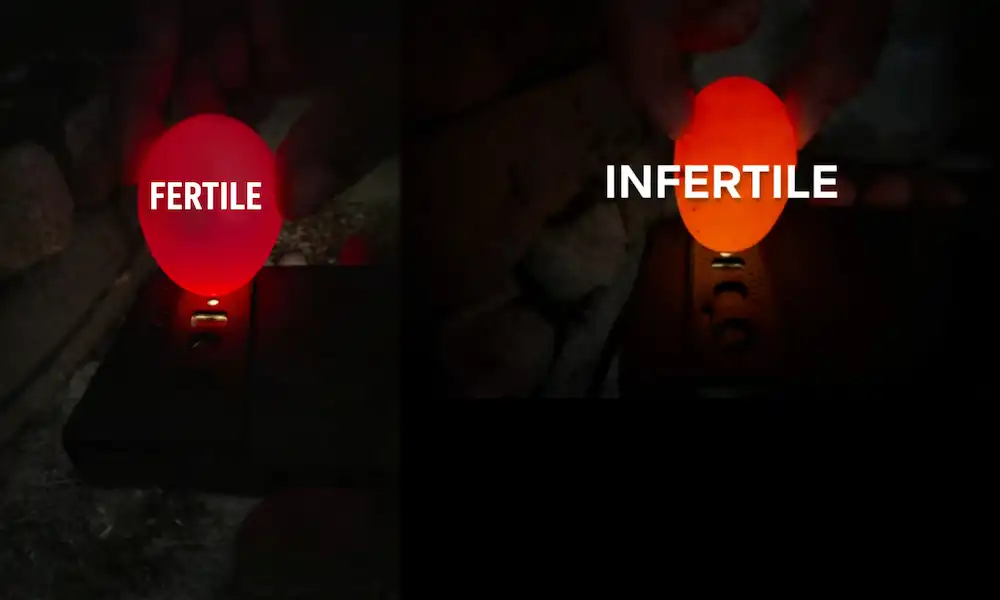
We also use an egg candler during storage or incubation. Candling lets you see inside the egg to check fertility and track development without opening the shell.
To perform candling:
Use a bright flashlight or a specialized egg candler.
In a dark room, hold the light up to the larger end of the egg.
Rotate the egg slowly to see inside without shaking it.
Once you candle the egg, the following signs can help you determine its fertility.
Fertile eggs: When an egg is fertilized and an embryo is developing, the blood vessels and embryo block some of the light. This creates darker areas or shadows inside the egg. So, a fertile egg doesn’t glow evenly, it has spots or veins visible instead.
Infertile eggs: If the egg is not fertilized, there is no embryo or blood vessels. The egg is much more translucent, and light passes through more evenly, making it appear brighter or glowing all around.
Choosing Your Incubation Method: Broody Hen or Incubator
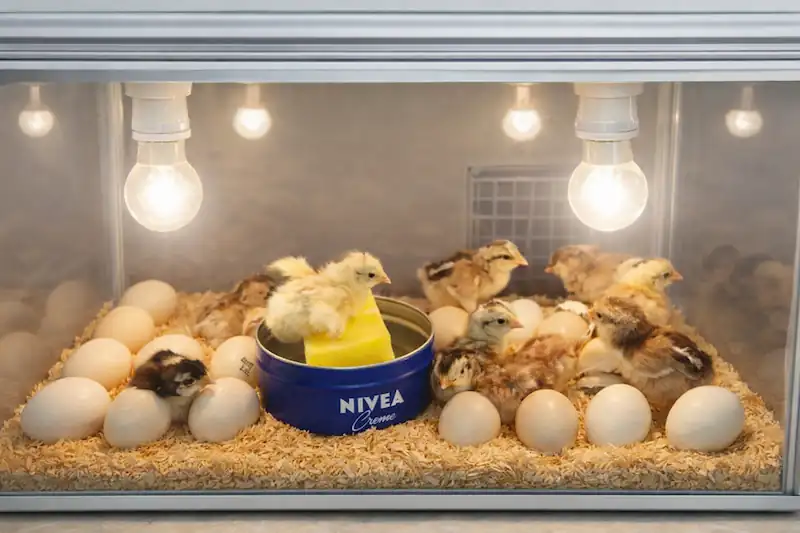
There are two main ways to hatch chicken eggs. You can let a broody hen do the job, or you can use an artificial incubator. Both can work well when done correctly.
Letting a Broody Hen Hatch Eggs
A broody hen handles everything naturally. She keeps eggs warm, turns them and later teaches chicks how to eat and drink. This method takes less daily work and feels more hands-off.
However, the broodiness is unpredictable. Hens can stop sitting, become disturbed, or hatch only a few eggs. You also have less control over temperature and humidity.
Broody hens need a quiet, safe nesting area where they will not be disturbed by other birds or predators. A long time ago, this was the only method we used for hatching the eggs, and it still works the best. However, we now also use the artificial incubator because of its more control settings.
Using an Artificial Incubator
Incubators give you full control. You can hatch more eggs at once and precisely control temperature and humidity.
There are still-air and forced-air incubators. Forced-air models are easier for beginners because they maintain more even temperatures. Some incubators turn eggs automatically, while others require manual turning several times a day.
Incubators require electricity and daily monitoring. Thermometers and hygrometers should be checked and calibrated before starting. While incubators cost more upfront, they offer consistent results when used correctly.
Many experienced breeders use incubators year after year because of their reliability and flexibility.
Step-by-Step Guide to Artificial Incubation
Step 1: Choose the Right Incubator
Decide between a forced-air incubator or a still-air incubator. For beginners, we recommend forced-air incubators because they maintain a more even temperature. We use still-air incubators for our own flock. Though they cost less, they require closer temperature monitoring. Choose an incubator size based on how many eggs you plan to hatch.
Step 2: Set Up the Incubator Before Adding Eggs
Place the incubator in a room with a stable temperature
Set the temperature to: 99.5°F for forced-air incubators and about 101 to 102°F for still-air incubators
Adjust humidity according to the incubator instructions
Make sure ventilation holes are open for proper airflow
Run the incubator empty for 24 hours to ensure stable conditions
Step 3: Place Eggs in the Incubator
We place each egg in the incubator with the pointed end facing down, which helps keep the air cell in the correct position for proper embryo development. The eggs we place are spaced slightly apart so warm air can move freely around them, allowing for even heating.
Before setting the eggs, we let them warm up to room temperature. Placing cold eggs directly into a warm incubator can cause condensation and reduce hatch success.
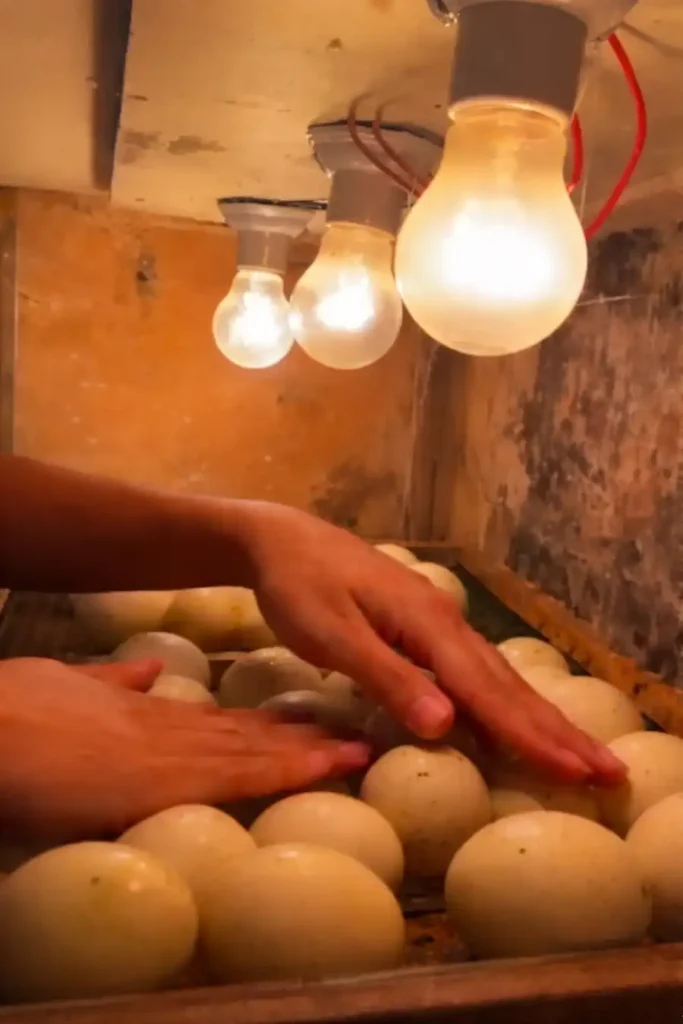
Step 4: Turn the Eggs Regularly
This is the step that I do by myself and enjoy the most. I turn eggs at least 3 to 5 times a day if turning by hand. You have to rotate eggs gently and at different angles. It’s better to use an automatic egg turner if available for consistency. Stop turning eggs on day 18 when lockdown begins.
Step 5: Monitor Temperature and Humidity Daily
Check the thermometer and hygrometer at least twice a day
Refill water trays as needed to maintain humidity
Avoid opening the incubator too often
Step 6: Candle Eggs to Check Development
This is the developing stage and needs careful examination. Candle eggs around day 7 to check fertility. Look for visible veins and embryo movement, and remove infertile or non-developing eggs. Candle again around day 14 if needed to monitor progress
Step 7: Prepare for Hatch Day
Increase humidity during the final 3 days
Stop turning eggs completely
Do not open the incubator unless absolutely necessary
Common Hatching Issues
Chicks usually start by pipping, which means they make a small hole in the shell. This can take time. Some chicks rest for many hours before fully hatching.
Stuck chicks do happen, but helping too early can do more harm than good. Most chicks need time to absorb the yolk and strengthen before coming out.
Assisted hatching should be performed only when absolutely necessary and with great care. Many experienced breeders recommend minimal intervention and letting nature take its course whenever possible.
Over time, you will learn what is normal and when help is truly needed. Patience is often the best tool during hatch day.
Caring for Chicks from Day One to Eight Weeks
Once chicks hatch, it’s all up to you to provide them with proper care. The first few weeks can make or break their health. Let’s take you through the care process, what we ensure for our own chicks after they hatch.
First of all, we set up a safe brooder in a draft-free area, protected from pets and cold air. Use pine shavings or paper towels for footing, and keep feeders and waterers easy to reach but not under the heat source.
Chicks need warmth right away. According to the University of New Hampshire Extension, maintain the brooder temperature at approximately 95°F (35°C) during the first week, then reduce it by 5°F each week as chicks grow, and always watch chick behavior to ensure they are warm but not stressed.
For heating, we use heat lamps or heat plates, as both work well. Watch chick behavior closely. If they huddle, they are cold. If they spread out, they are comfortable.
Feed a high-protein chick starter and provide clean, fresh water at all times. Weak or stressed chicks often benefit from electrolytes in their water during the first few days.
Check chicks daily for common issues like pasty butt, splayed legs, breathing problems, or signs of illness. Having a small poultry first aid kit on hand helps you act quickly when something goes wrong.
Emergency Chick Care
Even with good planning, emergencies happen. At our farm, we keep basic supplies on hand, including electrolytes, droppers, clean towels, and tweezers. A small isolation brooder is helpful for sick or injured chicks. For weak chicks, gentle warmth, hydration and calm handling often make a big difference.
Raising Chicks into Healthy Young Birds
As chicks grow, we gradually reduce the heat, as mentioned above, and move them into a larger grow-out space. This helps them build strength before joining the main flock and ensure a longer lifespan.
Only introduce birds to adult chickens once they are fully feathered and confident. Use slow introductions with visual contact first to prevent bullying.
Other things to look into are: continue feeding grower feed, protect them from predators, and watch for normal growth and behavior.
Solving Common Breeding and Chick Problems
Most problems stem from nutrition, temperature, hygiene, or genetics. Infertile eggs often point to rooster health, poor ratios, or weak breeding stock. Low hatch rates usually mean temperature or humidity issues. Pasty butt and splayed legs are often caused by stress or slippery flooring.
One habit that has helped me the most is keeping simple breeding records. Tracking hatch rates, health, and behavior helps improve results every season.
Ethics and Legal Basics for Responsible Breeding
Breeding chickens also comes with responsibility. Always check local laws about roosters, noise and zoning. Plan your breeding cycles so you do not end up with more birds than you can care for.
Sometimes, difficult decisions are necessary, such as humane culling or rehoming excess birds. Ethical breeding always puts animal welfare first.
For urban keepers, space limits and neighbor concerns matter. Quiet breeds, compact setups, and good communication go a long way.
Costs and Expectations
Breeding chickens is not free. There are setup costs, such as incubators and brooders, along with ongoing feed and care expenses. Some people earn money selling chicks or eggs, while others breed for food security or better genetics.
Before starting, weigh the costs against your goals and space. When done responsibly, breeding chickens can be both rewarding and sustainable.
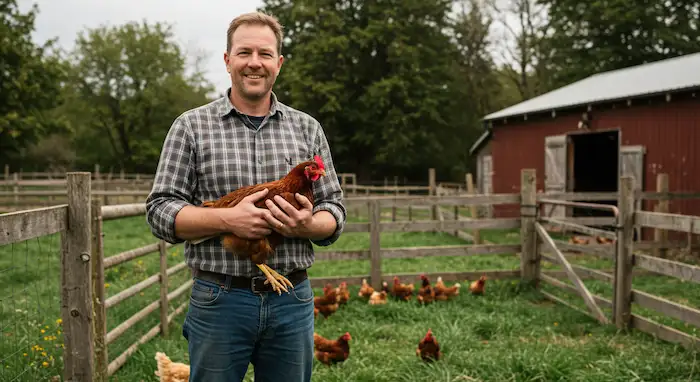
David Carter, founder of Farmstead Guide, has over 20 years of hands-on homesteading experience. From raising poultry to practicing sustainable farming, he shares practical tips and insights to help others live a more self-sufficient lifestyle.