Pond Ideas for Ducks
Before you grab a shovel and start digging, it’s a good idea to plan things out properly. A little planning now can save you a lot of time, money, and headaches later. Plus, it helps you create a pond that works well for both your ducks and you.
Building a duck pond isn’t just about digging a hole and filling it with water. If you plan it right:
- You avoid expensive mistakes
- Your pond lasts longer with fewer problems
- Your ducks stay happy and healthy
- Maintenance becomes much easier for you
Choosing the Right Location
Where you place your pond makes a big difference.
Sun vs. Shade
Ducks love water, but too much sunlight can cause algae to grow quickly. Try to pick a spot that gets a mix of sun and shade. It helps plants grow without turning your pond green.
Near Water & Electricity
It’s best to build your pond close to a water source and, if possible, electricity. This makes it easier to refill the pond and run pumps or filters if you plan to use them.
Avoid Flood-Prone Areas
Stay away from low spots where rainwater collects. These areas can flood your pond or bring in dirt, chemicals, or waste from nearby areas.
Keep It Visible
Place your pond where you can easily see it. This helps you keep an eye on your ducks and also lets you enjoy watching them.
How Big Should Your Duck Pond Be?
The size of your duck pond mainly depends on how many ducks you have and how you plan to use it. A good general guideline is to provide at least 10–20 square feet of water surface per duck, so they have enough room to swim comfortably without overcrowding.
For small backyard setups, even a 3–4 foot wide pond or kiddie pool can work for a few ducks, especially if it’s mainly for bathing and cleaning. However, if you want a more permanent and healthier setup, aim for 25–30 square feet for 3–4 ducks with enough space for all of them to enter at once.
Depth is just as important as size. Ducks need shallow areas (about 6–8 inches) to dabble and clean their heads, along with deeper sections (around 18–24 inches) for swimming and cooling off.
- More ducks = bigger pond needed
- A small pond gets dirty very quickly if overcrowded
- Always leave room if you plan to add more ducks later
Don’t overcrowd your pond. Giving your ducks enough space keeps the water cleaner and reduces stress for the birds.
Check Local Rules First
Before you start building, make sure you’re allowed to.
- Check local laws or city regulations
- Look into any homeowner association rules (if applicable)
- Some areas may require fencing for safety
Plan Your Budget
Duck ponds don’t have to be expensive, but costs can add up if you’re not careful.
Initial Costs
- Digging or excavation
- Pond liner or materials
- Pumps or filtration systems
Ongoing Costs
- Water refills
- Electricity for pumps
- Repairs and cleaning
You can cut costs by doing some work yourself, like digging or setting up simple DIY systems.
Think About Your Soil
Your soil type affects how easy it is to build your pond.
- Clay soil holds water well (great for ponds)
- Sandy soil may need a liner to prevent leaks
- Rocky ground can be harder to dig
You can dig by hand for small ponds, but for bigger ones, machinery might save you a lot of effort.
Creating a well-planned duck pond not only gives your ducks a fun place to swim but can also improve their overall well-being, which plays a role in healthy egg-laying cycles across different breeds and seasons.
Pond Ideas for Ducks: Find the Best Backyard Duck Pond for You
There’s no one-size-fits-all duck pond. The right choice depends on your space, budget, and how much effort you’re willing to put in. Let’s go through the main options, so you can pick what suits you best.
A) Simple & Budget-Friendly Options
If you want something quick, cheap, and easy, these are great starting points.
1. Kiddie Pools & Stock Tanks
These are basically using a ready-made container as a pond. These are one of the easiest ways to give your ducks a place to swim.
- A kiddie pool is the same plastic pool kids use
- A stock tank is a large metal or plastic container used for livestock
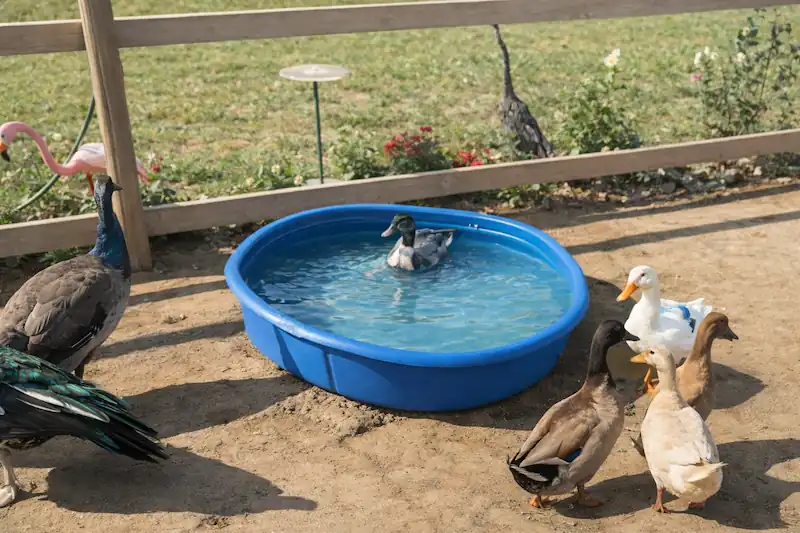
Instead of digging a proper pond, you just:
- Place it on the ground (or slightly bury it)
- Fill it with water
- Let your ducks use it
These types of duck ponds are an excellent choice for beginners or anyone working with a tight budget. They are very affordable and widely available, making them easy to source without much effort. Setup is quick and hassle-free; simply place them in your desired spot and fill them with water. Maintenance is equally simple, as they can be emptied and cleaned without difficulty. Another big advantage is their portability, allowing you to move them around your yard whenever needed.
However, they do come with a few limitations. Their smaller size means they may not provide enough space for multiple ducks to swim comfortably. In addition, they often lack a natural or visually appealing look, which might not blend well with a landscaped garden. Stability can also be an issue, as these lightweight ponds may tip over if they are not placed on a flat, secure surface.
If your ducks are super messy (which they usually are), use a small kiddie pool as their main splash area. It’s much easier to dump and refill, which helps keep your main pond cleaner.
2. Pre-Formed Pond Liners
This is a pre-formed, ready-made pond designed to be installed in the ground. It is made from durable materials like hard plastic or fiberglass and comes in fixed shapes such as round, oval, or kidney, giving a neat and structured look.
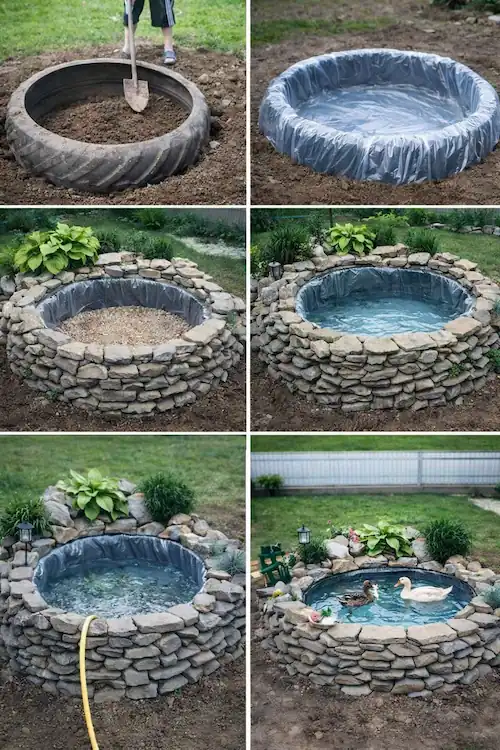
To install it, you need to dig a hole that matches the exact shape and size of the pond shell. Once the hole is prepared, the pre-formed pond is carefully placed inside, creating a neat and stable water feature. This method ensures a cleaner finish compared to temporary options, making it a popular choice for those who want a more natural-looking and long-lasting backyard pond.
Why they’re good
- Strong and long-lasting
- Easier to install than flexible liners
- Already have a neat, clean shape
Downsides
- Limited in size and design
- Can cost more than simple DIY options
This is a good middle-ground if you want something nicer than a kiddie pool but not too complicated.
3. Flexible Liner Ponds (EPDM or PVC)
This is a fully custom-built pond using a waterproof sheet. This is how it works:
- You dig a hole in any shape you want
- Lay a soft base (sand or fabric)
- Place a flexible rubber/plastic liner inside
- Fill it with water
The liner holds the water in place and stops it from leaking into the soil.
These ponds offer great flexibility, allowing you to create any shape or size to suit your space. They are durable, long-lasting, and often more affordable than expected, making them a practical choice for a custom setup.
However, installation requires more effort and careful planning. Proper digging is essential, and you must ensure the liner is laid smoothly to prevent wrinkles or leaks.
4. Natural or Earthen Ponds
This is the most natural type of pond.
- You dig directly into the ground
- No plastic or liner is used
- The soil itself holds the water
These ponds look the most natural and can even support plants, insects, and wildlife like a mini ecosystem.
But this only works well if your soil has a lot of clay, because clay naturally seals water. Some traditional ponds even use compacted clay to stop leaks.
These ponds offer the most natural and visually appealing look, blending seamlessly into the landscape. Over time, they can even become a low maintenance duck pond, creating a more balanced and easy-to-care-for environment.
However, they only work well in soil with a high clay content, which helps retain water. They are also harder to clean and typically require a larger space to function effectively.
B) Modern & Minimal Duck Pond Ideas
This isn’t a different construction method; it’s more about design style. If you have limited space or prefer a clean look, you can explore small duck pond ideas. These are perfect if you want something functional yet neat and stylish.
- Small, compact ponds
- Simple shapes (square or rectangle)
- Easy to clean and maintain
- Great for urban backyards
C) DIY Duck Pond Projects (Family-Friendly)
This is more about how you build the pond, not a specific type.
- Use simple materials like tubs, liners, or small tanks
- Keep the design safe and stable
- Always supervise kids around water
- Make sure ducks can easily get in and out
This can be a great way to involve the whole family while keeping costs low. Providing a safe duck pond in your backyard complements proper feeding habits, giving your flock a natural environment to forage, swim, and thrive while keeping them healthy.
While feeding your ducks the right treats is important, pairing a balanced diet with a clean duck pond ensures they stay active and healthy, enjoying both nutrition and exercise safely
Step-by-Step Guide to Building a Duck Pond (Simple & Practical)
Building a duck pond might look complicated, but if you follow the steps in order, it becomes much easier. Here’s a clear, no-confusion guide you can follow.
Step 1: Put Safety First
Before you start digging, take a few basic safety precautions:
- Wear gloves and proper footwear
- Be careful when using tools or machinery
- Keep kids and pets away from the work area
- Watch out for underground pipes or cables
Step 2: Mark the Pond Shape
Start by deciding the exact shape and size of your pond.
- Use spray paint, rope, or a garden hose to outline it
- Walk around it and adjust until it looks right
- Make sure it fits well in your available space
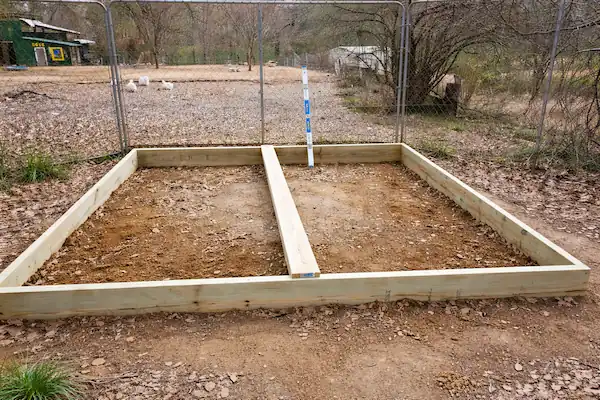
Step 3: Dig the Pond (Excavation)
Now it’s time to dig.
- Start removing soil within your marked area
- Create different depth levels (shelves)
- Shallow areas for ducks to stand
- Deeper areas for swimming
- Keep the sides slightly sloped instead of straight down
Always include gentle entry and exit points. Ducks need easy access in and out of the water to avoid injuries and stress.
Step 4: Add Underlayment (Protection Layer)
Before placing the liner, you need a protective layer. Start by spreading a protective layer of sand, old carpet, or geotextile fabric along the bottom of the pond. Make sure to cover any sharp edges, stones, or exposed roots. This layer acts as a cushion, preventing the pond liner from being punctured over time and extending its durability.
Step 5: Install the Pond Liner
Now comes the main waterproof layer.
- Carefully unfold the liner over the hole
- Gently press it into all corners and shelves
- Smooth out wrinkles as much as possible
- Leave extra liner hanging over the edges
Step 6: Secure the Edges & Add Rocks
Once the liner is in place:
- Fold and secure the edges around the pond
- Use rocks, bricks, or paving stones to hold it down
- Add natural stones inside for a more realistic look
This not only improves appearance but also keeps everything stable.
Step 7: Fill the Pond with Water
Now you can start filling your pond. Fill it slowly, so the liner settles properly. Adjust and smooth the liner as water rises. If you’re using tap water: add a dechlorinator to make it safe for ducks and beneficial bacteria.
Step 8: Set Up Filtration & Aeration
Before adding ducks, prepare the pond system.
- Install a pump or basic filtration system (if using one)
- Add aeration (like a small fountain or air pump)
This helps keep the water cleaner and healthier.
Step 9: Let the Pond Settle (Cycling Phase)
Don’t rush to add ducks immediately. Let the pond sit for a few days or longer if possible. This allows beneficial bacteria to grow and helps stabilize water conditions.
Keeping Your Duck Pond Water Clean
As someone who’s been keeping ducks for years, I can tell you good water quality is everything. Dirty water isn’t just gross, it can make ducks sick (botulism, bumblefoot) and shorten their lives. This is how I maintain my pond to keep it healthy and safe.
Filtration Systems to Keep Debris & Toxins Out
Mechanical Filtration: This removes leaves, feathers, and other floating debris. I use a pond skimmer for surface cleanup, which makes life much easier.
Biological Filtration: Ducks produce a lot of waste. Beneficial bacteria in a biofilter or a submersible pond pump with a filter (like Pondmaster or Aquascape) turn harmful ammonia into safer nitrates. This is key for keeping water safe long-term.
Aeration to Keep the Water Oxygenated
Oxygen isn’t just for fish; your pond bacteria need it too. I use simple methods like:
- A small fountain or waterfall
- An air pump with air stones
This keeps the water lively and healthier for ducks.
Water Changes: How & When
I usually do partial water changes rather than emptying the whole pond. How often depends on:
- Pond size
- Number of ducks
- Filter efficiency
Build your duck pond with drainage by incorporating a gentle slope or a drain plug. This makes cleaning and muck removal much easier.
Natural Biofiltration
I love using duck-safe aquatic plants to naturally filter water:
- Water hyacinth, duckweed, cattails, water lettuce
- They absorb excess nutrients
- Provide shade and shelter for ducks
- Help reduce mosquito problems
Planting a mix of these gives your ducks a little “natural playground” while keeping water cleaner.
Beneficial Bacteria Additives
You can sometimes add bacteria additives to support the pond ecosystem. These help maintain a healthy balance, especially when starting a new pond.
Monitor Water Quality Regularly
You must test your pond water at least once a week for:
- Ph: ideal range keeps ducks comfortable
- Ammonia & Nitrites: high levels are toxic
- Nitrates: safe in moderation
I use a basic pond test kit to check levels. Regular testing is better than guessing. If levels are off:
- Adjust water with partial changes
- Add plants or biofilter support
- Ensure proper aeration
I’ve also consulted vets and pond biologists, and most agree: keeping ammonia near zero and pH stable is the single most important thing for duck health.
Predator Protection & Keeping Ducks Safe
Ducks have lots of potential predators, including foxes, raccoons, coyotes, dogs, hawks, owls and even snapping turtles or large fish in natural ponds. Planning for safety is key to keeping your flock healthy and stress-free.
To protect them, make sure your pond area is secure with fencing that’s buried to prevent digging and tall enough to stop climbing. Overhead netting helps keep birds of prey away, and adding ramps or shallow edges gives ducks easy escape routes. Dense plants or small shelters around the pond provide safe hiding spots and reduce stress.
At night, confine ducks to a secure coop or run. Motion-activated lights or alarms can add extra protection, but simple fencing and cover often work best. Even small gaps in fencing can be dangerous, so thorough planning and observation make all the difference.