Have you ever spotted a few big, fuzzy bees quietly flying in and out of a small hole in the garden, under a shed, or even inside a bird box and felt unsure about what you were seeing? I remember noticing this for the first time myself and feeling curious, slightly cautious, and full of questions. Like many people, I initially wondered if it was something dangerous.
Over time, by simply watching their calm movement and behavior, it became clear that these were bumblebees going about their daily routine. What looks alarming at first is usually just a bumblebee nest, a temporary and harmless home for some of our most helpful pollinators. These nests are often misunderstood and disturbed simply because people do not know what they are.
A Bumblebee Nest’s Lifecycle
When I first started paying attention to a bumblebee nest, I realized it follows a simple but fascinating yearly rhythm. From a quiet beginning to a natural ending, every stage has a purpose, and nothing lasts longer than it needs to.
Spring: The Queen Starts It All
After spending winter tucked away in hibernation, a queen bumblebee wakes up as the weather warms. I’ve often noticed her flying low to the ground, stopping at flowers for nectar and pollen while searching for the perfect nesting spot. Once she finds a safe place, she lays her first eggs and begins the colony completely on her own.
Late Spring to Summer: The Nest Comes Alive
Before long, the first worker bees emerge. I like to think of this as the busy phase. The workers take over food collection, nest cleaning, and caring for the young, while the queen stays inside laying eggs. The nest slowly grows, activity increases, and the colony reaches its peak during summer.
Late Summer: Preparing for The Future
As summer winds down, the nest shifts focus. New queens and male bees are produced, and mating flights begin. This is nature’s way of making sure the next generation is ready to continue the cycle.
Autumn: A Quiet Ending
By autumn, the original queen and workers naturally die off. The newly mated queens leave to find safe places to hibernate through winter. The nest becomes inactive and is eventually abandoned.
One thing I always remind people is that bumblebee nests are temporary. They only last for one season and usually disappear on their own by late autumn. In most cases, the best thing to do is simply leave them alone and let nature take its course.
Where Bumblebees Build Their Nests
If you look closely in your garden or outdoor spaces, you’ll see that bumblebees are resourceful nesters. They turn all kinds of quiet, hidden places into homes as long as it feels safe and sheltered.
Below Ground Is Their Favourite
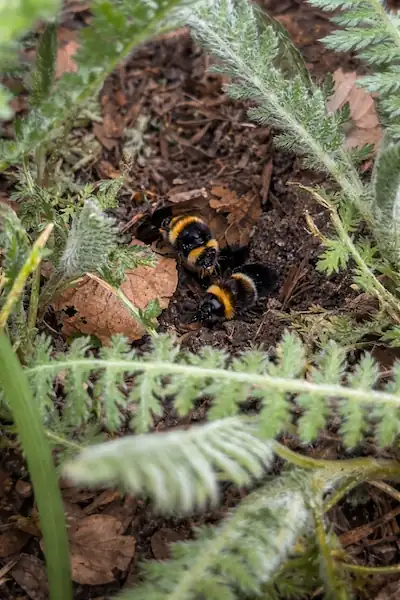
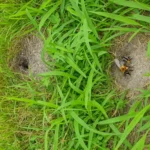
Most of the nests I’ve come across were underground. Bumblebees often reuse old mouse or vole tunnels, which are already dry and well hidden. I’ve also spotted nests tucked under sheds, near compost heaps, and even buried in thick clumps of grass. You’ll usually notice bees popping in and out of a small hole in the soil.
At Ground Level, But Well Hidden
Sometimes nests sit right on the surface, but you’d never know unless you watched closely. I’ve seen bumblebees nesting in dense grass, mossy corners, piles of leaves, and compost bins. These spots stay warm and protected, which is exactly what they need.
Inside Small Spaces and Cavities
Bumblebees also make use of ready-made spaces. Old bird boxes, gaps in walls, cracks near foundations, and quiet sheds or garages can all become nesting sites. Anywhere dark, dry, and undisturbed can look perfect to a searching queen.
What really matters to them is simple. They want shelter from rain and wind, protection from predators, and flowers close by for food. Soft materials like grass, moss, or even old insulation help keep the nest warm.
When people see a large group of bees clustered together, they often assume it’s a nest. In reality, this is usually bees’ swarming behavior, which happens mainly in honey bees when a colony is splitting and relocating.
To support bumblebees, leave some parts of your garden a little wild. Create log piles, keep sections of compost heaps undisturbed, and avoid clearing old burrows. These actions give young queens safe winter hibernation spots and help them restart their colonies each spring.
How to Tell If You’ve Found a Bumblebee Nest
If you spot bees going in and out of a spot in your garden, the first question is usually simple: What kind of bees are these? I’ve been there myself. Once you know what to look for, bumblebee nests are actually quite easy to recognize.
Bumblebees Vs Wasps or Hornets
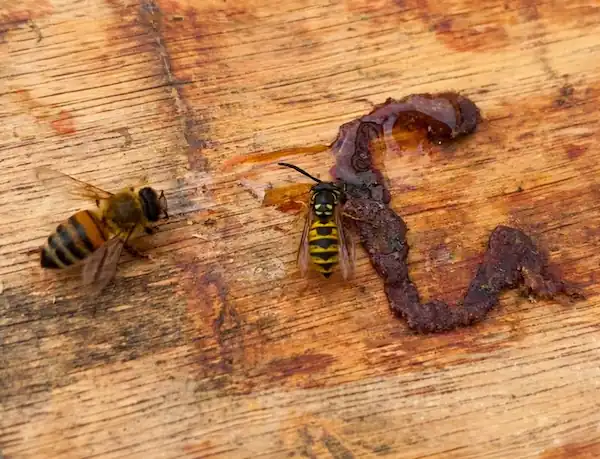
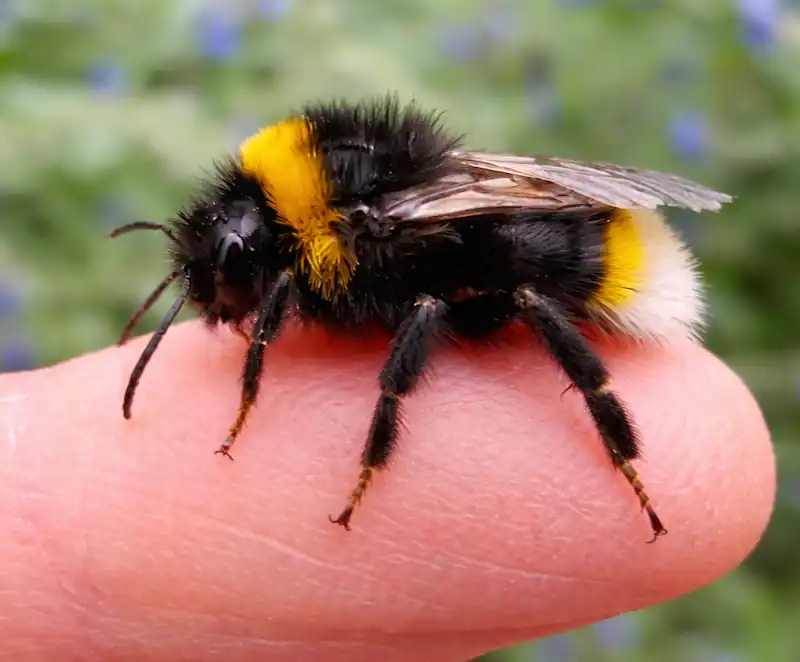
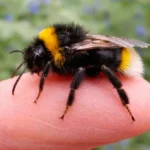
Bumblebees look chunky and fluffy, with soft black and yellow bands, sometimes mixed with orange or white. Wasps and hornets are slimmer, smoother, and look shinier than fuzzy.
Their movement gives them away, too. Bumblebees fly slowly and calmly, almost like they’re taking their time. Wasps and hornets are quick, sharp, and often hover or dart around.
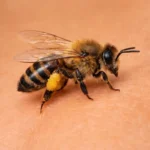
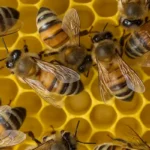
Honeybee on the left, wasp on the right, an easy visual comparison.
You’ll also hear the difference. Bumblebees make a deep, low hum, while wasps sound higher-pitched and more aggressive.
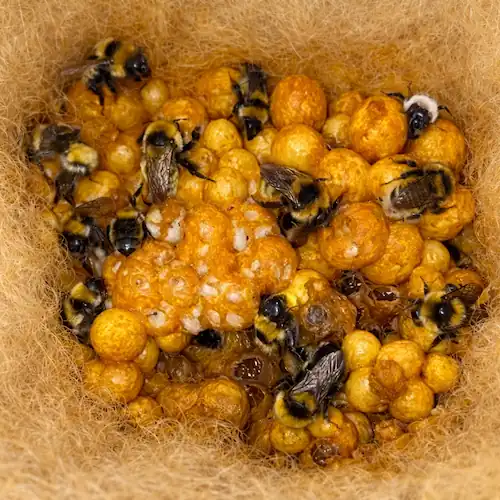
If you ever see a neat, papery nest, that’s not bumblebees. Bumblebees use natural stuff like grass, moss, or old insulation and keep things pretty messy.
Bumblebee nests are often confused with ground bees because both appear as small holes in the soil. Correct identification is important before deciding on the removal of ground bees.
Bumblebees Vs Honeybees
Honeybees are smaller and less fluffy. Their stripes look more brown or amber than bright yellow.
They also live very differently. Honeybees build large, organised wax combs, usually inside trees or managed hives. Bumblebee nests are smaller, untidy, and often hidden.
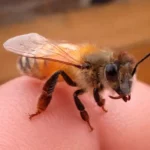
A close-up view of a bumblebee at Carter Farmstead
Most of the time, all you’ll see is a small hole in the ground, a gap in a wall, or an opening in thick grass. Sometimes there’s a little pile of loose soil or debris around the entrance.
On warm days, you’ll notice bees coming and going more often. As the nest grows, the traffic picks up.
What always stands out to me is their behavior. Bumblebees are focused on their job. They fly in and out without much fuss and usually ignore anyone nearby unless the nest is disturbed.
If you’re unsure, the best thing to do is watch from a safe distance. I always keep a few steps back and just observe. With a little patience, bumblebees usually make it very clear who they are.
What to Do If You Find a Bumblebee Nest
Finding a bumblebee nest can feel a bit surprising at first, but in most cases, it’s not a problem at all. When I come across one, the first thing I do is slow down and watch from a distance. Standing a few steps back keeps both me and the bees calm.
Before doing anything else, I always make sure it really is a bumblebee nest. Wasps and hornets behave very differently, so taking a little time to identify the insects properly helps out. I also look at where the nest is and how active it seems. Is it tucked away somewhere quiet, or right in the middle of daily foot traffic?
If The Nest Is in a Quiet, Safe Spot
If it’s under a bush, deep in a compost heap, or in an unused corner of the garden, the best option is simple: leave it alone. I usually see this as a good sign. These nests are temporary, and the bees will move on their own later in the year. Just avoid disturbing the area and let them get on with their work.
If The Nest Is Near a Path or A Busy Area
When a nest is close to a doorway or garden path, a little planning helps. I like to mark the area with a stick, a small fence, or even some tape so no one walks too close by accident. Letting family members or visitors know what’s there also prevents panic. If possible, changing your walking route for a few weeks can make things much easier for everyone.
If The Nest Is in a Shed or Garage
This one needs a bit of thought. I check whether the bees can be kept out of the main living space while still allowing them to go outside freely. In many cases, the nest won’t last long enough to cause real trouble, so patience is often the best solution.
Understanding bumblebee nests becomes easier when you know about the lifecycle of different species of bees. Honey bees, bumblebees, and solitary bees all have very different life cycles and nesting habits.
If The Nest Is in a Bird Box or a Pet House
I’ve seen bumblebees take over bird boxes more than once. If it’s late spring or summer, it’s best to wait until the season ends. Once the bees have left in late autumn or winter, the box can be cleaned before birds return. For pet houses, finding a temporary alternative for your pet is usually the easiest fix.
In most situations, doing less is actually doing the right thing. Bumblebee nests don’t last forever, and with a bit of awareness and calm observation, it’s usually easy to live alongside them until they naturally disappear.
Living Peacefully with a Bumblebee Nest
Once you realize a bumblebee nest isn’t a threat, living alongside one is usually very easy. I always start by giving the nest some space. Keeping at least a few feet back makes a big difference, both for safety and for keeping the bees calm.
If there are children or pets around, it helps to gently teach them to avoid that area. You should also try not to make sudden movements or cause strong vibrations near the entrance, especially when mowing or moving things nearby. Small changes like this go a long way.
One thing you should never do, and always warn others about, is using pesticides. Sprays and chemicals don’t just harm the nest; they also damage the wider environment. Bees are essential pollinators, and even small amounts of chemicals can have serious effects.
Bumblebees are naturally quite relaxed. They’re not out to sting people and usually only react if the nest is directly threatened. Most of the time, they’re busy collecting food or caring for the colony and will completely ignore you if you leave them alone. If you want to learn more, check out our guides on which bees sting and why bees sting for a deeper understanding of bee behavior and safety.
I once had a bumblebee nest under a shed where I kept garden tools. At first, I worried it would cause problems, but I simply gave them space. Over time, I barely noticed them, and by autumn, the activity faded away. That experience showed how easy coexistence can be when you let nature take its course. Bumblebees only sting when they’re disturbed.
When to Get Professional Help and Who to Contact
In most cases, a bumblebee nest doesn’t need any outside help. I always remind people that these nests are temporary. They usually disappear on their own by the end of the season. Still, there are a few situations where calling a professional might make sense.
You may need help if the nest is in a place that truly can’t be avoided. For example, right in a doorway that’s used all the time or inside a child’s bedroom. Another reason is if someone in the household has a serious bee allergy. If there’s no safe way to keep a distance from the nest, professional help may be necessary. These situations are rare, but safety always comes first.
If you do need help, it’s important to contact the right kind of service. I always suggest looking for humane bee removal or relocation specialists. Avoid regular pest control companies. Good specialists focus on moving the bees safely rather than killing them. Before booking anyone, it helps to ask how they handle bees. Also, check whether they avoid pesticides.
A proper professional will first assess the situation and explain the options clearly. If relocation is possible, they’ll try to do it in a way that protects the bees. They can also advise you on how to prevent bees from nesting there again.
Most of the time, patience and a little understanding are all that’s needed. But when a nest really does pose a serious problem, choosing a humane, informed professional makes all the difference.
Supporting Bumblebees, Simple Ways to Help Them Thrive
Once you start noticing bumblebees around you, it’s hard not to want to help them. I see them as quiet workers doing an important job, and the truth is, they really do need our support. Bumblebees pollinate many of the foods we eat and the wild plants we rely on, and without them, ecosystems struggle. Sadly, many bumblebee species are declining, which makes small actions at home even more meaningful.
Creating Places for Bumblebees to Nest
One of the easiest things I’ve learned is not to keep the garden too tidy. Bumblebees love undisturbed areas. Leaving a few messy corners, some leaf litter, or an old compost heap can give queens the shelter they need. I also avoid filling in old rodent holes, as these often turn into perfect nesting spots. Some people like to use bumblebee nesting boxes, which can help if they’re designed and placed properly, but natural spaces usually work just as well.
Making Food Easy to Find
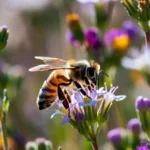
Flowers are just as important as shelter. I try to plant a mix of pollinator-friendly plants so something is always in bloom from spring to late summer. Native flowers are especially useful because bumblebees recognize and rely on them. I never use pesticides in the garden, and I leave out a shallow dish of water so bees can drink safely.
If you’re not sure what to plant, native plant finder tools can help you choose flowers that work best in your area and support local pollinators.
Getting Involved in Conservation
There are also easy ways to help beyond your garden. I enjoy using citizen science apps that let you record bumblebee sightings. These reports help researchers track populations and protect struggling species. Supporting local and national bumblebee conservation groups is another great step. They share practical advice, seasonal tips, and updates on how bumblebees are doing in the wild.
If you ever think you’ve found a rare or endangered bumblebee, reporting it to a conservation organization can genuinely make a difference. Sometimes simply paying attention is the first step in protecting them.
David Carter, founder of Farmstead Guide, has over 20 years of hands-on homesteading experience. From raising poultry to practicing sustainable farming, he shares practical tips and insights to help others live a more self-sufficient lifestyle.