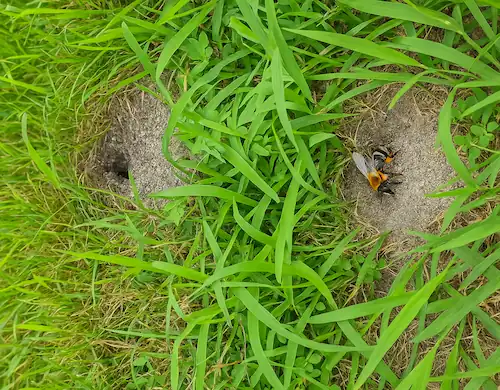
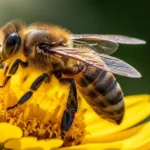
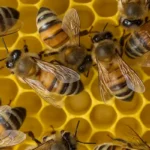
If you spot small holes scattered across your lawn and notice bees flying in and out of them, you may be seeing ground-nesting bees. These bees are most common in spring and summer and often nest in bare or sparsely vegetated, well-drained soil.
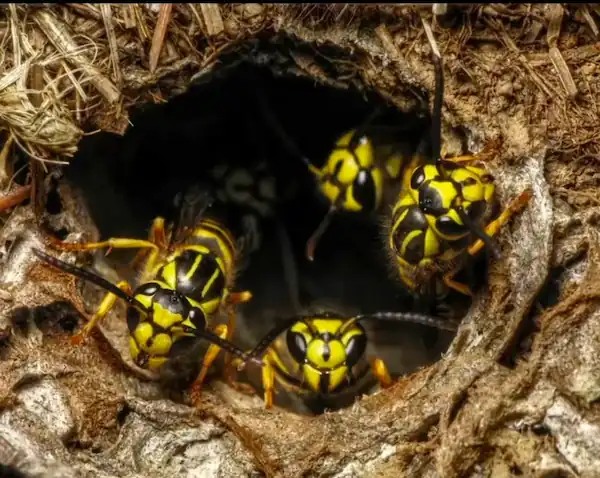
Before trying to remove them, it’s important to make sure they’re actually bees, since yellowjackets and other ground-nesting wasps can also emerge from holes in lawns.
What are Ground Bees
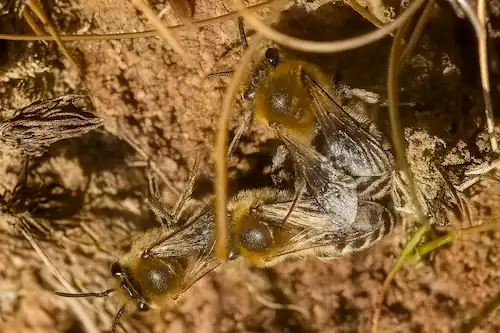
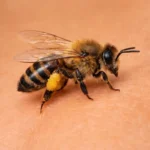
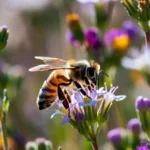
Unlike honeybees or wasps that live in big colonies, ground bees are usually solitary, meaning each female builds her own tiny nest instead of living with hundreds of others. These bees love dry and sunny areas with loose soil. You’ll often find their burrows in bare patches of your yard or garden. While they live alone, many of them might choose the same area to dig, which can make it look like an infestation.
Ground-nesting bees are generally peaceful pollinators. However, some species can sting and become a real nuisance. If you’re facing them, you’re likely wondering how to get rid of them. This is where most people get stuck, doing either too much or not enough. In this guide, we have discussed everything you need to know about removing ground bees safely and effectively.
Thinking about keeping bees? Learn everything you need to know in our guide on starting beekeeping.
Is It Really a Ground Bee?
Not every bee flying close to the ground is a ground bee. Sometimes, they might be yellowjackets or wasps. Knowing the difference helps you take the right steps and avoid panicking or harming harmless pollinators. Let’s break down how to identify them easily.
Feature
Ground-nesting bees
Yellowjackets
Body
Often fuzzy/hairy
Smooth and shiny
Behavior
Usually less defensive
Can become aggressive
Nest
Individual holes or small clusters
Often a concentrated nest entrance
Activity
Bees entering/exiting individually
Multiple wasps may rapidly enter/exit
Risk
Usually low unless handled
Can be significant if nest is disturbed
1. Ground Bees
Usually solitary or live in small colonies.
Gentle and non-aggressive unless provoked.
Often appear fuzzy and resemble small honeybees.
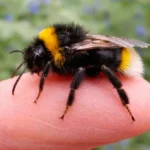
Common types: Bumblebees, Mining bees, Sweat bees.
You can spot ground bees by watching their nesting behavior. They dig tiny holes in the ground, often with a little pile of soil like a mini volcano at the entrance. You’ll see one bee going in and out of a single hole. They don’t share their burrows with others.
2. Yellowjackets (Ground Wasps)
Highly aggressive and will attack in groups if disturbed.
Before taking any action, make sure you’re actually dealing with ground-nesting bees. Many are solitary and generally don’t defend their nests aggressively, but disturbing any nest can still result in stings.
Don’t dig into or disturb active nests.
Keep children and pets away from areas with active bee activity.
Avoid walking or mowing directly over active nesting areas.
Don’t handle bees or try to block their nest entrances while they’re active.
If treatment is necessary, wear appropriate protective clothing and follow the product’s safety instructions.
If the insects appear aggressive, repeatedly attack when approached, or you’re unsure whether they’re bees or yellowjackets, don’t disturb the nest. Keep people and pets away and consider contacting a pest-control professional.
Natural Ways to Remove Ground Bees from Your Lawn
Natural removal methods are not about killing bees. They’re about encouraging them to relocate peacefully. After all, ground bees are important pollinators that play a big role in keeping your garden thriving.
Method 1: Soaking the Soil with Water
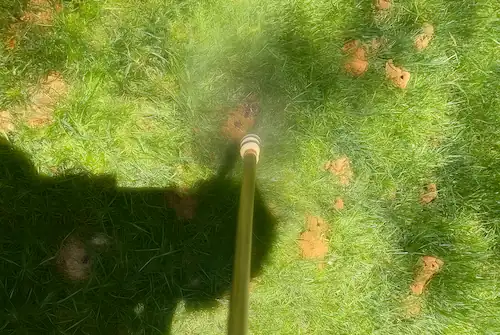
One of the easiest and most natural ways to get rid of ground bees is by using water. Ground bees prefer dry, sandy soil because it makes digging and nesting easier. Rather than presenting water as a proven removal method, say that changing lawn conditions may make the area less attractive for future nesting, but don’t promise that repeated watering will remove an established nest.
To try this method, grab a garden hose or a water sprayer and soak the soil where you’ve spotted bee holes. Do this slowly and thoroughly once or twice a day for several days. The goal is to keep the soil damp long enough for the bees to realize it’s not a good nesting spot anymore.
Try this method early in the season when bees are just starting to build their nests. It’s far more effective before the colony grows.
Method 2: Dish Soap and Water Solution
If you’re looking for a slightly stronger method, a dish soap and water mix can do the job. The soap helps break down the bees’ waxy coating, making it uncomfortable for them to stay in their nests.
To prepare this, mix about two to three tablespoons of liquid dish soap with 1-gallon of water. Once you’ve made the mixture, pour it directly into the bee holes during the evening hours.
This method is simple, affordable, and uses household items most people already have. However, it’s best to use it carefully. It can kill ground bees instantly if sprayed directly on them. The soap solution should only be poured into the nest holes rather than sprayed widely, as it can also affect other helpful insects in your garden.
Method 3: Changing the Ground Surface
Another long-term way to manage ground bees naturally is by changing the look and texture of the soil. These bees love open, bare, and dry ground, so when you change the surface, you make it less appealing for them to dig burrows.
What do we usually do? We start by raking the area where the bees have built their nests. This disturbs their tunnels and makes it harder for them to return. After that, we cover the area with mulch, gravel, or landscape fabric. These materials make it nearly impossible for bees to dig new nests.
This method might take a little physical effort, but it’s eco-friendly and prevents future infestations without using any chemicals. It won’t instantly remove the bees already living there, but once they leave, they’re unlikely to come back.
Be patient when using natural or DIY approaches. These methods take time, but they’re much safer for your yard, your pets, and the environment than chemical sprays.
Method 4: Reduce Suitable Nesting Areas
If ground bees are nesting in an area where you don’t want them, make the spot less suitable for future nesting. Ground-nesting bees often use bare or sparsely vegetated soil, so covering unnecessary bare patches with healthy turf, appropriate ground cover, mulch, or other landscaping can discourage new nests.
Avoid disturbing active nests just to remove them. Instead, wait until the bees have finished nesting, then improve the ground cover in that area. This is a better long-term approach than relying on plants or strong-smelling substances to repel bees.
Method 5: Using Diatomaceous Earth
Diatomaceous earth can be used as a physical insect-control dust, but it isn’t selective and can affect beneficial insects that come into contact with it. Because many ground-nesting bees are valuable pollinators, we don’t recommend spreading DE throughout your lawn, garden, or flowering areas simply to remove them.
If targeted treatment is necessary, use food-grade diatomaceous earth rather than pool-grade DE and apply it only where appropriate. Avoid breathing the dust and follow the product’s safety instructions during application.
If you’re looking for DE for appropriate pest-control or gardening uses, this food-grade diatomaceous earth (Check on Amazon) is a convenient option. It’s made from natural freshwater diatomaceous earth, contains no added fillers or chemicals, and is OMRI listed for organic use. The important thing is to choose food-grade DE, not pool-grade DE, and use it according to the product’s directions rather than treating active bee nests indiscriminately.
Strong Methods to Kill or Get Rid of Ground Bees
Before trying to kill or relocate ground bees, first consider whether they actually need to be removed. Many ground-nesting bees are solitary and are generally not aggressive unless their nests are disturbed. They also play an important role as pollinators.
If the bees are nesting in an unused part of your yard and aren’t bothering anyone, the simplest option may be to leave them alone. Their activity is often seasonal, and they may naturally disappear once the nesting period ends.
However, removal may make sense if the nests are close to a doorway, play area, pet area, or another high-traffic part of your yard. And if you’re seeing aggressive insects repeatedly entering and leaving the same hole, don’t assume they’re bees. Ground-nesting yellowjackets can look similar from a distance and should be handled much more cautiously.
If you’ve confirmed that removal is necessary, start with the least disruptive approach and only consider insecticides when other options aren’t suitable.
1. Using Insecticide Dust
If natural methods don’t do the trick and the bees keep coming back, insecticide dust can be a stronger option. Professionals often recommend products like Drione Dust or Sevin Dust because they’re designed to reach deep inside the burrows where the bees live.
To use this method, you’ll need a bulb duster, which is a small tool that lets you puff the dust directly into the nest entrance. Just a few gentle puffs are usually enough. The dust sticks to the bees as they move in and out, spreading it throughout the nest and eventually wiping out the colony.
While this method is effective, it’s best used only when the infestation is large or poses a real problem, since insecticides can affect other beneficial insects, too. It also works as an instant killer for ground bees.
Check out this proven instant killer for ground bees, effective both indoors and outdoors. We tested Bonide Revenge Spider & Ground Bee Killer (Check on Amazon) and liked how simple it was to use. Its built-in puffer lets us apply the dust directly where ground bees are active without mixing or using a separate sprayer. It’s a convenient option for targeted treatment, especially when you need something stronger than natural methods.
However, it contains permethrin, so we recommend using it carefully and following the label instructions. Overall, it’s a practical ready-to-use option for ground bee control.
2. Boiling Water Method
Boiling water is another common DIY method for dealing with ground bees, but we don’t recommend using it. It can kill beneficial bees and damage the grass or plants around the nest, while also creating an unnecessary burn risk. Since there are safer ways to manage ground-nesting bees, pouring boiling water into their burrows isn’t worth the risk.
3. Wasp and Bee Foam
Wasp and Bee Foam is a quick way to get rid of ground bees. When sprayed directly into the nest entrance, the foam expands, trapping and killing the bees inside. It works best at night or early morning when they’re less active. While it’s very effective, it should be used only as a last resort since it’s not an eco-friendly option. It kills the bees rather than encouraging them to leave.
When It’s Time to Call a Professional
Sometimes, no matter how hard you try, ground bees can be too much to handle on your own. That’s when calling in a professional pest control expert is the safest and smartest move. Other reasons that call for a Pro are as follows.
If someone in your home has a serious bee allergy, don’t take any chances, as one sting could be dangerous. You should also call a pro if you’re not sure what kind of insects you’re dealing with. Ground bees are usually gentle, but they can easily be mistaken for yellow jackets or hornets, which are way more aggressive.
When there are too many nests to control, or if the bees keep coming back every spring, that’s another sign you might need expert help. And if they’ve made nests in hard-to-reach places like near wiring, decks, or walls, it’s better to let professionals handle it safely.
What Professionals Do
A licensed pest control expert or local beekeeper will first inspect the area to figure out exactly what species you’re dealing with. They’ll explain the situation, discuss safe removal options, and offer the best long-term plan to keep bees from returning.
Many professionals now provide eco-friendly or humane relocation services, which means the bees are moved instead of being harmed.
If you prefer a safe and humane approach, you can learn how to relocate bees by checking out our guide on moving beehives.
Methods You Should Avoid
While it might be tempting to use quick, harsh methods you see online, some of them are actually very dangerous for you, your yard, and the environment.
Don’t Use Gasoline
Never use gasoline, diesel, or any other flammable liquid to remove ground bees. Although some might recommend using gasoline, but I’ll say why opt for this method when we already have a lot of different options discussed.
Pouring fuel into the ground might sound effective, but it contaminates the soil, kills your grass, and pollutes the groundwater. It’s also a serious fire hazard that can turn your yard into a disaster zone.
Don’t Burn the Nests
Also, don’t try to burn the nests. Some people have shared stories of setting their lawns on fire by accident. It’s simply not worth the risk.
Preventing Ground Bees from Nesting in Your Yard
Once you’ve managed to get rid of ground bees, the best thing you can do is make sure they don’t come back. A few small changes in how you care for your yard can go a long way in keeping them away for good.
Improve Your Soil and Drainage
As discussed earlier, ground bees love dry, compact soil. It’s perfect for digging little burrows. You can make your yard less attractive to them by aerating your lawn once or twice a year. This loosens up the soil and helps it stay healthy.
Also, check for any dry patches or poor drainage areas. Ground bees prefer dry ground, so fixing those spots and keeping the soil slightly moist can make them look elsewhere for nesting.
Cover Bare Spots with Mulch or Plants
If you’ve got open patches of soil in your yard, that’s like an open invitation for ground bees to move in. Cover these areas with 2–3 inches of mulch, wood chips, or gravel. Not only does it make your garden look nice, but it also makes digging difficult for bees.
You can also plant dense ground cover or turf grass in bare areas. Plants like creeping thyme, clover, or low-growing perennials are great options that add greenery while discouraging nests.
Keep an Eye on Your Yard
Do a quick yard check every now and then, especially in spring, when bees start looking for nesting sites. If you see small holes or mounds, keep an eye on them to make sure they aren’t active. Once you’re sure the bees have left, usually by late summer, fill in the holes to stop them from returning next year.
David Carter, founder of Farmstead Guide, has over 20 years of hands-on homesteading experience. From raising poultry to practicing sustainable farming, he shares practical tips and insights to help others live a more self-sufficient lifestyle.