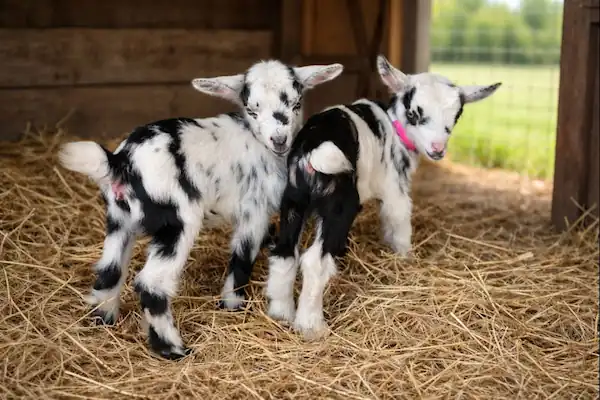
Nigerian Dwarf Goats come from West Africa, where small, hardy goats were originally kept for milk and meat. They were brought to the United States, and breeders worked to make them friendly, small, and excellent milk producers. Over time, they became a favorite among hobby farmers, families, and anyone looking for a cute, manageable goat.
Breed Traits and Standards
Size & Build
Does (females): 17–19 inches tall, 75–100 lbs.
Bucks (males): 19–21 inches tall, similar weight.
Body Type: Well-proportioned, dairy-style goats, compact but strong.
Coat Colors & Patterns
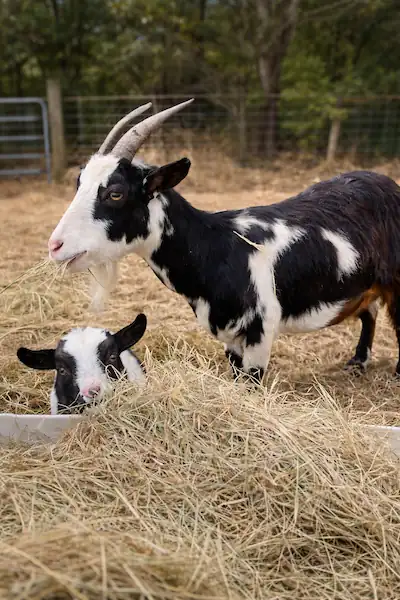
One of the most striking features of Nigerian Dwarfs is their coat variety. These goats come in an almost endless range of colors and patterns, including black, brown, gold, white, spotted, roan, and combinations of these. Each goat has a unique appearance, which makes them especially fun for enthusiasts who enjoy collecting or showing them.
Horns & Face
Most Nigerian Dwarf Goats are naturally horned, though many owners choose to disbud them while they are young for safety reasons. Their facial profile can be either straight or slightly dished, giving them a gentle and approachable look.
Personality & Temperament
Smart, playful, and affectionate.
Usually good with kids and other animals.
Each goat has its own quirks, so spend time with them early to build trust and friendliness.
Lifespan
Nigerian dwarf goats usually live about 10 to 15 years, and with really good care, some can even reach 16–18 years.
Their lifespan depends a lot on how they’re raised and cared for. Goats that get proper nutrition, regular hoof trimming, parasite control, vaccinations, clean shelter, and companionship tend to live much longer and healthier lives.
Nigerian Dwarf Goats vs. Pygmy Goats
In reality, Nigerian Dwarf Goats and Pygmy Goats are two completely different breeds. They happen to look a bit similar, which is where all the confusion comes from.
This mix-up usually happens because both breeds come from West Africa and are small in size. But when it comes to care, purpose, and even body shape, they’re not the same. Using the right name matters a lot, especially if you’re buying goats, planning to breed them or raising them for milk or shows.
Quick Comparison of Pygmy vs. Nigerian Dwarf Goats
Feature
Pygmy Goat
Nigerian Dwarf Goat
Origin
West Africa
West Africa
Main Purpose
Pets, show, formerly meat
Milk, pets, show
Body Type
Short, wide, stocky
Slimmer, longer, dairy-type
Adult Height
Bucks: 16–23 in Does: 16–22 in
Bucks: 19–23.5 in Does: 17–22.5 in
Adult Weight
Bucks: 50–75 lb Does: 40–60 lb
Bucks: 70–80 lb Does: 50–70 lb
Face Shape
Straight to slightly curved
Straight to slightly curved
Milk Production
Low, rarely milked
Higher, high butterfat
Temperament
Playful, energetic, hardy
Gentle, calm, friendly
Which One Is Right for You?
Choosing between a Pygmy goat and a Nigerian Dwarf depends on what you want.
If you’re mostly looking for a pet or a fun companion, Pygmy goats are a great choice. They’re sturdy, playful and full of personality.
If your goal is fresh milk for your family, a Nigerian Dwarf goat makes more sense. They produce a surprising amount of rich milk for their size and are usually calmer.
Also consider your space, local climate, and personal preferences. Both breeds are small and manageable, but their needs can still differ slightly. Knowing exactly which breed you’re getting helps you provide better care and avoid surprises later.
For a comprehensive overview of goats, including their breeds, behavior, and lesser-known facts, see our article on goats and their behaviors.
Planning Before You Bring Goats Home
Before you fall in love with those cute little faces, it’s important to stop and ask yourself one big question: Are Nigerian dwarf goats actually right for you? They’re fun and adorable, but they’re also a real commitment. You have to plan for the following things before bringing any of them to your home.
Time, Space, and Daily Care
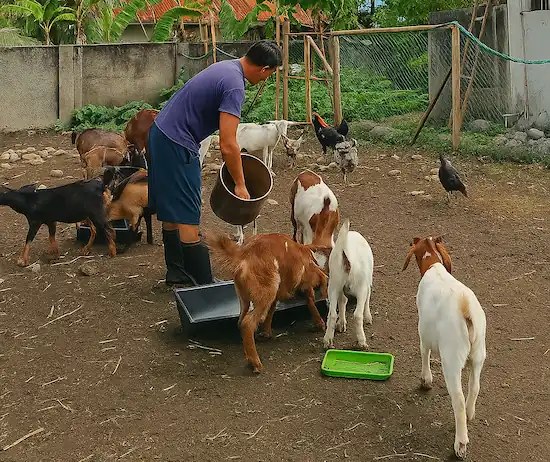
Nigerian dwarf goats don’t take care of themselves. You’ll need time every day for feeding, cleaning, checking their health, and just hanging out with them. They love attention and interaction.
You’ll also need enough space. Each goat needs room to move, play, and graze, whether that’s pasture or a dry lot. And here’s a big one: never keep just one goat. A single goat can become stressed, depressed, or even sick, so always plan to keep at least two.
Understanding the Real Costs
One of the biggest worries people have is money, so let’s be real about it. Dwarf goats aren’t free once you bring them home.
Upfront costs usually include:
Buying the goats (price depends on age, quality, and breeder)
Building or buying a shelter
Fencing to keep them safe and contained
Feeders, water buckets, and hay racks
First vet visit, vaccinations, and deworming
Basic tools like hoof trimmers and a small first-aid kit
Then there are ongoing costs you’ll pay every month or year:
Hay, grain, and loose minerals
Regular vet care and the occasional emergency
Bedding for their shelter
Supplements if needed
Fence repairs and general upkeep
Knowing these costs ahead of time helps you plan better and avoid surprises. If you’re prepared financially and mentally, owning Nigerian dwarf goats can be incredibly rewarding instead of overwhelming.
Nigerian Dwarf Goats Care
If there’s one thing I’ve learned from working with goats, it’s this: a good shelter and strong fencing make life easier for both you and your goats. Dwarf goats may be small, but they still need solid protection from weather and predators to stay healthy and stress-free.
Shelter
Your goats’ shelter doesn’t have to be fancy, but it does need to keep them safe. It should protect them from rain, wind, snow, hot sun, and anything that might try to get in at night. Since dwarf goats are smaller, they’re more vulnerable, so shelter really matters.
Plan for about 10–15 square feet per goat inside the shelter. Make sure there’s good airflow to keep the air fresh, but avoid direct drafts, which can cause breathing problems. I always pay attention to ventilation because respiratory issues are common when shelters are stuffy.
For the floor, simple options like straw, wood shavings, or pine pellets work well. Adding a raised sleeping platform is a great idea too. It keeps goats dry, comfortable, and off cold or damp ground.
You can buy a small pre-built shed or build one yourself with basic lumber. A three-sided shelter with the open side facing away from the wind works great for most climates.
Fencing
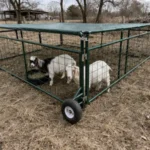
Goats are curious escape artists, and predators are always a risk. Good fencing keeps your goats in and danger out. Dogs, coyotes, and even bobcats can be a threat, so fencing isn’t something to cut corners on.
The best all-around option is woven wire (field fence) with small openings, no bigger than 4×4 inches, so goats don’t get their heads stuck. The fence should be at least 4 feet tall, but 5 feet is even better.
Many goat owners, including myself, also add electric fencing along the inside or top of woven wire. It’s a great deterrent for predators and helps stop goats from testing the fence. Panel fencing works well for small areas or kidding pens.
Strong posts, quality wire, and a reliable charger make all the difference in how long your fence lasts.
Diet & Feeding
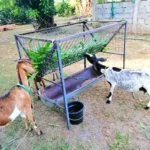
Hay: High-quality grass hay should be their main food
Browse: Leaves, weeds, and branches (only safe plants). Don’t let them eat toxic plants like Oleander and Lantana.
Goats hate being bored. Nigerian dwarf goats especially love to climb, jump, and explore. When goats have things to play on, they’re calmer and less likely to get into trouble.
These provide goats with exercise and mental stimulation, which are just as important as food and shelter. A happy goat is a healthier goat.
Daily Routine Care
A simple daily routine helps you catch problems early and keeps your goats comfortable.
Each day, you’ll:
Refill hay and check mineral levels.
Provide grain if needed.
Refill and clean water buckets.
I also do a quick health check every day. Just take a moment to look at each goat’s eyes, nose, coat, appetite, and behavior. If something seems “off,” it usually is.
Keep the shelter clean by spot-cleaning manure and making sure bedding stays dry. Clean bedding goes a long way toward preventing illness.
David Carter, founder of Farmstead Guide, has over 20 years of hands-on homesteading experience. From raising poultry to practicing sustainable farming, he shares practical tips and insights to help others live a more self-sufficient lifestyle.