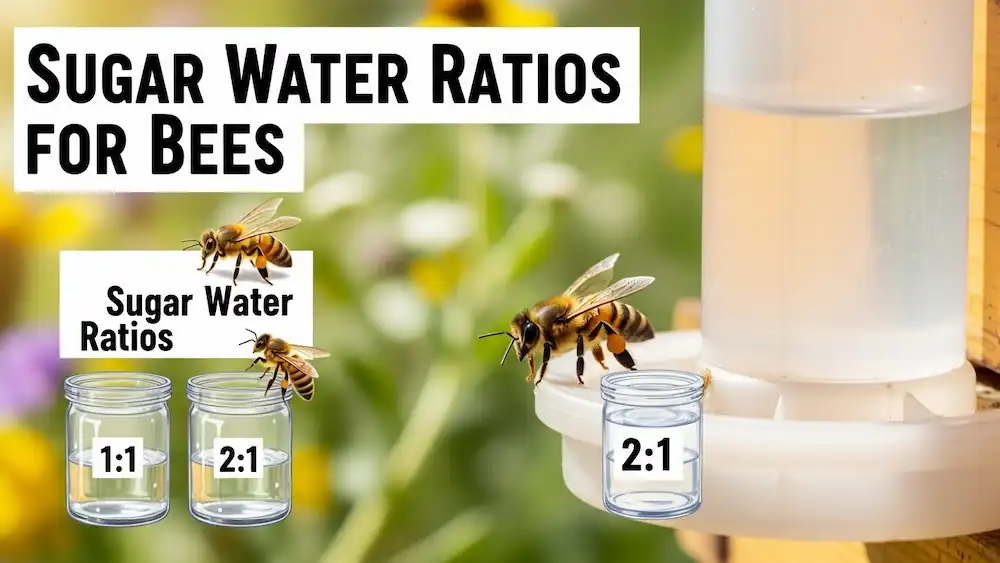
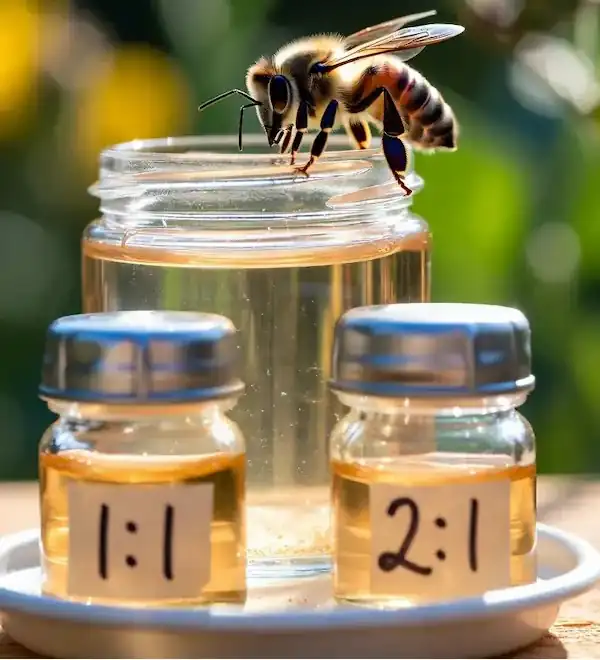
Sugar water can help honey bee colonies when natural nectar is scarce, but the right sugar-to-water ratio depends on what the colony needs at that time of year.
I’ve used both 1:1 and 2:1 sugar syrup when feeding bees, and I’ve found that choosing the right ratio is less about memorizing a recipe and more about understanding what the colony needs. For most beekeepers, these are the two main ratios to know:
1:1 sugar syrup: commonly used for spring buildup, stimulating brood rearing, and helping new packages or nucs get established.
2:1 sugar syrup: commonly used for fall feeding when a colony needs to build or finish its winter food stores.
To make 1:1 syrup, mix equal parts white granulated sugar and water. For 2:1 syrup, mix two parts sugar with one part water. Use clean equipment and feed only when the colony actually needs supplemental food.
Sugar syrup should support a colony when natural forage is limited, not replace nectar and pollen. Feeding at the wrong time can also encourage robbing or result in syrup being stored where you don’t want it.
I’ll break down the ratios I use, when each one makes sense, how to mix them correctly, and the feeding mistakes I make sure to avoid. If you’re new to beekeeping, you can also learn how to start beekeeping before getting into supplemental feeding.
What Is Sugar Water for Bees?
Sugar water for bees is a simple syrup made by dissolving white granulated sugar in clean water. Beekeepers use it as a temporary food source when a honey bee colony does not have enough natural nectar available.
The two most common mixtures are 1:1 and 2:1 sugar syrup. The 1:1 mixture is thinner and is mainly used when you want to encourage feeding and colony buildup. The thicker 2:1 mixture contains more sugar and is better suited to helping bees build up food stores before winter.
Sugar water doesn’t replace everything bees get from natural forage. Nectar provides carbohydrates, while pollen supplies the protein, fats, vitamins, and minerals needed by the colony. Syrup is mainly a carbohydrate source, so it should be treated as supplemental feed rather than a complete diet.
I’ve used both 1:1 and 2:1 sugar syrup when feeding bees, and the right ratio really comes down to what the colony needs at that time of year. Using the correct mixture can make feeding more useful while avoiding unnecessary syrup sitting in the feeder or being stored when the colony doesn’t need it.
Why and When Bees May Need Sugar Water
Healthy, established colonies with plenty of natural forage usually don’t need sugar water. Feeding becomes useful when nectar is scarce or when a colony is trying to build up its food reserves and doesn’t have enough natural forage to keep pace with its needs.
Spring Feeding
Early spring can be a tricky period for honey bees. The weather may be warming up, but flowers aren’t always producing enough nectar yet. A colony coming out of winter also needs plenty of food as brood rearing increases.
A 1:1 syrup can provide an additional carbohydrate source during this period. It can also encourage foraging and support colony buildup when natural nectar is limited.
New Packages and Nucs
Newly installed packages and nucs may need supplemental feeding while they establish themselves. They have to build comb, raise brood, and organize the colony, but their initial food stores may be limited.
Providing 1:1 syrup when natural nectar is inadequate can give them the carbohydrates they need while they get established.
Fall Feeding
Fall feeding has a different purpose. Instead of encouraging rapid colony growth, the goal is generally to help bees build adequate food stores before winter.
This is where 2:1 syrup is commonly used. Its higher sugar concentration means bees have less water to remove before the syrup can be stored and capped.
Periods of Poor Weather or Nectar Shortages
Rain, drought, cold temperatures, or a sudden gap between flowering plants can temporarily reduce nectar availability. If the colony’s food stores are getting low, supplemental syrup can help bridge that gap.
Before feeding, check the colony’s actual food reserves rather than feeding automatically. Sugar syrup is useful when bees need supplemental carbohydrates, but unnecessary feeding can create problems such as robbing and unwanted syrup storage.
When You Should Hold Back
Don’t assume bees need sugar water simply because you have a feeder available. If the colony has plenty of stored honey and natural nectar is coming in steadily, supplemental feeding usually isn’t necessary.
I also avoid treating sugar syrup as a replacement for natural forage. Bees still need access to nectar and pollen whenever possible, and good forage remains the foundation of a healthy colony.What Is Sugar Water for Bees?
Sugar water for bees is a simple syrup made by dissolving white granulated sugar in clean water. Beekeepers use it as a temporary food source when a honey bee colony does not have enough natural nectar available.
The two most common mixtures are 1:1 and 2:1 sugar syrup. The 1:1 mixture is thinner and is mainly used when you want to encourage feeding and colony buildup. The thicker 2:1 mixture contains more sugar and is better suited to helping bees build up food stores before winter.
Sugar water doesn’t replace everything bees get from natural forage. Nectar provides carbohydrates, while pollen supplies the protein, fats, vitamins, and minerals needed by the colony. Syrup is mainly a carbohydrate source, so it should be treated as supplemental feed rather than a complete diet.
I’ve used both 1:1 and 2:1 sugar syrup when feeding bees, and the right ratio really comes down to what the colony needs at that time of year. Using the correct mixture can make feeding more useful while avoiding unnecessary syrup sitting in the feeder or being stored when the colony doesn’t need it.
Which Ratio to Use
Choosing between 1:1 and 2:1 syrup becomes much easier once you stop thinking of them as competing recipes. They serve different purposes. I look at the colony’s condition, the time of year, and whether I’m trying to encourage activity or put more usable food into the hive.
Sugar Syrup Ratio
Best Use
Main Goal
1:1
Spring, new colonies, short-term feeding
Encourage feeding and colony buildup
2:1
Late summer and fall
Build food stores for winter
3:2
Transitional feeding
Middle ground between 1:1 and 2:1
1:1 Ratio: Best for Stimulation and Building Up
1:1 syrup is the lighter option. It contains roughly equal amounts of sugar and water and has a consistency closer to the nectar bees encounter while foraging.
I generally reach for this ratio when I want to support a colony that is actively expanding rather than trying to fill the hive with winter stores. It is particularly useful when weather or limited flowering has temporarily reduced nectar coming into the hive.
The main advantage is that bees can process this thinner syrup relatively quickly. When a colony is already raising brood and has suitable temperatures for normal activity, that additional carbohydrate source can support the increased workload.
I wouldn’t use 1:1 simply because it’s spring, though. The calendar is only part of the decision. If bees are bringing in plenty of nectar from flowering plants, there may be little reason to supplement them.
Choose 1:1 when:
The colony is building up after winter.
A new package or nuc needs supplemental feed.
Natural nectar is temporarily scarce.
You want a lighter syrup for short-term feeding.
The colony needs carbohydrates but isn’t primarily trying to build winter stores.
2:1 Ratio: Best for Building Winter Stores
2:1 syrup contains considerably more sugar and less water than 1:1. That makes it the better choice when the objective changes from encouraging activity to putting concentrated food into the hive.
This is the ratio I prefer for late-season feeding when a colony needs to increase its stores before colder weather arrives. Bees still have to process the syrup, but there is less water for them to remove compared with a thinner mixture.
That matters because winter preparation is about getting usable food stored and capped before the colony becomes restricted by cold weather. You don’t want to be relying on a thin syrup late in the season when bees have less opportunity to evaporate excess water.
Timing matters here. I would rather start assessing winter stores early enough for the bees to process what they receive than wait until cold weather has already reduced their ability to work the feeder.
Choose 2:1 when:
The colony needs additional winter stores.
You’re feeding during late summer or fall.
You want to provide a concentrated carbohydrate source.
There is limited time remaining before colder weather.
The colony has enough population to process and store the syrup.
3:2 Ratio: A Useful Middle Ground
Some beekeepers use a 3:2 ratio when they want something between the lighter 1:1 mixture and the heavier 2:1 syrup.
I see this as an optional middle ground rather than a ratio every beekeeper needs to memorize. There isn’t a requirement to use three different recipes throughout the year. For most backyard beekeepers, understanding when 1:1 and 2:1 make sense is enough to handle the majority of supplemental feeding situations.
A 3:2 mixture can make sense when you’re transitioning between the purposes of the two main syrups or simply prefer its consistency for a particular feeding situation.
How I Decide Which Ratio to Use
When I’m standing in front of a hive with a feeder that needs filling, I don’t start by asking, “Which syrup recipe is popular?”
I start with what am I trying to accomplish?
If the goal is to provide a lighter supplemental feed while the colony is expanding, 1:1 is the logical choice.
If the goal is to help a colony put away concentrated food before winter, 2:1 makes more sense.
If the colony already has adequate stores and natural forage is coming in strongly, I may not feed at all. That’s an important part of choosing the right ratio. The best syrup is sometimes no syrup.
I also consider the weather. A thick syrup is not particularly useful if bees can’t comfortably access and process it because temperatures have already dropped significantly. Likewise, giving a colony large quantities of thin syrup late in the season can leave the bees with more water to remove when time is running short.
A Simple Rule to Remember
If you’re new to beekeeping, don’t overcomplicate the ratios:
1:1 = help the colony build and stay active.
2:1 = help the colony build concentrated food stores.
The ratio is only one part of good feeding practice. The colony’s existing stores, population, weather, natural forage, and time of year all matter. I use the ratio to match the syrup to the job, rather than treating a particular recipe as a year-round feed.
How to Make Sugar Water for Bees
Making sugar water for bees is straightforward, but getting the concentration right matters more than making a complicated recipe. I stick with plain white granulated sugar and clean water and avoid adding ingredients that the colony doesn’t need.
The two mixtures worth knowing are 1:1 and 2:1 sugar syrup. The important thing is to keep the proportions consistent rather than guessing by eye.
What You Need
For a basic batch, you only need:
Plain white granulated sugar
Clean water
A clean container or saucepan
Measuring cups or, preferably, a kitchen scale
A clean spoon or whisk for mixing
Avoid using brown sugar, molasses, raw sugar, or artificial sweeteners. These aren’t suitable substitutes for refined white sugar when preparing supplemental feed for honey bees.
How to Make 1:1 Sugar Syrup
For 1:1 syrup, use equal parts sugar and water. For a small batch, you can use:
1 cup sugar + 1 cup water
2 cups sugar + 2 cups water
1 kg sugar + 1 litre water
For larger batches, I prefer weighing the ingredients because volume measurements can vary depending on how tightly the sugar is packed. To make it:
Add the water to a clean container.
Gradually add the measured sugar.
Stir until the sugar has completely dissolved.
If necessary, use warm water to make dissolving easier.
Allow the syrup to cool completely before putting it into a feeder.
There’s no need to boil the mixture. Excessive heating can cause the sugar to break down and can produce compounds that aren’t desirable for bees.
How to Make 2:1 Sugar Syrup
For 2:1 syrup, use two parts sugar to one part water. For example:
2 cups sugar + 1 cup water
4 cups sugar + 2 cups water
2 kg sugar + 1 litre water
The same basic process applies. Measure the ingredients accurately, combine them, and stir until the sugar has dissolved. Because there is substantially more sugar in this mixture, it can take more stirring to dissolve completely. Warm water can make the job easier, but I avoid bringing the syrup to a boil.
Should You Measure Sugar by Weight or Volume?
For small batches, measuring cups are convenient and usually sufficient. For larger batches, I prefer weight measurements because they give you better consistency from one batch to the next.
There’s also an important detail here: a 1:1 ratio can mean different things depending on whether someone is measuring by weight or by volume. That’s why you shouldn’t mix measurement methods halfway through a recipe.
If you’re following a recipe written by another beekeeper, check whether the stated ratio refers to weight or volume before making the syrup.
Should You Use Hot or Cold Water?
You don’t need hot water to make bee syrup. I usually use warm water when making a larger batch because the sugar dissolves more easily. There’s no benefit to aggressively heating or boiling the mixture.
Once everything has dissolved, let the syrup cool before feeding it to the colony. I don’t pour hot syrup into a feeder.
What Kind of Sugar Should You Use?
Plain, refined white granulated sugar is the simplest choice for homemade bee syrup. Cane and beet sugar are both commonly available as refined white sugar and can be used for this purpose. What matters is using a clean, refined sugar without additional ingredients.
I wouldn’t experiment with molasses, brown sugar, raw sugar, or other sweeteners just to make the syrup more nutritious. Honey bees need more than carbohydrates for a complete diet, but that doesn’t mean the syrup itself needs a long list of additives.
How Much Syrup Should You Make?
Make an amount that your colony can reasonably consume before the syrup begins to deteriorate. A small colony doesn’t need the same quantity as a large, established colony. It’s better to make smaller batches and refill the feeder as needed than to prepare a large quantity that sits around for too long.
Before adding more syrup, check what the bees have already taken. This gives you a better idea of their actual consumption and helps prevent unnecessary waste.
How Long Can You Store Homemade Sugar Syrup?
Freshly prepared syrup should be stored in a clean, sealed container in a cool place if you’re not using it immediately.
Check stored syrup before feeding it. If it has developed an unusual smell, visible mold, fermentation, or other obvious changes, discard it rather than giving it to the bees.
I prefer making smaller quantities when possible. It keeps the process simple and means I’m less likely to end up with old syrup sitting in the refrigerator or on the shelf.
The goal isn’t to create a complicated bee-feeding recipe. Use clean water, refined white sugar, the correct ratio, and fresh syrup. For most beekeepers, those basics are far more important than adding supplements or trying to improve a simple sugar-water mixture.
How to Feed Sugar Water to Bees
Making the syrup is only half the job. How you deliver it to the colony can determine whether feeding goes smoothly or turns into a robbing problem. I prefer to keep feeding contained and controlled, especially when a colony is small or there are other hives nearby.
Feed Inside the Hive When Possible
For routine supplemental feeding, an in-hive feeder is usually my first choice. A frame feeder, division board feeder, or top feeder keeps the syrup close to the colony and reduces the amount of scent escaping into the surrounding area.
This is particularly useful when there is a shortage of natural nectar. Hungry colonies can become defensive around food, and exposed syrup can quickly attract bees from neighboring hives.
Choose the Feeder According to the Situation
There’s no single feeder that works perfectly for every colony.
Frame feeders (Check Price on Amazon) sit where a brood-frame would normally go and allow bees to access syrup from inside the hive. They’re useful for smaller colonies but reduce the available space for comb.
Top feeders (Shop on Amazon) can hold considerably more syrup, making them convenient when a colony needs larger amounts. They also let you replenish feed without disturbing the brood nest as much.
Entrance feeders (Shop on Amazon) are easy to observe and refill, but I use them more cautiously. Because they’re positioned outside the hive, the syrup is much easier for other insects and bees to discover.
For colonies that are vulnerable to robbing, I favor an internal option whenever practical.
Give Bees Easy Access to the Syrup
Bees should never have to swim through the feeder to reach their food. A poorly designed feeder can turn supplemental feeding into a drowning hazard.
Use a feeder with a float, ladder, textured surface, or another escape mechanism that gives bees secure footing. Before putting a new feeder on a colony, I check that bees can climb back out if they slip into the syrup.
This is especially important with homemade or improvised containers. A container that holds syrup perfectly well isn’t necessarily a safe bee feeder.
Start With an Appropriate Amount
Don’t assume that more syrup means better feeding. I would rather give a colony a manageable amount, see how quickly it consumes it, and adjust from there. This prevents large quantities of syrup from sitting in the feeder unnecessarily.
Consumption can vary dramatically between colonies. A strong colony may work through syrup quickly, while a smaller colony may need much less.
Feed During Suitable Conditions
Timing your feeding can make a noticeable difference. When robbing pressure is a concern, feeding later in the day can reduce the amount of time exposed syrup is available to foraging bees. Keep the process quick and avoid spilling syrup around the hive.
Weather matters too. Bees need suitable conditions to move around the hive and process the feed. As temperatures fall, I become more cautious about relying on liquid syrup because the colony’s ability to access and process it changes.
Keep Spills Under Control
Even a small syrup spill can create unnecessary problems. If syrup gets onto the hive, stand, ground, or equipment, clean it up rather than leaving the smell around the apiary. I also keep the feeder itself free from leaks before putting it back into service.
This is one of those small details that is easy to overlook until you suddenly have bees investigating everything around the hive.
Watch What the Colony Does With the Feed
The feeder itself doesn’t tell you whether feeding is working. The colony’s response does. Check whether the bees are taking the syrup, whether their stores are increasing when that is the goal, and whether the colony is showing signs of robbing activity.
If syrup is consistently being ignored, don’t automatically assume the bees need a different recipe. There may already be enough natural forage, the colony may have sufficient stores, or weather conditions may be limiting activity.
Feeding should respond to what the colony needs rather than becoming a routine simply because there’s a feeder available.
Clean the Feeder Between Batches
Old syrup shouldn’t be allowed to build up inside the feeder. Empty any leftover feed, clean the container, and rinse it thoroughly before adding fresh syrup. If syrup smells fermented, looks moldy, or has otherwise deteriorated, discard it.
I treat feeder cleanliness the same way I treat any other equipment that comes into direct contact with bee food. A few extra minutes of cleaning is much easier than dealing with contaminated feed later.
My Basic Feeding Routine
When I need to feed a colony, I keep the process simple:
Check the colony → choose the appropriate syrup → fill a clean feeder → install it securely → watch consumption → refill only when necessary.
The objective isn’t to keep a feeder permanently full. It’s to provide supplemental carbohydrates when the colony actually benefits from them while minimizing robbing, waste, drowning risks, and unnecessary disturbance.
Why You Should Use Sugar Water
Boosting Brood Production in Spring
In early spring, flowers aren’t fully blooming yet, but the colony needs to grow fast. A light sugar syrup acts like a fake nectar flow and signals the queen that it’s time to start laying more eggs. This helps build a strong workforce just in time for the real nectar flow. The goal isn’t to force bees, it’s to give them a gentle push so they’re ready for the busy season ahead.
Helping Bees Store Food for Winter (Fall Feeding)
As fall approaches, bees need to stock up for winter. Thick sugar syrup helps them fill and cap their food stores before cold weather hits. Dense, well-stored food is important because bees rely on it for energy to stay warm and alive when they can’t fly out for forage. Without enough stored food, even a healthy colony can struggle to survive winter.
Supporting New Packages or Nucs
Newly installed bees have a lot of work to do: building comb, raising brood, and settling into their new home. Sugar water gives them steady energy during this stressful phase. Consistent feeding during the first few weeks can make a big difference in how quickly and successfully the colony gets established.
Emergency Feeding During Tough Times
Sometimes nature doesn’t come in your bees’ favor. Long periods of rain, drought or sudden nectar shortages can leave bees short on food. Sugar water can be a lifesaver for weak or struggling colonies, but it’s only a short-term fix. If a hive keeps needing emergency feeding, it’s important to look for the real problem, like disease, pests, or a failing queen.
Installing and Maintaining Feeders
No matter which feeder you choose, a proper setup is all that matters. Make sure entrance feeders fit tightly and don’t leak. Top and frame feeders should be level and secure. To prevent drowning, use feeders with floats, ladders, or textured surfaces so bees can climb out easily.
Clean feeders regularly to prevent mold, bacteria, and fermented syrup, all of which can make bees sick. Warm water with mild soap works well; just rinse thoroughly before refilling.
Preventing Robbing and Pests
Robbing usually looks chaotic, with fast, aggressive flying and fighting at the hive entrance. To reduce the risk, feed bees inside the hive whenever possible, keep entrances small for weaker colonies, and feed during evening hours when fewer bees are active.
Ants and other pests can be managed by raising hives off the ground, using ant moats, and checking feeders often. A little prevention goes a long way in keeping feeding safe and stress-free for your bees.
Avoiding Mistakes and Fixing Common Problems
Feeding sugar water can help your bees, but doing it wrong can cause problems. Avoid the following mistakes while offering sugar water for bees.
Fermented syrup: Sour, foamy, or cloudy syrup can make bees sick; always use fresh syrup.
Incorrect ratios: Too thin syrup won’t help bees store food; too thick is hard for them to consume.
Attracting pests and robbing: Poor feeder placement or dirty feeders can draw ants, wasps, and robbing bees.
Overfeeding: Relying too much on sugar water can reduce natural foraging and affect honey quality.
Chlorinated water: It can harm bee digestion, so always use non-chlorinated water.
Feeding during nectar flow: Never feed during nectar flow. It can contaminate honey intended for harvest.
Proper feeding with sugar water can influence colony health and longevity, helping you understand the average lifespan of bees across different species and roles.
How to Save a Tired Bee with Sugar Water?
Individual bees can become exhausted or dehydrated while foraging. Signs of a tired bee include sluggish movement, inability to fly, or staying in one spot for a long time. In these cases, a quick energy boost can save the bee.
A safe way to help is to place a few drops of 1:1 sugar water or plain sugar water if necessary on a leaf or flower near the bee. The bee can sip the sugar and regain strength to fly back to the hive. Remember, this is only for individual bees and not a solution for colony-level problems.
Natural Forage and Pollen
While sugar water is useful, remember it’s merely a supplement. Natural nectar and pollen remain essential because they provide the full range of nutrients bees need, including proteins, vitamins, and micronutrients. Planting pollinator-friendly flowers and maintaining healthy forage areas helps bees thrive sustainably.
In addition to sugar water, pollen patties can serve as a supplemental protein source when natural pollen is scarce. These supplements support brood rearing and overall colony health, but they should never replace natural forage entirely.
David Carter, founder of Farmstead Guide, has over 20 years of hands-on homesteading experience. From raising poultry to practicing sustainable farming, he shares practical tips and insights to help others live a more self-sufficient lifestyle.