Shelter of Goat
A good shelter is key to keeping your goats safe, healthy, and comfortable. If you’re new to goats, the first thing to do is to prepare a shelter for them. And if you already keep goats, improving your shelter to make it stronger and more reliable is a good step toward better care for your herd. But that can be unclear. That’s why we have put this discussion together.
You’ll learn the essentials of goat shelter design along with easy planning tips, practical DIY building ideas, the best materials to choose, reliable predator protection methods, and smart ways to adapt the shelter for different weather conditions.
Why Goat Shelter Really Matters
A goat shelter isn’t optional; I consider it a must. Goats need a safe place to stay protected and comfortable every day.
A proper shelter keeps goats dry in rain and snow, blocks strong winds, and helps them remain cool in summer while staying warm in winter. This protection goes a long way in keeping them healthy by reducing problems like breathing issues, hoof rot, and stress.
Shelter also plays a big role in safety. It gives your goats a secure place to hide from predators like dogs, coyotes, eagles and other common threats.
Just as important, goats need a clean, dry, draft-free spot to rest, chew their cud, and give birth safely. When your goats are comfortable and healthy, they’re more productive and that protects the time, money, and care you’ve invested in your herd.
Core Goat Shelter Basics
Once you understand why a shelter is important, the next step is knowing what makes a good one. Goats don’t need anything fancy, but they do need the right basics to stay healthy, safe and comfortable.
Enough Space for Happy Goats
Space matters more than most people think. Each goat needs enough room to move, lie down, and stay relaxed. Smaller breeds like dwarf goats need less space, while larger breeds need more.
Knowing more about your goats can help you create a shelter that fits them well. Learning about different goat breeds and their behavior makes it easier to understand how they move, interact, and use their space.
It’s also smart to plan for the future because, as time goes on, herds grow, kids arrive, and herds often get bigger over time.
Fresh Air Without Cold Drafts
Good airflow is just as necessary as solid walls. Proper ventilation helps prevent breathing problems, reduces strong ammonia smells and controls moisture inside the shelter. High vents allow warm and moist air to escape, while lower openings bring in fresh air.
Sleeping areas should stay protected from direct wind. Even in cold weather, airflow is essential as trapped moisture causes more harm than fresh air.
A Dry Shelter Is a Healthy Shelter
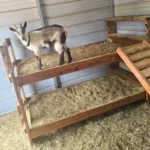
Keeping everything dry should always be a top priority. Damp conditions can lead to hoof rot, parasites and respiratory issues. Choosing a well-drained location helps water drain away from the shelter rather than pooling around it. Raised sleeping platforms or deep bedding systems keep goats off cold, wet ground and add extra comfort.
Strong, Safe, and Goat-Proof Design
Goats love to climb, rub and test everything around them. A good shelter must be sturdy enough to handle their behavior and strong enough to withstand bad weather. Remove sharp edges, exposed nails, splinters and anything toxic. Regular inspections help catch small problems before they turn into injuries.
Safety for Goats and the Builder
Safety doesn’t stop with the goats. When building or repairing a shelter
- use tools carefully
- follow basic construction safety rules
- choose materials that stay safe over time.
A well-built shelter protects your herd every day and saves you stress, time, and money in the long run.
A clean, safe shelter works best when your goats also have the right food. Understanding what goats eat helps ensure their diet keeps them healthy and active.
Planning Before You Build: Set Yourself Up for Success
Before picking up a hammer, take some time to plan; it will save you money, effort, and frustration later. A little thinking upfront makes the entire build smoother and more effective.
Know Your Goats (Now and Later)
Start by looking at your current herd. Think about how many goats you have, their ages and how they use space. Then look ahead. If you plan to breed, expect kids, or add more goats in the future, your shelter should be ready for that. Building a bit bigger than you need right now is always a good move, as it prevents costly changes later.
Choose the Right Spot for Your Shelter
Where you place the shelter matters as much as how you build it. Pay attention to the wind direction and position the opening away from strong, cold winds. Natural sunlight is your friend as extra sun helps keep things warm in winter, while shade is essential during hot months.
Pick a spot where water drains well to avoid muddy, wet conditions. Also make sure the shelter is easy to reach for feeding, cleaning, and daily care.
Plan Your Budget
It helps to know your numbers before you start. Break down the costs for wood, roofing, flooring and hardware, so there are no surprises. Don’t forget tools. Some you may already own; others might be cheaper to rent.
If you plan to hire help for part of the build, factor that in too. Look at shelter ideas by budget level, which we’ll discuss in the following sections.
Check Local Rules Before Building
Before construction begins, take a few minutes to check local regulations. Some areas require permits, have setback rules or limit livestock structures. If you live in a neighborhood with an HOA, review their guidelines as well. Handling this early prevents headaches and delays once the shelter is built.
Match the Shelter to Your Needs
Every goat owner’s situation is different. Your herd size, climate, budget and skill level all play a role in choosing the right shelter design. Using a simple decision guide or checklist can help narrow down the best option and keep your project focused and stress-free.
Types of Goat Shelters
Not every goat shelter needs to look the same. The best option depends on how many goats you have, your local weather, and how much time and money you want to invest. Below are the most common shelter types that I have explained in simple terms to help you decide.
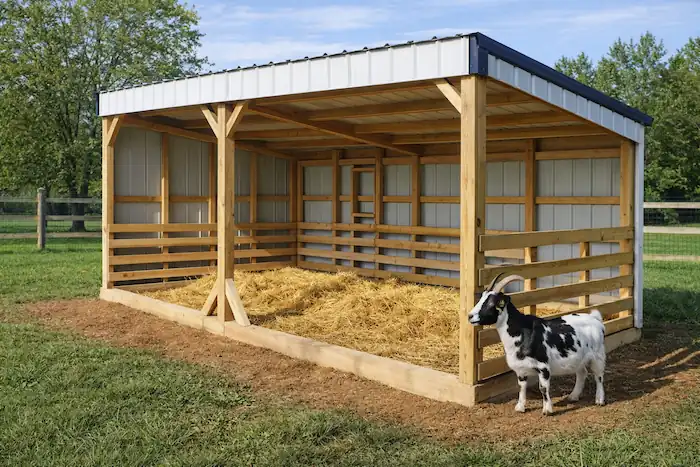
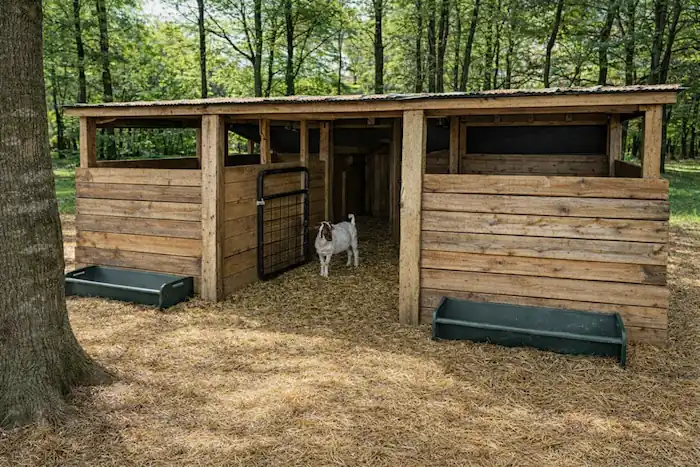
1. Three-Sided Shed (Open Front Shelter)
This is a simple and popular choice, especially for beginners. It has three walls and one open side, which blocks wind and rain while allowing fresh air to flow. It’s easy to build, affordable and lets in plenty of natural light. Best for small to medium herds in mild climates, though it’s not ideal in extreme cold or for protection against predators approaching the open side.
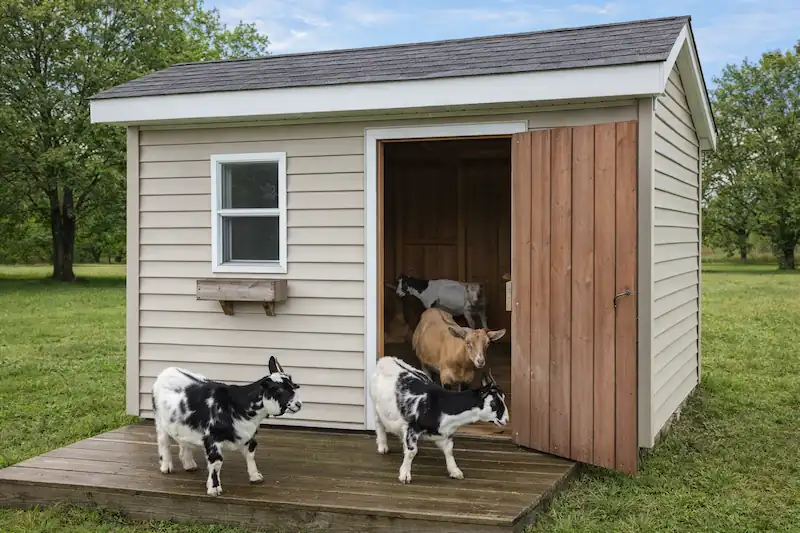
2. Fully Enclosed Barn
A classic option for serious goat keepers. With four walls, secure doors and sometimes interior stalls, it offers maximum protection from weather and predators. It’s perfect for medium to large herds and works in any climate. The downside is higher costs, more complex construction and the need for proper ventilation to prevent dampness and respiratory issues.
3. Portable or Movable Shelters
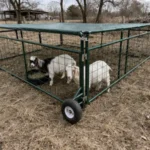
These are flexible shelters that can be moved around your pasture. Examples include hoop houses, skid-mounted sheds, or framed tarps.
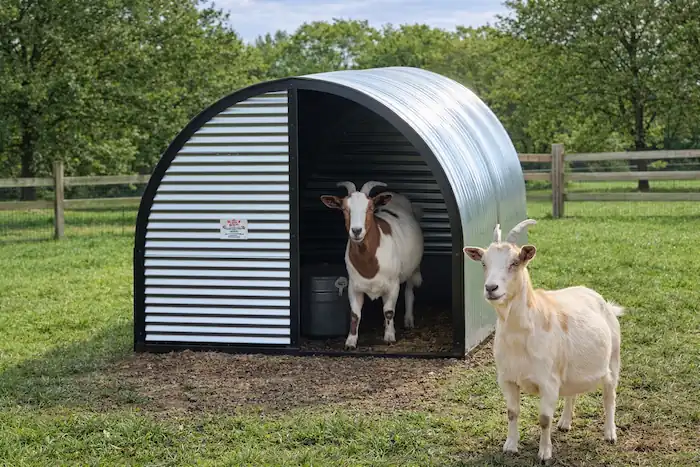
- Best for: Small herds, rotational grazing or temporary setups
- Pros: Can follow pasture rotation, lower initial cost and easy to move
- Cons: Less durable than permanent structures, needs frequent anchoring and limited predator protection
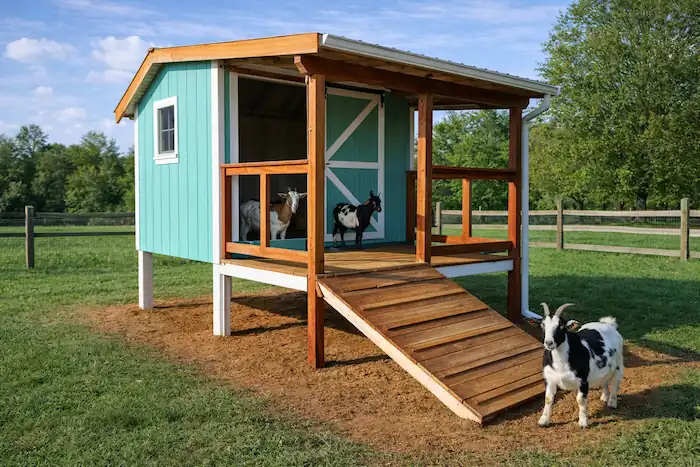
4. Open-Front Lean-To
A very simple shelter that’s often attached to an existing building or fence. It’s affordable and easy to build but offers limited protection, only from one direction, and has less flexibility in placement. Best suited for small herds in moderate climates.
5. Repurposed or Converted Buildings
Using old sheds, garages, or chicken coops is a cost-effective way to house goats. With some modifications, these structures can provide a safe space. This works for almost any herd size, depending on the building, but may require repairs or safety checks to remove hidden hazards.
Choosing Strong and Safe Materials for Your Goat Shelter
Now, let’s discuss the first thing towards building a goat shelter: the materials. Picking the right materials is key to building a shelter that lasts and keeps your goats safe and comfortable.
Framing and Structure
- Use treated lumber for posts and frames that touch the ground. It lasts longer and resists rot.
- Untreated lumber is fine for interior parts that don’t touch the ground.
- Other solid options include plywood for walls/flooring and concrete blocks or footers for a strong foundation.
Roofing
Invest in a durable roof, it’s the first line of protection for your goats.
- Corrugated metal is tough, weather-resistant, and easy to install. It has never disappointed me.
- Shingles look nice but cost more and can be trickier to put on.
Walls and Siding
- Plywood is versatile and easy to work with.
- OSB is cheaper but needs good sealing against rain.
- Rough-sawn lumber gives a rustic look but needs more maintenance.
Floors
- Natural earth drains well but can get muddy and messy.
- Concrete is durable and easy to clean. I always go with that but add bedding for comfort.
- Raised wooden slats keep goats dry and clean, but must be built safely to prevent hoof injuries.
Hardware and Fasteners
For hardware and fasteners, check local sawmills, reclaimed lumber yards, or online marketplaces to save money and find good materials.
- Use galvanized screws and nails to avoid rust.
- Choose sturdy latches and hinges that can handle goat strength.
Following safe, non-toxic material guidelines from agricultural extension programs ensures your shelter is healthy for goats and built to last.
DIY Goat Shelter: How I Built My 3-Sided Shed
Building a goat shelter might seem intimidating at first but I promise it’s doable, even if you’re a beginner. I’ve been there, figuring out layouts, choosing materials and getting everything to come together. I will go through the whole process I used to build a simple, sturdy 3-sided shed for my goats, with tips I learned along the way.
Start with a Solid Foundation
The key to a long-lasting shelter is a strong base. I used concrete blocks and treated posts set into the ground to keep the structure stable and protect it from moisture. Even if you skip a full concrete pad, at least make sure posts are treated and buried properly. Your goats will thank you for a dry, sturdy floor.
Framing Made Simple
I kept it basic with a stick-frame design for the walls and roof. Nothing fancy, just straight, sturdy lumber cut to size. Make sure your roof has a decent pitch so rain and snow slide off easily. A flat roof can turn into a headache later on.
Tools and Materials I Used
Before starting, I made a checklist so I wouldn’t get halfway and realize I’m missing something. Here’s what worked for me:
- Tools: Power drill/impact driver, circular saw or hand saw, measuring tape, level, hammer, staple gun, gloves, and safety glasses.
- Materials: Treated lumber, plywood for walls, corrugated metal roofing, and some hardware cloth for windows or ventilation.
I can’t stress this enough. Go slow and be careful. Always wear protective gear, lift materials properly and mind ladders when you’re putting up the roof. Even a small slip can ruin your day or worse.
Step-by-Step Construction
Here’s how I built my 8’x10’ shed:
- Prepare the Site: Clear the area, level it, and mark your footprint.
- Lay the Foundation: Place concrete blocks or dig holes for treated posts.
- Frame the Walls: Build the back wall and the two side walls, adding frames for windows or doors if needed.
- Build the Roof: Construct roof trusses or rafters with enough pitch for water runoff.
- Install the Roof: Attach plywood sheathing, then felt paper, and finally your corrugated metal or shingles.
- Add Wall Sheathing: Put on exterior-grade plywood or other siding.
- Finishing Touches: Seal any gaps, paint with non-toxic paint if desired, and add interior features like raised platforms or bedding areas.
By keeping it simple and following these steps, I ended up with a sturdy, safe, and comfortable shelter that my goats love. It’s a project you can definitely handle, and seeing your herd enjoy it makes all the effort worth it.
Best Bedding and Flooring for Happy, Healthy Goats
A good shelter isn’t about walls and a roof. What your goats stand and lie on matters just as much. The right bedding and flooring can make a huge difference in keeping goats comfortable, dry, and healthy.
Choosing the Right Bedding
I’ve tried a few options over the years, and I have put together those that work best:
- Straw is my go-to for deep litter setups. It’s absorbent, keeps goats warm in winter, and is easy to find.
- Non-toxic wood shavings like pine or aspen are great for controlling odor, though they can be a bit dusty, so make sure the area is well-ventilated. Avoid cedar; it can be harmful to goats.
- Hay can work in a pinch, but goats love to munch it, which reduces its usefulness as bedding.
The Deep Litter Method
One of my favorite techniques is the deep litter method. It’s simple:
- layer bedding with carbon-rich organic matter
- let it naturally decompose
- and occasionally turn it or add fresh layers.
This creates insulation, absorbs moisture and even reduces how often you have to clean. Over time, it also produces compost you can use in your garden.
Flooring and Moisture Management
Keeping the shelter dry is essential. Natural earth floors drain well but can get muddy if the site isn’t properly graded. Concrete floors last long and are easy to clean. However, you’ll still need bedding and good drainage to keep goats comfortable. Raised platforms or pallets are another great option. They keep goats off damp ground and improve air circulation.
No matter which flooring or bedding you choose, you should not ignore the issue of dryness. Damp conditions can lead to hoof rot, respiratory problems, and general discomfort. A little effort in managing bedding and flooring helps keep your goats healthy.
Keeping Predators Out: How I Made My Goat Shelter Safe
One of the biggest worries as a goat owner is predators. I’ve learned the hard way that a little planning can save your herd a lot of stress and protect them from serious harm. I keep my goats safe from predators by doing the following.
Lock Down Every Opening
Doors, windows, vents: every opening is a potential entry point for predators. I made sure our doors are heavy-duty and swing inward so they’re hard to push open. Latches and locks need to be goat-proof too. Barrel bolts, spring-loaded latches and padlocks work great. For windows and vents, I used hardware cloth with 1/2” mesh, because chicken wire is way too flimsy for anything bigger than a raccoon.
Reinforce Walls and the Foundation
A predator can’t get in if it can’t chew or push through. I built my walls with sturdy plywood and strong lumber, and I added a burial skirt and hardware cloth extended underground around the shelter to stop diggers from tunneling under. It’s an extra layer of security that really works.
Perimeter Protections
The shelter itself is one part of the plan. Outside, I put up fencing like woven wire or electric fencing to keep predators at a distance. I also added motion-activated lights to startle nocturnal visitors. Some people use livestock guardian animals like Great Pyrenees dogs or donkeys, which can be amazing for added security if you’re open to it.
Don’t rely on just one method. The safest shelters use multiple layers of protection: strong construction, secure doors and windows, buried hardware cloth, perimeter fencing and even guardian animals or motion detectors. Combining these strategies dramatically reduces the risk of an attack.
Over time, I’ve realized that predator-proofing isn’t only about building a stronger shed, it’s about thinking ahead, layering defenses, and staying one step ahead of any potential threat. Your goats will thank you for the peace of mind.
Adapting Goat Shelters for Year-Round Comfort
Keeping goats comfortable year-round means adjusting your shelter for the weather: heat, cold, wind, and snow each require different strategies.
Hot Weather Tips
In the summer, ventilation is key. I add ridge vents, soffit vents and even small solar-powered fans to keep air moving.
You should arrange shade using trees, overhangs, or shade cloth to block direct sun. Reflective roofing or radiant barriers can keep the shelter cooler, and I always make sure fresh, cool water is available.
Cold Weather Tips
When it gets cold, insulation and draft control are essential, and you must install them at any cost. I use rigid foam boards for walls and the roof while maintaining airflow for ventilation. The deep litter method adds warmth and positioning windbreaks; such as fences or trees helps block harsh winds. For kidding season, I set up a small, draft-free pen so newborns stay safe and cozy.
Wind and Snow Considerations
Strong winds and heavy snow need extra attention. You’d have noted that when it rains or snows, goats become quite disturbed. So, we strongly emphasize reinforcing the structure with braces, hurricane ties and sturdy fasteners. Portable shelters should be anchored securely, and a steeper roof pitch helps snow slide off while substantial purlins support the load. Always check local snow-load recommendations to ensure your roof can handle it.
Planning your shelter with the climate in mind ensures your goats stay safe, healthy and comfortable no matter the season.
While setting up a comfortable shelter, it’s also a good idea to include some toys for goats inside or around the space to keep them entertained and prevent boredom or destructive behavior.
Keeping Your Goat Shelter Clean, Safe, and Long-Lasting
A well-built shelter only works if you maintain it regularly. A little routine care goes a long way in keeping goats healthy and the shelter lasting for years.
Cleaning Made Easy
I do daily spot cleaning to remove soiled bedding and manure, and I rake in fresh bedding every week or two. Seasonal deep cleans, such as emptying and disinfecting the entire shelter, help prevent the buildup of germs and pests. Designing the shelter with removable bedding platforms and smooth, accessible surfaces makes all this much easier.
Regular Inspections and Repairs
Checking the shelter regularly for loose nails, splinters, damaged wood, or roof leaks is pivotal. I fix hazards immediately and keep an eye out for pests like rodents or insects before they become a problem.
Seasonal Prep
Winter means sealing drafts, adding bedding, and checking the roof. Summer calls for boosting ventilation, ensuring shade, and monitoring for pests.
Protecting Your Investment
Applying non-toxic paints or sealants and keeping proper drainage around the shelter helps prevent wood rot and extend the life of your build. A little maintenance now saves headaches later and keeps your goats safe, comfortable, and happy.