Quail Cage
Thinking about raising quail for fresh eggs or meat, but worried about the high cost of ready-made cages? Many beginners face the same challenge when searching for affordable and reliable housing options.
Building your own quail cage is a smart solution. It saves money, lets you customize the setup to suit your birds, and ensures proper space, safety and easy cleaning. This guide will show you how to build a simple, secure and practical cage with confidence.
A general quail coop works well for backyard flocks, combining predator protection, proper ventilation, and easy access for cleaning, feeding, and egg collection. Coops can be stationary or slightly elevated depending on your space.
Understanding Quail Needs: What Your Birds Really Require
Before you start building, it’s important to understand what quail actually need to stay healthy and productive. Good housing isn’t just about putting up wire and wood. It’s about creating a safe and comfortable space in accordance with proper poultry care guidelines.
We’ve carefully researched trusted guidelines from university extension services and poultry science departments, including resources from institutions such as Penn State Extension, to understand proper space, ventilation and humane care standards.
On top of that, we’re also sharing insights from our own extensive hands-on experience with raising quail, so the advice here is both research-backed and practical in real-life settings.
1. Give Them Enough Space
Quail may be small, but they still need room to move around.
- A good rule of thumb is at least 1 square foot per standard Coturnix quail.
- Larger breeds or breeding pairs will need a bit more space.
If you overcrowd them, they can become stressed, start pecking each other, and get sick more easily.
Aim for at least 1 square foot per standard Coturnix quail, more if possible to prevent stress, pecking, and health problems.
2. Proper Ventilation
Fresh air is very important. Poor airflow can lead to respiratory problems and ammonia buildup, resulting in bad odors. Design your cage so air can move through it easily (cross-ventilation works great).
At the same time, protect your birds from strong, direct drafts, especially in cold weather. Make sure there’s good airflow, but always block strong drafts, particularly during winter.
3. Strong Predator Protection
Quail are small and vulnerable, so predators are a real threat. Common predators include raccoons, foxes, hawks, and even snakes.
To keep your birds safe:
- Use galvanized hardware cloth, not chicken wire.
- Choose small openings (½” x ½” or smaller).
- If the cage sits on the ground, bury the wire around the edges to stop digging predators.
- Install strong, secure latches on every door and access panel.
Never rely on chicken wire; it’s too weak. Use sturdy hardware cloth and predator-proof latches to prevent break-ins and escapes.
4. Easy Cleaning & Waste Management
A clean cage keeps your birds healthy and reduces smell.
- Add removable waste trays to catch droppings.
- Consider a slightly sloped floor so waste falls into a collection area.
- Clean regularly to prevent ammonia buildup.
Design your cage so cleaning is quick and simple. Removable trays or sloped floors make a huge difference.
5. Comfort & Enrichment
Happy quail are productive quail. Provide a dust bath area with sand or diatomaceous earth. This keeps feathers healthy and helps control parasites. Protect them from harsh sun, strong wind, and heavy rain with a solid roof and at least one solid wall. Give them small hiding spots or covered areas so they feel secure.
Even in raised cages, include a secure dust bath area. Also, make sure your cage has a solid roof and some wind protection for comfort and safety.
Types of Quail Cages Explained & Compared
Not all quail cages are the same. The best design depends on how many birds you have, how much space you’re working with, and whether you’re raising them for eggs, breeding, or just as pets. Let’s break down the most popular DIY options in simple terms.
You can also design your cages in a modular or scalable way, meaning you can add more levels later, expand the setup, or even include nesting boxes if needed.
1. Stacked Hatcher/Breeder Cages
Stackable Quail Cage are built in layers, one on top of the other. They’re great if you want to save space.
Pros
- Saves a lot of space (uses vertical height)
- Good for larger flocks
- Works well in controlled setups like sheds or garages
- Easier to manage egg collection and waste if designed properly
Cons
- Not very natural for the birds
- Needs a proper waste and egg collection system
- Slightly harder to build
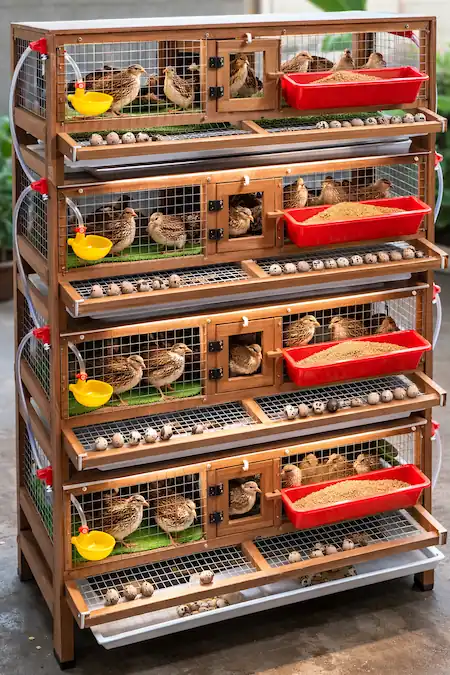
When raising chicks, a hatching time quail cage is essential. These cages provide extra warmth, protection, and proper flooring for young quail to thrive during their first few weeks.
2. Tractor Cages (Mobile Pens)
These are movable cages placed on the ground. You shift them regularly so birds get fresh grass and insects.
Pros
- Birds can forage naturally
- Fresh ground reduces waste buildup
- Great enrichment for the birds
- Manure spreads naturally on soil
Cons
- Takes up more ground space
- Must be moved often for safety
- Can be risky if predator protection isn’t strong
3. Hutch-Style Cages (Stationary & Elevated)
These are raised cages that stay in one place. Very common for backyard setups.
Pros
- Strong predator protection
- Easy to clean
- Good airflow
- Easy access for feeding and egg collection
Cons
- Takes permanent space
- No natural foraging
4. Button Quail Specific Enclosures
Button quail are much smaller than standard Coturnix, so they need special setups.
Important Considerations
- Use finer mesh wire (small openings)
- Smaller feeders and waterers
- Add hiding spots and enrichment
- Include a dust bath area
| Cage Type | Best For | Space Needs | Estimated DIY Cost |
| Stacked Hatcher | Layers, breeders, large flocks | About 1 sq ft per bird, small floor footprint (vertical setup) | $75 – $250+ per stack |
| Tractor Cage | Small flocks, pasture raising | Larger ground space, movable | $100 – $300+ |
| Hutch Style | Backyard flocks | Medium footprint, raised design | $80 – $200+ |
| Button Quail Specific | Small pet quail | Small footprint | $40 – $150 |
Costs are general estimates and can vary depending on your location, material prices, and design choices. Always check current material costs in your area before starting your build.
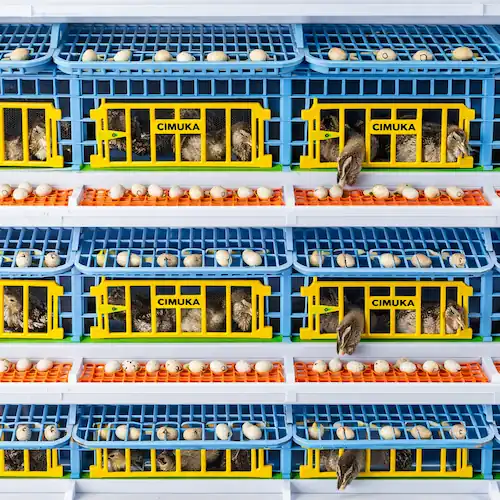
5. Cimuka Quail Cage
The Cimuka quail cage is a starter kit option for beginners. It comes with a simple brooder section, feeder, waterer, and secure enclosure, making it ideal for first-time quail keepers.
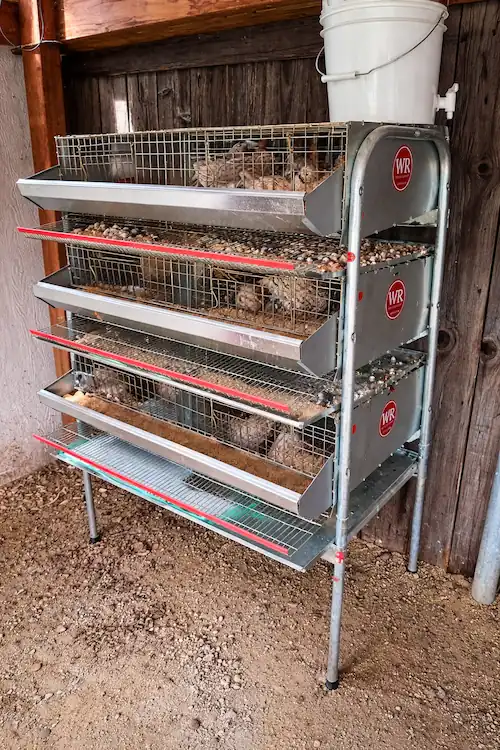
6. Wynola Ranch Quail Cage
For larger flocks or commercial setups, the Wynola Ranch quail cage offers durable construction and high-capacity layouts. These cages are designed for efficiency in feeding, egg collection, and maintenance.
Choosing the right cage really depends on your goals. If you want efficiency and higher production, stacked cages work well. If you prefer a natural setup, tractor cages are great. For most backyard keepers, a simple hutch-style cage is more than enough.
Key Design Considerations (Pre-Build Checklist)
Before you start building your quail cage, take a little time to plan things properly. Many beginners feel unsure about which materials to choose, how much they’ll spend, or whether their design will actually work long term. Considering these essential points first can save you money, time and frustration.
Budget Assessment
Start with a clear idea of your budget. Material costs can vary by location, so it’s wise to check current prices before buying. New materials often look cleaner and last longer, but reclaimed or repurposed materials can significantly reduce costs. For example:
- Wood is sturdy and easy to work with, but PVC can be lighter, more moisture-resistant, and sometimes cheaper.
- Old shelves, metal racks, or scrap lumber can often be reused to build strong cage frames at a lower cost.
Available Space & Location
Next, decide about where the cage will be placed. For apartment or indoor backyard setups, an indoor quail cage keeps your birds safe from harsh weather and predators. These cages are usually elevated, ventilated, and designed to minimize mess while giving your quail a comfortable home.
An outdoor cage, on the other hand, needs to handle direct sunlight, wind, rain, and predators.
Pay attention to how much sun the area gets during the day, the direction of strong winds, and whether the ground drains well after rain. Standing water around the cage can create hygiene issues. It’s also important to check local rules and housing restrictions on poultry before you build.
Climate Adaptation
Your cage should match your weather conditions.
- In hot climates, focus on strong ventilation and shade.
- In cold climates, add insulation and block drafts.
- In humid areas, make sure airflow prevents moisture buildup.
- Protect against heavy rain, snow, strong sun and high winds.
A climate-ready cage keeps your quail comfortable all year.
Number of Birds & Purpose
Your design should match your goal. Birds raised for eggs need easy egg collection and a comfortable space. Breeders may require divided sections. Meat birds need sufficient space but usually simpler setups.
It’s also smart to think about the future. If you plan to expand your flock later, consider building a modular system that allows you to add sections or stack levels easily.
Ease of Cleaning & Maintenance Access
Cleaning will be part of your routine, so design for convenience. Make sure you can easily reach inside the cage for feeding, watering and egg collection. Removable waste trays or sloped flooring can make cleaning faster and reduce ammonia buildup. The simpler your maintenance routine, the healthier your birds will be.
Predator Protection & Security
Security should never be overlooked. Choose strong wire mesh with small openings, and make sure the wire is thick enough to resist chewing or pulling. Install solid, secure latches on all doors and access panels and build the frame firmly so predators cannot pry it open. A strong structure gives you peace of mind.
Egg Collection System
If you’re raising laying quail, a roll-out egg system can make life much easier. By slightly sloping the cage floor, around 5 to 7 degrees, eggs gently roll into a collection tray outside the cage. This prevents pecking and makes daily collection quick and simple.
Taking the time to plan these details before building will help you create a cage that is safe, practical, and built to last.
Along with choosing the right cage, following proper quail-raising practices ensures your flock stays safe, comfortable, and productive.
Materials List with Budget-Friendly Options
When I built my quail cage, I used pressure-treated wood, PVC pipes, galvanized hardware cloth, screws, and sturdy latches. These were the essential tools and materials I needed to get it done right.
Framework Materials
- Pressure-treated wood for outdoor cages, untreated wood for indoors
- PVC pipes: lightweight, rot-proof, and affordable
- Ensure all materials are non-toxic and weather-resistant
Wire Mesh
- Galvanized hardware cloth (1/2″ x 1/2″ or 1/4″ x 1/2″) for walls and floors
- 19-gauge wire for strength and predator protection
Roofing & Shelter
- Corrugated metal or plastic panels
- Budget option: tarpaulin or plywood with waterproof sealant
Fasteners & Latches
- Screws, nails, J-clips, and zip ties
- Sturdy, predator-proof latches for all doors
Waste Management
- Removable trays made of galvanized metal or durable plastic
- PVC gutters for sloped floors to collect waste or eggs
Cost-Saving & Sustainable Options
- Reclaimed lumber or pallets (ensure no harmful chemicals)
- Used hardware cloth (inspect for rust or damage)
- Repurposed plastic containers for feeders or waterers
Using these materials wisely keeps your cage safe, durable, and budget-friendly while providing a comfortable home for your quail.
Tools Required for Your Quail Cage Build
Building a quail cage requires a few essential tools to make the process safe, accurate and efficient.
Measuring Tools
Tape measure, carpenter’s square, level. A reliable tape measure and spirit level ensure precise construction
Cutting Tools
- Hand saw, circular saw, or miter saw for wood
- Heavy-duty tin snips or wire cutters for hardware cloth
Drilling & Fastening Tools
- Electric drill with drill bits
- Heavy-duty staple gun with staples
- J-clip pliers and J-clips for wire assembly. They make wire mesh connections secure and simple.
- Screws and nails
Safety Gear
- Work gloves, preferably cut-resistant
- Safety glasses
- Dust mask for cutting and drilling
These tools cover everything you need to build a sturdy, safe, and practical quail cage efficiently.
Step-by-Step Guide: Building a Standard Hutch-Style Quail Cage
If you want a simple, elevated hutch-style cage for a backyard flock of 15–20 Coturnix quail, this guide walks you through the process in easy-to-follow steps. I’ve included the practical tips from as I build my own one to make sure your build is safe, practical, and easy to maintain.
Phase 1: Planning & Prepping
- Gather all the materials and tools listed earlier.
- Cut all your wood pieces to the sizes in your plan.
Label each piece as you cut it. It makes assembly much easier.
Phase 2: Building the Main Frame
- Assemble the rectangular base using wood screws. Check that all corners are square.
- Attach the four legs (corner posts) to the base and make sure they’re perfectly vertical.
- Build the top frame the same way as the base and attach it securely to the top of the posts.
Take your time here, this frame is the backbone of your cage.
Phase 3: Installing the Wire Mesh
- Cut hardware cloth for the sides, back, and front (leave spaces for doors).
- Staple the side and back mesh to the frame, placing staples every 2–3 inches.
- Cut and install the floor mesh (1/2″ x 1/2″), slightly sloped 5–7 degrees toward the front for easy egg roll-out.
A 1/2″ x 1/2″ floor mesh lets waste fall through but stays comfortable for your quail.
Phase 4: Making Doors & Access Points
- Build a small wooden frame for each access door.
- Cover the frame with hardware cloth and attach it to the cage with sturdy hinges.
- Add predator-proof latches to all doors.
Secure doors properly; strong latches prevent escapes and keep predators out.
Phase 5: Adding the Roof & Waste System
- Attach a corrugated roof or waterproof material to the top frame, leaving an overhang for weather protection.
- Place a removable waste tray under the sloped wire floor.
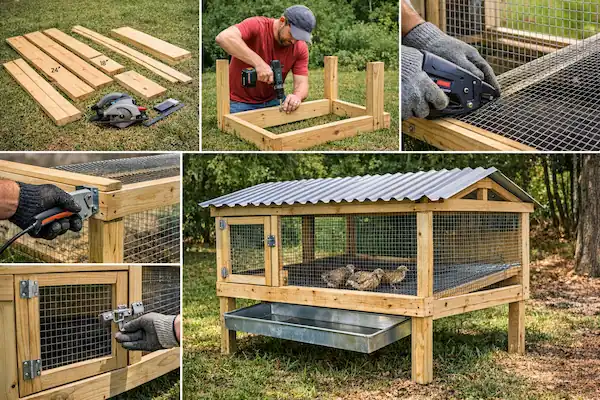
A solid roof and at least one solid side protect quail from sun, wind, and rain. Removable trays make cleaning simple and reduce ammonia buildup.
Following these steps will give you a sturdy, easy-to-clean, and safe home for your quail. With proper planning and careful assembly, your birds will be comfortable and productive in their new hutch.
If you prefer a ready-made option, this galvanized stackable quail cage has been tested and works great for both breeders and layers. It’s durable, easy to clean, and perfect for a secure, stress-free setup.
Maintaining Your Quail Cage: Cleaning, Care & Longevity
A clean and well-maintained cage is vital for healthy, happy quail and a long-lasting setup. Daily care involves emptying waste trays, refilling waterers and feeders and collecting eggs from roll-out systems. Providing a balanced diet to your quail keeps him healthy and energetic alongside a well-designed cage.
Scrubbing wire floors and cage surfaces weekly or monthly, checking for pests, and inspecting wood, wire and latches for damage will help prevent bigger problems.
Proper waste management like composting droppings and disposing of soiled bedding, not only keeps the cage hygienic but can also benefit your garden. Outdoor cages benefit from good drainage and applying bird-safe sealants or paints to wooden components can extend their life.