Before we jump into different ideas and designs, let’s quickly clear up something that confuses almost every beginner; the terms people use for goat shelters.
You’ll often hear words like goat housing, pen, shed, and barn used interchangeably, but they don’t all mean the same thing. If you understand this properly from the start, it becomes much easier to plan the right setup for your goats without wasting time or money.
Goat Housing
This is the big picture. It includes everything your goats need to live comfortably: shelter, space to move, fencing, feeding area, etc. Think of it as the complete setup for raising goats.
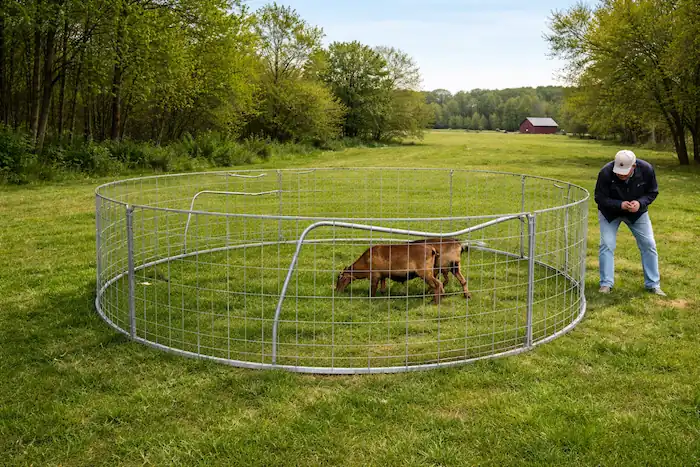
A pen is a fenced space where goats stay during the day.
It’s usually open (no roof)
Used for exercise, playing, and movement
Keeps goats in and predators out
Goat Shed (Basic Shelter)
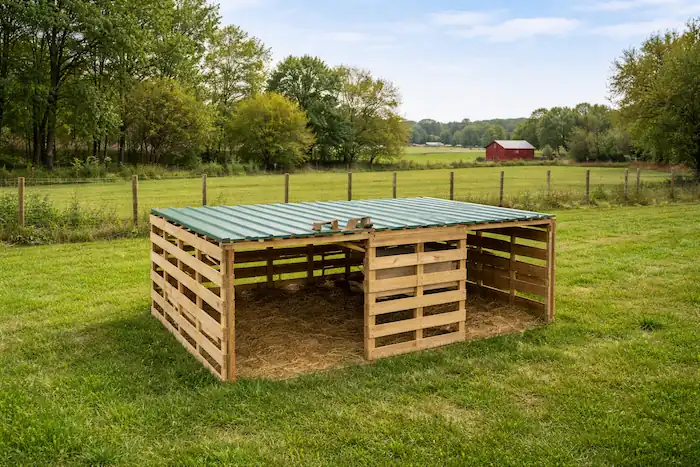
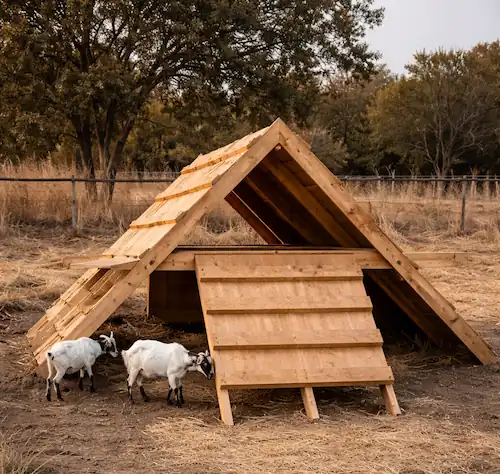
A goat shed is a small, simple shelter that protects goats from rain, wind, and sun.
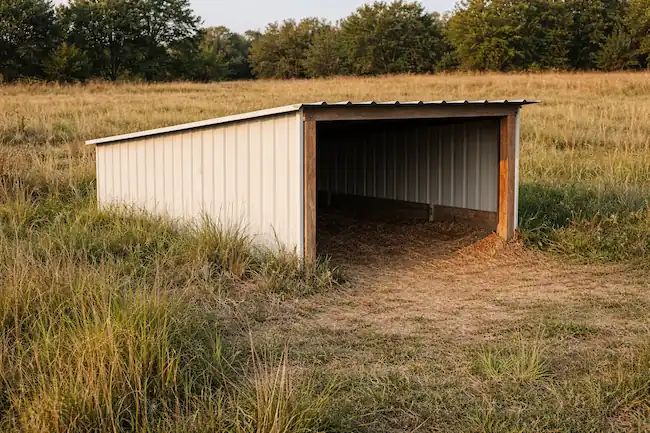
Often 3-sided with a roof
Budget-friendly and easy to build
Perfect for small farms or beginners
Goat Barn (Large Building)
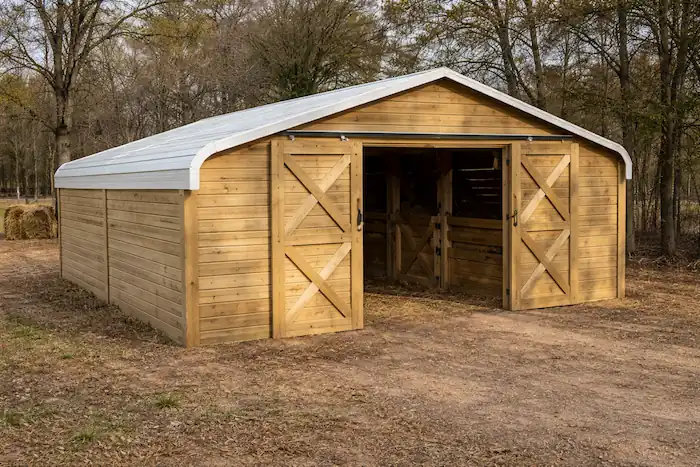
A barn is a big, fully built structure used for housing goats.
More enclosed and secure
Can include separate sections (pens, feeding areas, storage)
Ideal for larger herds or serious farming
Goat Pen Ideas
A goat pen is basically the fenced area where goats spend most of their time when they’re outside the shelter. A good pen keeps them safe, gives room to move, and makes daily chores easier.
Basic Goat Pen Designs
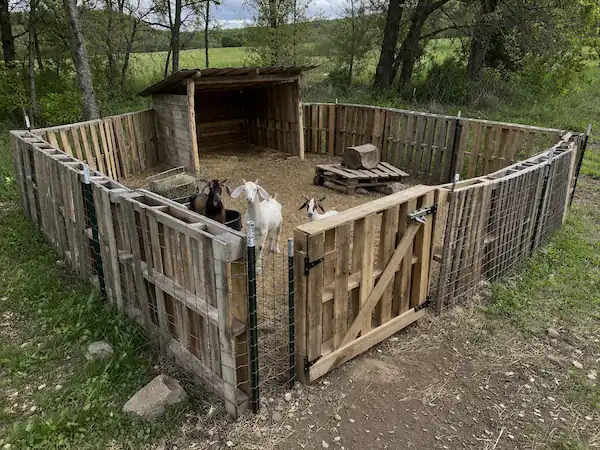
1. Pallet Fence Pen: One of the cheapest and easiest options. You can arrange free or low-cost wooden pallets upright, secure them with posts, and reinforce gaps with wire mesh to keep goats from escaping. This setup can also double as a windbreak or boundary for shade areas.
2. Cattle Panel Pen: For a stronger, longer-lasting pen, use cattle panels (metal grids) with strong posts. These work especially well if goats tend to push, jump, or lean on fences.
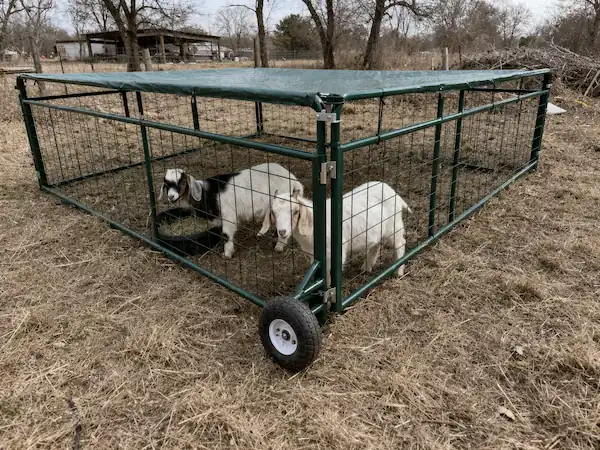
3. Portable Day Pen: If you like moving your goats to fresh grazing spots, you can create a moveable pen with panels and attachments that you can shift easily. Some people even build pens on wheels for easy repositioning.
How to Build a DIY Goat Pen?
Step 1: Plan Your Space
Decide how big your pen will be based on the number of goats. For 4–6 goats, a 14×14 feet pen works well. Make sure the area is flat, well-drained, and easy to access for feeding and cleaning.
Step 2: Gather Materials
You’ll need:
Wooden pallets: these will form most of your fencing walls
T-posts: metal posts to support pallets or wire panels
Wire panels or mesh: to cover gaps and make the pen secure
Staples or fencing wire: to attach pallets to posts
Gate hardware: hinges, latch, or bolt for access
Optional: Shovel, post driver, hammer, and pliers.
Step 3: Mark the Pen Area
Use stakes and string to outline your pen. Make sure it’s square and measurements are correct. This will guide your fence placement.
Step 4: Install T-Posts
Drive T-posts into the ground every 6–8 feet around the perimeter. These will hold up your pallets and wire panels. Make sure they are firmly in the ground so goats cannot push them over.
Step 5: Attach Pallets to Posts
Stand each pallet upright against the T-posts. Use fencing wire or staples to secure the pallets to the posts. Make sure all edges are tight and there are no gaps goats can squeeze through.
Place pallets side by side until the whole perimeter is covered
Check the height; goats can jump, so the fence should be at least 5 feet tall
Step 6: Add Wire Panels for Extra Security
Goats are clever and can squeeze or push through gaps. Attach wire panels over any openings or weak spots. Secure them tightly to the pallets and posts with wire ties.
Step 7: Install a Gate
Leave one side for a gate. Use a pallet or a piece of wood as a swing door, then attach hinges to a T-post or frame. Add a strong latch, so goats cannot open it.
Step 8: Add Shelter and Features
Inside your pen, place a small shelter for shade and rain protection. You can build a 6×6 feet wooden shed or use a small pallet barn. Add:
Feeding station (hay rack and water trough)
Elevated platform or log for climbing
Dry bedding area
Step 9: Inspect and Test
Walk around the pen and check for:
Loose boards or wire
Sharp edges or nails
Gaps at the bottom that goats might escape through
Make adjustments before letting goats in.
Goat Barn Ideas and How to Build Them
A barn is usually a more permanent, enclosed shelter where goats sleep, escape bad weather, and sometimes even get fed or milked. It’s more substantial than a simple three sided shed.
Popular Barn Design Ideas
Before choosing any design, you need a rough size idea:
Small goats → 10–15 sq ft per goat
Standard goats → 15–20 sq ft per goat
Outdoor space → 20–30 sq ft per goat
Always build slightly bigger than needed because herds grow fast. Learn about pygmy goats and their playful nature, so you can design a goat pen or shelter that suits their size and energy. You can also discover the traits of Nigerian Dwarf goats and what kind of housing setup works best for these small but active goats.
Below are the most popular and widely used goat barn designs among goat keepers.
1. Classic Three Sided Barn: This is a traditional style that’s very common because it’s simple, inexpensive, and effective. You build three solid walls with a tall, sloped roof. The open side faces away from prevailing winds so goats stay protected while still getting fresh air.
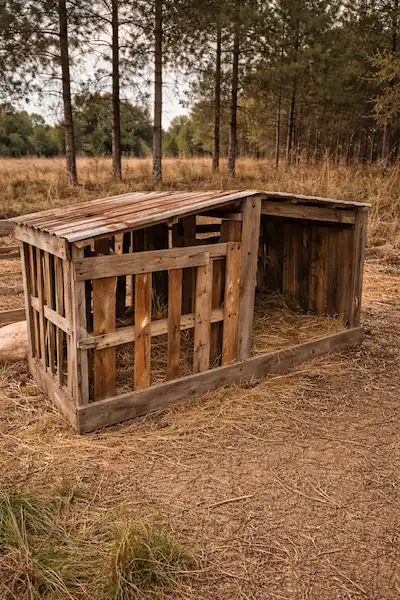
2. Pallet Barn (Budget): If you’re on a tight budget, pallets can form the barn walls. Stand pallets vertically or horizontally, reinforce them with braces, and then add a sloped roof with metal panels or waterproof tarps. Goats like the rustic design and the ventilation pallets naturally offer.
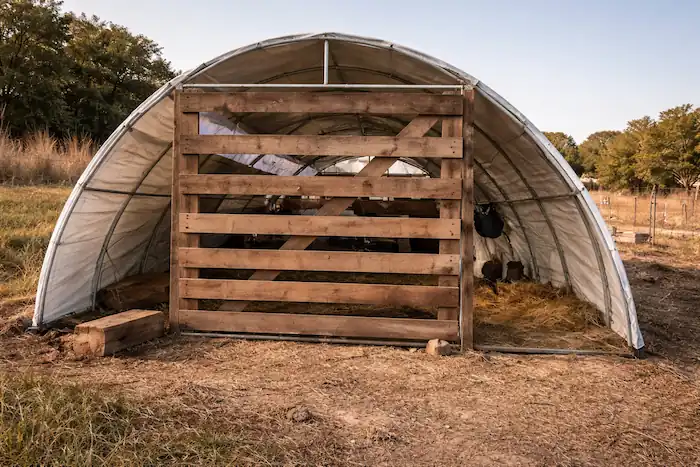
3. Hoop House Style: This uses bent metal or PVC pipes to create an arch shape covered with tarp or greenhouse plastic. It’s easy to build, sheds snow and rain well, and you can roll up sides for airflow in summer.
4. A Frame Goat Barn: A frame barns have walls that meet at a peak, forming a triangular shape. The steep roof lets snow slide off easily, and the structure stays strong in bad weather. These can work as full barns or smaller shelters.
5. Converted Shed or Carport: If you already have a structure like a garden shed or metal carport, converting it into a goat barn is one of the quickest ways to get usable housing. You’ll need to add ventilation and possibly expand doors or open walls for airflow.
Detailed barn plans often provide materials lists and layouts based on herd size, which helps you estimate lumber, roofing, and layout before building.
Understanding What Goats Really Need
Before you build anything, it’s important to understand what goats actually need to stay healthy and happy. If you get these basics right, everything else becomes much easier.
Enough Space Matters
Goats don’t like feeling cramped. They need enough room to move around comfortably. Adult goats need more space than kids. If you have different groups (bucks, does, babies), they may need separate areas. Always plan a little extra space in case your herd grows later
Protection from Predators & Weather
One of the biggest concerns is keeping your goats safe. Animals like dogs, foxes, and even birds of prey can be a real threat.
Use strong fencing, tall enough so goats can’t jump over
Make sure there are no gaps or weak spots
Add a proper shelter with a solid roof and walls to protect from rain, wind, and heat
Predator-proofing is a must. Use strong locks, bury fencing slightly into the ground, and if possible, consider guard animals like dogs.
Keep It Dry & Clean
Goats hate wet and dirty places and it can also cause health problems. I always use dry bedding like straw or wood shavings. Make sure water doesn’t collect inside the shelter. And choose a slightly elevated area, so rainwater drains away easily
In colder months, you can use the deep litter method, just keep adding fresh bedding on top. It helps keep the area warm and reduces cleaning, but you need to manage it properly.
Social Life & Fun
Goats are very social animals. They don’t like being alone. At our Carter farm, I always keep at least two goats. Give them space to climb, jump, and explore. Add simple like logs, rocks, or platforms for fun.
Things to Consider Before You Build or Buy
Before you start building anything, take a little time to think things through. A bit of planning now can save you from expensive mistakes and headaches later.
Herd Size
First, think about your herd size, not just today, but in the future too. Many people start with a few goats and then quickly expand. If that’s your plan, it’s better to design a setup that can grow with you instead of rebuilding everything later. From experience, leaving room for easy expansion makes a big difference.
Local Climate
Your local climate is another big factor. Goats can handle different weather, but only if their shelter is designed properly.
In hot areas, they need shade and good airflow
In colder or snowy regions, a strong structure with a proper roof is important
The goal is to keep them comfortable year-round, not just in one season.
Ventilation
Ventilation is one of the most overlooked parts of goat housing. Goats need fresh air to stay healthy, but at the same time, they shouldn’t be exposed to direct cold drafts. Good airflow keeps the space dry and reduces health issues, especially in humid conditions.
Budget
Budget is where most people feel stuck. Building a goat shelter doesn’t have to be expensive. You can use simple materials, reuse what you already have, and start small. A basic, well-built shelter is always better than an expensive plan that never gets completed.
Local Rules
Lastly, don’t ignore local rules and regulations. In some areas, there are restrictions on livestock or building structures. It’s always a good idea to check this beforehand. I’ve seen people run into unnecessary problems just because they skipped this step.
Designing the Inside of Your Goat Shelter
Once your main structure is ready, the inside setup matters just as much. A good interior setup is not just about looks. It directly affects your goats’ health, behavior, and comfort. When goats have clean, organized, and engaging space, they stay active, relaxed, and easier to manage.
Fencing and Pen Layout
Inside the shelter, you may need to divide space for different goats. Bucks, does, and pregnant goats are often kept separately. Using strong wire panels or mesh helps keep everything secure.
Gate placement is also important. If gates are placed smartly, it becomes much easier to move goats around for feeding, cleaning, or separation.
Feeding and Water Setup
Goats can be messy, so you need to keep their food and water clean. Place feeders and water containers in a way that they stay protected from dirt and waste.
Use separate feeders for hay, grain, and minerals
Keep them slightly raised or covered to avoid contamination
This helps prevent illness and keeps feeding simple and organized.
Kidding Area and Sick Space
It is always helpful to have a small separate area for special situations. A kidding space should be quiet, clean, and comfortable for goats giving birth.
You should also have a small isolation area for sick or injured goats. Keeping them separate helps them recover faster and protects the rest of the herd.
Play and Resting Areas
Goats are naturally active and love to climb. If their space feels boring, they can become stressed or try to escape. Adding simple features can keep them engaged.
Raised platforms where they can sit and rest
Strong objects like logs for climbing
Surfaces they can rub against
Goats feel more comfortable when they can get off the ground, even a little.
Construction Basics: Materials, Tools and Setup
Once you’re ready to build, it’s important to choose the right materials and understand a few basic construction ideas. You don’t need to be an expert, but knowing the basics will help you build something strong and long-lasting.
Choosing the Right Materials
The materials you use will decide how strong and durable your shelter is. Goats can be rough, so everything should be sturdy and safe.
Wood is commonly used for framing and walls. Try to use treated or rot-resistant wood where possible
Metal works great for roofing and sometimes walls because it lasts longer and handles weather well
Concrete is useful for strong foundations or flooring, especially in permanent setups
It is always better to invest in materials that are durable and non-toxic, especially in areas goats will touch or chew.
Foundation and Structure
A strong base is what keeps your shelter stable. There are a few simple options depending on your budget and setup.
You can go with a basic raised base, concrete slab, or simple post support. The main goal is to keep the structure stable and off wet ground.
For the frame, basic wall and roof framing is enough, but make sure everything is secure. The structure should be able to handle wind and, if needed, the weight of rain or snow.
Roofing and Siding
Your roof and walls protect goats from weather, so they need to be reliable. Metal sheets are a popular choice because they are strong and last long. Other options like wood panels or simple siding can also work.
Make sure everything is properly sealed so water does not leak inside. A good roof makes a big difference in keeping the shelter dry and comfortable.
Ventilation Setup
Fresh air is very important inside a goat shelter. Without it, moisture and bad air can build up and cause health issues.
Add simple vents or small openings near the roof
Windows can also help improve airflow
Try to allow air to move from one side to the other
Good airflow without direct drafts is the key to keeping goats healthy.
Maintenance and Management for Healthy Goats
Building a shelter is just the first step. Keeping it clean and well-managed is what really keeps your goats healthy.
Daily Cleaning
A little cleaning every day goes a long way. Remove dirty bedding, clean feeders and water containers, and quickly check for anything broken or unsafe. If your setup is easy to access, cleaning becomes much faster and less tiring.
Seasonal Care
Your setup should adjust with the weather.
In winter, block cold drafts, add extra bedding, and keep the shelter warm but still ventilated
In summer, focus on shade, airflow, plenty of water, and controlling pests
The goal is to keep goats comfortable in every season.
Pest Control
Pests can become a problem if ignored. Flies, rodents, and parasites can affect your goats’ health. Keep the area clean, avoid moisture buildup, and use safe, natural methods when possible to control pests.
Regular Checks and Repairs
Take time to inspect your shelter regularly. Check fences, gates, and the structure for any damage. Fix small issues early before they turn into bigger problems. Good maintenance keeps your goats safe and prevents unnecessary stress and illness
David Carter, founder of Farmstead Guide, has over 20 years of hands-on homesteading experience. From raising poultry to practicing sustainable farming, he shares practical tips and insights to help others live a more self-sufficient lifestyle.