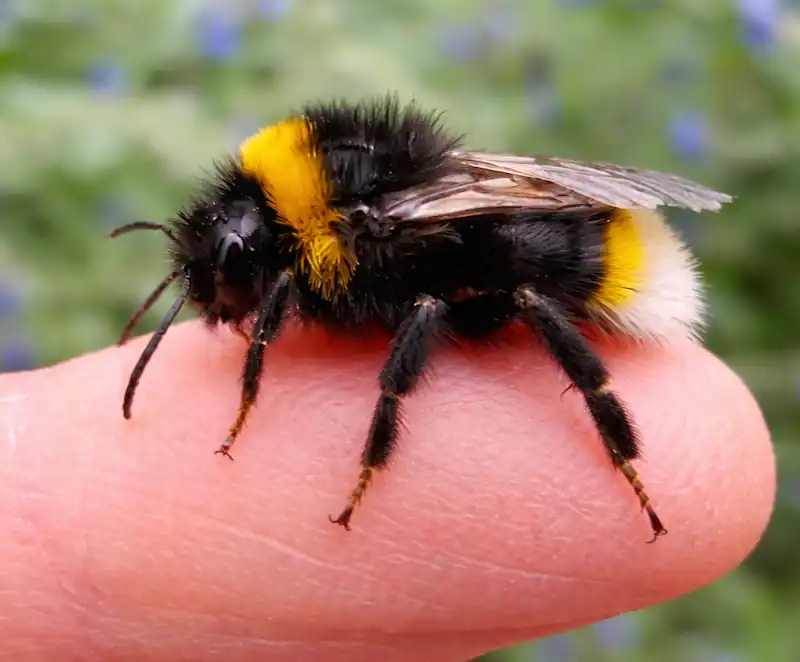
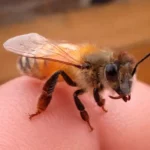
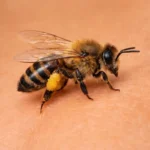
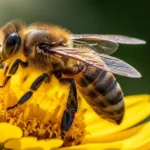
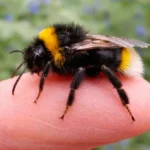
So, do bumblebees sting? The short answer is: yes… but not all of them. Only female bumblebees can sting. This includes the queen and the worker bees, which are the ones you usually see buzzing around flowers. Their stinger is mainly for defense, and they use it only if they feel threatened.
Not all bees sting. Find out which bees sting and how to recognize their behavior to avoid getting stung.
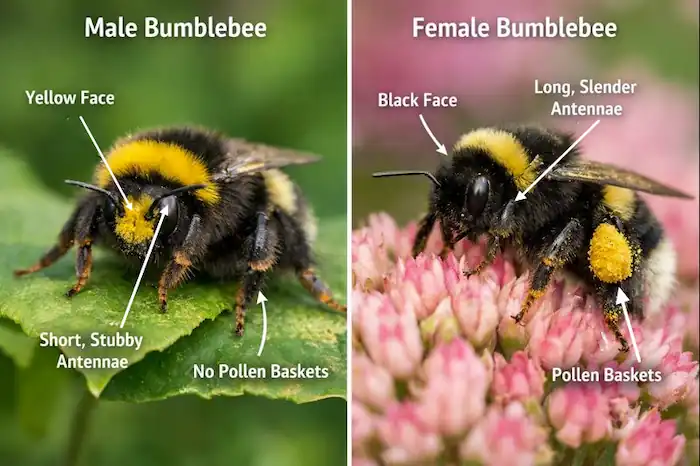
Male bumblebees, also called drones, are a different story. They don’t have a stinger at all. Their main job is mating, and that’s it. No stinging, no defending the nest. So if a bumblebee is hovering near you and acting calm, there’s a good chance it’s a male and completely harmless.
If you’re curious about telling them apart, there are a few visual clues. Male bumblebees often have more yellow on their faces, slightly different antennae, and they don’t carry pollen because they lack pollen baskets. Females, on the other hand, are the ones hauling pollen back to the nest.
Why and When Do Bumble Bees Sting?
Bumblebees are actually some of the calmest bees you’ll come across. Most of the time, they’re busy doing their thing: flying from flower to flower, collecting nectar and pollen, and completely ignoring people. If a bumblebee is away from its nest, it’s very unlikely to sting unless it feels threatened.
So, when do bumble bees sting? Almost always for defense, not aggression.
The most common reason is protecting their nest. Bumblebee nests are often hidden in places like underground holes, thick grass, old rodent burrows, compost piles, or even garden corners. If someone gets too close, blocks the entrance, or disturbs the area, the bees may see it as a threat. While they’re generally less aggressive than honeybees or wasps, they will defend their home if needed.
Bumblebees can also sting in self-defense. This usually happens by accident like stepping on one barefoot, sitting on it, trapping it in clothing, or trying to grab or swat it. When a bumblebee feels trapped with no escape, stinging becomes its last option.
Understanding where bumblebees live and how they behave can help you avoid stings. Learn more about identifying bumblebee nests and their daily habits.
Bumblebee vs Other Stinging Insects
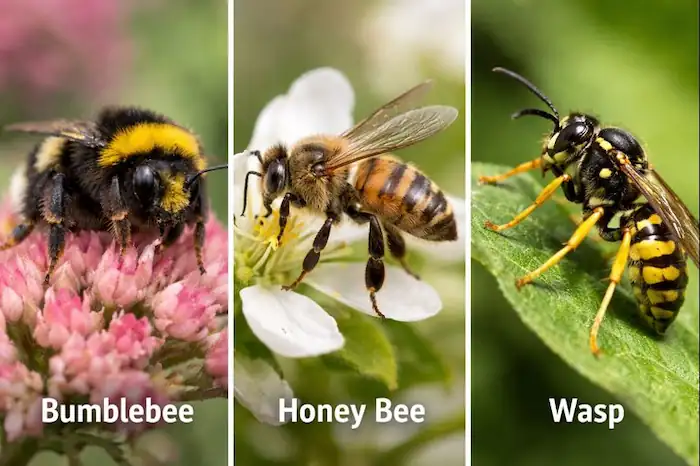
Not every buzzing insect is a bumblebee, and knowing the difference really matters. If you can tell a bumblebee from a honey bee or a wasp, you can better judge the real risk of getting stung and react the right way instead of panicking.
Bumblebee
Size: Large and chunky, about half an inch to one inch
Body: Very fuzzy and hairy, especially on the body
Colors: Black and yellow, sometimes with orange or white bands
Shape: Round and stout, like a fuzzy ball
Flight: Slow and heavy, almost clumsy looking
Sting: Can sting more than once
Nest: Usually underground, in thick grass or compost
Temperament: Calm and easygoing unless their nest is disturbed
Honey Bee
Size: Medium, smaller than a bumblebee
Body: Hairy but not nearly as fuzzy
Colors: Golden yellow with black or brown stripes
Shape: Oval and slimmer
Flight: Faster and more direct with a steady hum
Sting: Stings once and then dies
Nest: Hives in trees, walls, or man-made boxes
Temperament: Protective of the hive and can become aggressive
Colors: Bright yellow and black with sharp stripes
Shape: Long and narrow with a very noticeable waist
Flight: Fast, darting, and aggressive
Sting: Can sting multiple times
Nest: Underground, in trees, walls, or hanging paper nests
Temperament: Highly aggressive, especially near food or nests
What Does a Bumblebee Sting Feel Like?
If you do get stung by a bumblebee, you’ll notice it right away. The first feeling is usually a quick, sharp pain, similar to a bee or wasp sting. It can feel like a sudden pinch or jab, followed by a short burning or throbbing sensation.
The good news? For most people, that intense feeling doesn’t last long.
Normal Reactions After a Bumblebee Sting
In most cases, the reaction stays right around the sting spot. You might notice:
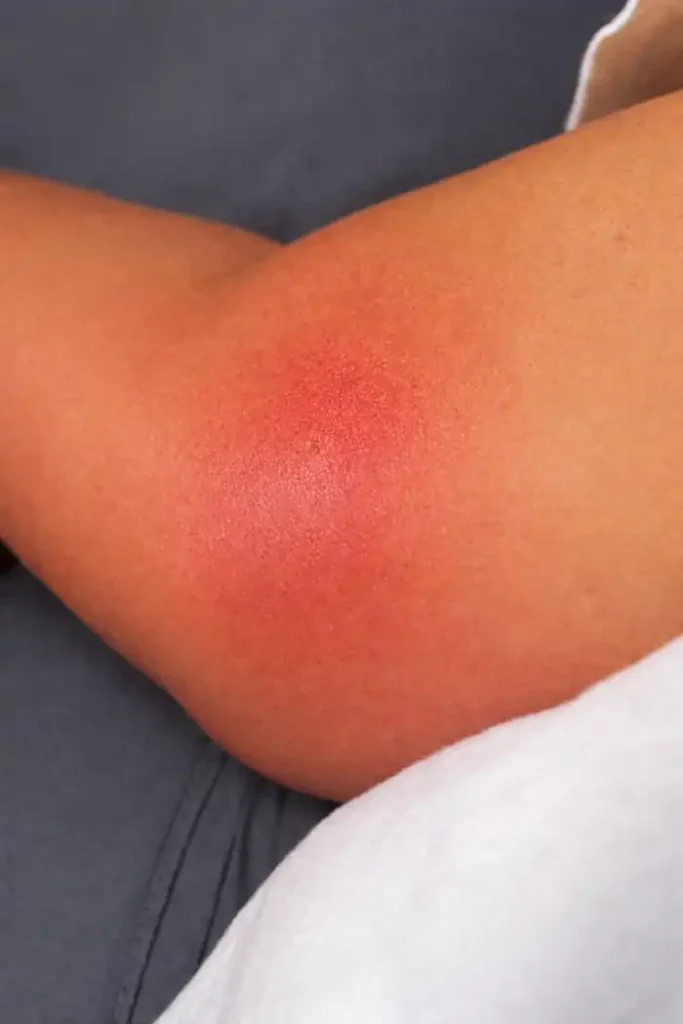
Redness and swelling, usually just an inch or two around the area
Itching or soreness
A warm feeling where you were stung
Bumblebee sting reaction after 36 hours: redness and swelling still present where it stung me.
These symptoms are normal and usually fade within a few hours, though mild swelling or itching can sometimes last a day or two.
First Aid for a Bumblebee Sting
If you get stung by a bumblebee, don’t panic. Most stings are easy to handle with basic first aid. I immediately follow the given steps whenever I get stung by a bumblebee.
Step 1: Move to a Safe Spot
First things first, walk away from the area where you got stung. This helps prevent getting stung again, especially if you’re near a nest or flowers with lots of bees.
Step 2: Check for a Stinger
Bumblebees usually don’t leave their stinger behind, but it’s still a good idea to check.
If you do see one, gently scrape it out using your fingernail or the edge of a credit card. Try not to squeeze it, since that can push more venom into the skin.
Step 3: Clean the Area
My next step is to wash the sting site with soap and water to remove dirt and reduce the risk of infection.
Step 4: Use a Cold Compress
Next, I put some ice or a cold pack on the sting for about 10 to 20 minutes. This helps reduce swelling, pain, and that burning feeling.
If it’s sore, you can take an over-the-counter pain reliever, such as ibuprofen or acetaminophen.
Step 5: Calm the Itch and Swelling
To help with itching and swelling, try:
Antihistamine cream
Hydrocortisone cream
A simple baking soda and water paste
If itching is strong, an oral antihistamine can also help.
Over the next day or two, watch the sting area. If you notice spreading redness, pus, fever, or worsening swelling, it’s a good idea to talk to a doctor. Also seek medical help if the swelling keeps growing or doesn’t improve.
Allergic Reactions to Bumblebee Stings
Most bumblebee stings cause only mild, local reactions like redness and swelling. But for some people, a sting can trigger a serious allergic reaction, which is very different from the normal response. Knowing whether you or someone in your family has a bee sting allergy is really important and can be life-saving.
If you’ve never had an allergic reaction before, it’s still good to know the warning signs, just in case.
Signs of Anaphylaxis (A Severe Allergic Reaction)
Anaphylaxis is rare, but it’s a medical emergency. Symptoms can show up within minutes after a sting and may include:
Skin symptoms
Hives or widespread itching
Skin that looks flushed or unusually pale
Breathing problems
Trouble breathing or shortness of breath
Wheezing
Tightness in the throat or feeling like your throat is closing
Circulation issues
Dizziness or feeling faint
Fast or weak pulse
Sudden drop in blood pressure
Loss of consciousness
Stomach symptoms
Nausea or vomiting
Diarrhea
Stomach cramps
Swelling
Swelling of the face, lips, tongue, or throat
When to Get Emergency Help
If any of these symptoms appear after a bumblebee sting, call emergency services right away. Do not wait to see if things get better. Anaphylaxis can get worse very quickly and needs immediate treatment.
If the person has an epinephrine auto-injector, like an EpiPen, and it’s been prescribed, use it right away while waiting for emergency help.
Important Safety Notes
Medical organizations like the CDC and Mayo Clinic agree that epinephrine is the first and most important treatment for severe allergic reactions. Anyone with a known severe allergy should always carry their auto-injector and ensure those around them know how to use it.
If you or a family member has had a serious reaction in the past, talk to a doctor about allergy testing and whether carrying an epinephrine injector is necessary.
If severe allergies run in your family or you’ve reacted badly to stings before, don’t take chances. Always carry your epinephrine injector and know exactly when and how to use it.
Preventing Bumblebee Stings to Live Peacefully with Them
The best way to avoid a bumblebee sting is pretty simple: give them space and stay calm. Bumblebees are not out to sting people. I’ve noticed that working around gardens and pollinator-friendly spaces, almost every sting happens because the bee feels surprised, trapped, or threatened. Let’s discuss effective steps you can take to prevent a bumblebee sting.
Watch from a Distance
Bumblebees are fun to observe, especially in the garden, but there’s no need to get close. This is extra important if you spot a nest nearby. Most stings occur when someone unknowingly gets too close to a nest.
What if a bumblebee lands on you? Stay still, breathe, and let it leave on its own or gently brush it away.
Move Slowly, Not Suddenly
If a bumblebee lands on you, don’t panic. Swatting almost always makes things worse. Stay calm, gently brush it off, or wait a few seconds for it to fly away. This advice is commonly shared by beekeepers for a reason. It works.
Sometimes a bee crawls into shoes, gloves, or jackets left outside. A quick shake before putting them on can save you from an accidental sting.
Teach Kids Early
One of the best prevention steps is education. Teach children not to chase, poke, or yell at bees, and show them how to stay still and calm if one comes close. Calm behavior prevents almost all stings.
Smart Environmental Changes That Help
Bees are less interested in light colors. Dark or heavily patterned clothes can sometimes catch their attention.
Perfumes, colognes, and scented lotions can attract curious bees. When gardening or spending time outdoors, it’s best to keep scents to a minimum.
Sweet drinks and food attract bees. Keep cups covered and food sealed when eating outdoors.
David Carter, founder of Farmstead Guide, has over 20 years of hands-on homesteading experience. From raising poultry to practicing sustainable farming, he shares practical tips and insights to help others live a more self-sufficient lifestyle.