Have you ever heard that bees die after they sting you? It’s one of those things most of us grow up believing. But the truth is a little more interesting. Not all bees die after stinging, and yes, it depends on the kind of bee.
The big difference comes down to something you probably haven’t thought about before: the stinger itself. Different insects have different stinger designs, and that tiny detail changes everything.
Honeybees are the main reason this myth exists. When a honeybee stings a human, it usually can’t survive afterward. But other bees, like bumblebees and many solitary bees, don’t have this problem at all. They can sting more than once and fly away just fine. Wasps are the same way, thanks to their smooth, retractable stingers.
So, before we blame all bees for a one-sting-and-done fate, it helps to look closer. In the next sections, we’ll break down how stinging works for different species and why these differences matter, both for the insects and for us.
The Honeybee’s Sacrifice: Why One Sting Is the Last
Honeybees are the reason this whole “bees die after stinging” idea exists. Unlike most stinging insects, honeybees have a very specific kind of stinger, and it comes with a serious downside.
A honeybee’s stinger isn’t smooth. It has tiny, backward-facing barbs along it, almost like a fishhook. These barbs are great for defense, especially against mammals, but they also create a problem. When a honeybee stings human or animal skin, those barbs dig into the stretchy surface and get stuck. The bee simply can’t pull the stinger back out.
When the bee tries to fly away, the stinger stays behind. As it tears free, it pulls out the venom sac and parts of the bee’s abdomen, including sections of its digestive and nervous systems. This process, called autotomy, causes fatal internal damage. The bee doesn’t die instantly, but it usually passes away within minutes or a few hours.
Even after the bee is gone, the stinger is still doing its job. The detached stinger keeps pumping venom into the skin and releases an alarm pheromone. This chemical signal warns nearby worker bees that there’s a threat, which can cause more bees to rush in to defend the hive. That’s why swatting at bees is a bad idea. It can make the situation worse by triggering more stings.
From an evolutionary point of view, this sacrifice makes sense. One worker bee giving its life can help protect thousands of others in the colony, including the queen. It’s a harsh but effective defense system against large predators.
Interestingly, honeybees don’t always die when they sting. If they sting other insects, like rival bees or small hive invaders, they can often pull their stinger back out. Insects have harder outer shells, so the barbs don’t get stuck the way they do in human skin.
This one-time sting is tragic for the individual bee, but for the colony, it can be the difference between survival and destruction.
Other Bees and Wasps: They Sting and Fly Away
Honeybees are the odd ones out. Most other bees and all wasps can sting without paying the ultimate price.
The big reason is their stingers. Bumblebees, solitary bees like mason bees and leafcutter bees, and wasps such as yellowjackets, hornets, and paper wasps have smooth stingers. Some may have tiny barbs, but nothing like the hooked stinger of a honeybee. Because of this, their stingers don’t get stuck in skin.
When these insects sting, they inject venom and then pull the stinger right back out. Simple as that. No tearing, no fatal damage. This is why they can sting more than once if they feel threatened.
They use this ability in different ways. For defense, they sting to protect themselves or their nests when something gets too close. Wasps take it a step further. They also use their stingers to hunt, paralyzing insects and carrying them back to their nests as food for their young.
Since their lives don’t depend on a single sting, their behavior is different too. They can be more persistent if they see you as a threat, especially wasps.
Bumblebees are usually calm and mind their own business, but they will sting if you disturb their nest or grab them. Solitary bees are even more laid-back. They live alone, focus on building their nests and sting almost never. On the other hand, wasps can be more aggressive, especially yellowjackets around food or when their nests are disturbed.
So if an insect stings and sticks around, it’s probably not a honeybee. It’s just doing what its body allows it to do.
Why Stinging Mechanisms Differ (Social Structure vs. Solitary Life)
Honeybees (Highly Social)
Since protecting the hive is one of their main roles, many people still wonder do honeybees sting and under what circumstances they decide to use their stinger.
Honeybees live in tightly organized colonies where the group always comes first. The survival of the hive matters more than the life of any single worker bee. Since worker bees do not reproduce, their role is to gather food and defend the colony. From an evolutionary point of view, sacrificing one worker to protect thousands of others, including the queen, is a reasonable trade.
Other Bees (Often Solitary or Semi-Social)
Many other bee species live alone or in small, loose groups. For them, individual survival is essential. Each bee needs to stay alive long enough to build a nest, lay eggs, and continue its species. Their stinger is a tool for protection, not a one-time, fatal defense.
Wasps (Social and Solitary)
Wasps can be either social or solitary, but in both cases, staying alive matters. They depend on their stingers not just for defense, but also for hunting. Because of this, a stinger that can be used multiple times is far more useful than one that works only once.
Predator Defense Strategies
Honeybees evolved mainly to defend against large predators such as bears, badgers, and humans. These animals can quickly destroy an entire hive. A barbed stinger that delivers a strong dose of venom is especially effective against thick, stretchy skin.
Other bees and wasps face a wider range of threats, including smaller animals and other insects. In these situations, being able to sting repeatedly is often more effective, whether it’s to scare off a threat or subdue prey.
The Evolutionary Trade-Off
This difference comes down to cost and benefit. Honeybees evolved a powerful, single-use sting that protects the colony as a whole. Other bees and wasps evolved reusable stingers that support individual survival, defense, and hunting.
By looking beyond the simple question of who dies after stinging, we get a clearer picture of why these insects behave the way they do. Their stingers are not accidents of nature, but carefully shaped tools molded by evolution and social life.
Visual Distinctions of Barbed vs. Smooth Stingers
At first glance, all stingers might look the same. But when you zoom in, the differences are pretty dramatic.
Honeybee Stinger
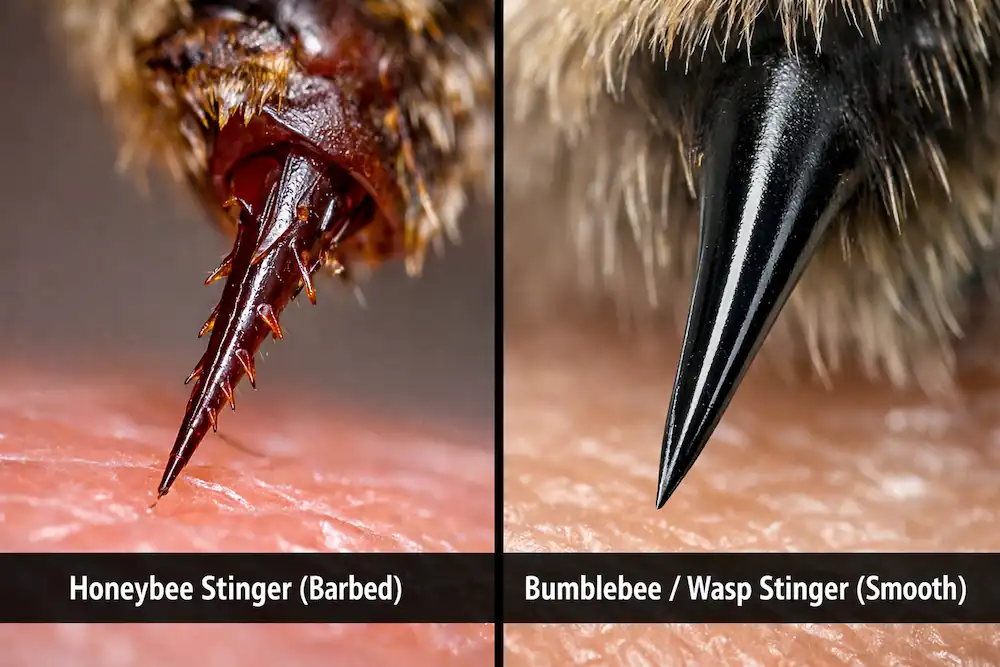
A honeybee’s stinger is covered in noticeable, backward-facing barbs along its length. These barbs act like tiny hooks. Once the stinger goes into the skin, it locks in place. This design keeps the venom sac attached, allowing it to keep pumping venom even after the bee pulls away.
Other Bees and Wasps
Most other bees and all wasps have smooth stingers, or ones with extremely tiny barbs you can barely see. Because there’s nothing to snag on skin, these stingers slide in and out easily. After injecting venom, the insect can retract the stinger and sting again if needed.
If you’re unsure which bees can sting and which cannot, it helps to understand what actually happens after a sting and why some bees die while others don’t.
Microscopic Views and Diagrams
Under magnification, the contrast becomes even clearer. Side-by-side diagrams or microscopic images show the sharp, pronounced barbs on a honeybee stinger next to the clean, smooth surface of a bumblebee or wasp stinger.
These close-up views make it easy to understand why one sting is fatal for the bee and the other isn’t.
Beyond the Sting: Identifying Common Stinging Insects
Not every flying, buzzing insect is out to get you. Knowing what you’re looking at can reduce panic and help you react appropriately. It also tells you whether you’re dealing with a one-sting insect or one that can sting again and again. On top of that, it builds a little respect for the role these insects play in nature.
Honeybees
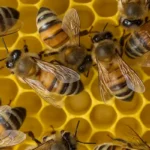
They build large, well-organized hives. These are often found in tree hollows, rock gaps, or inside buildings.
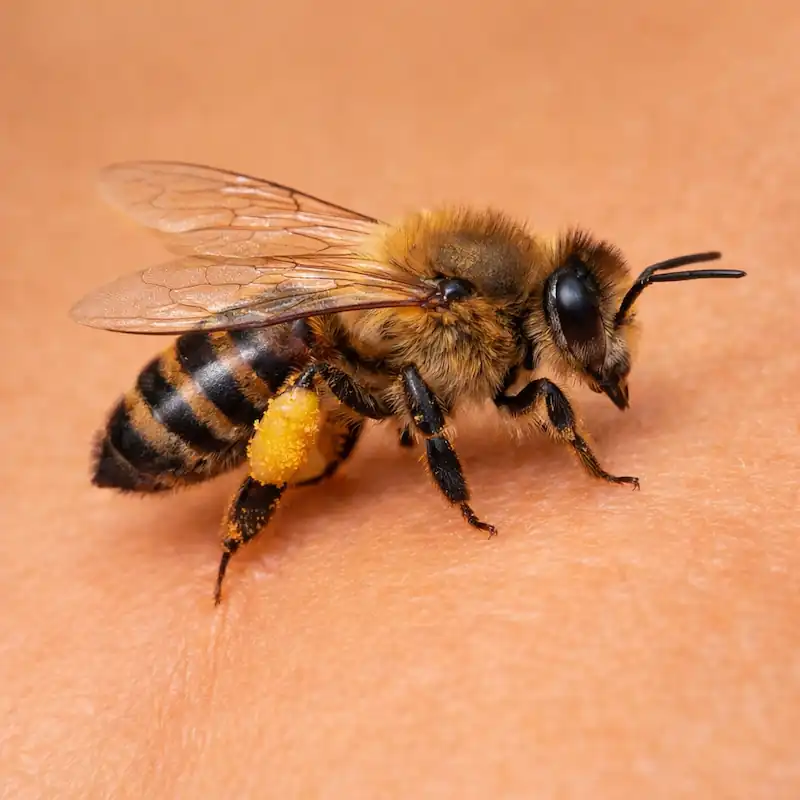
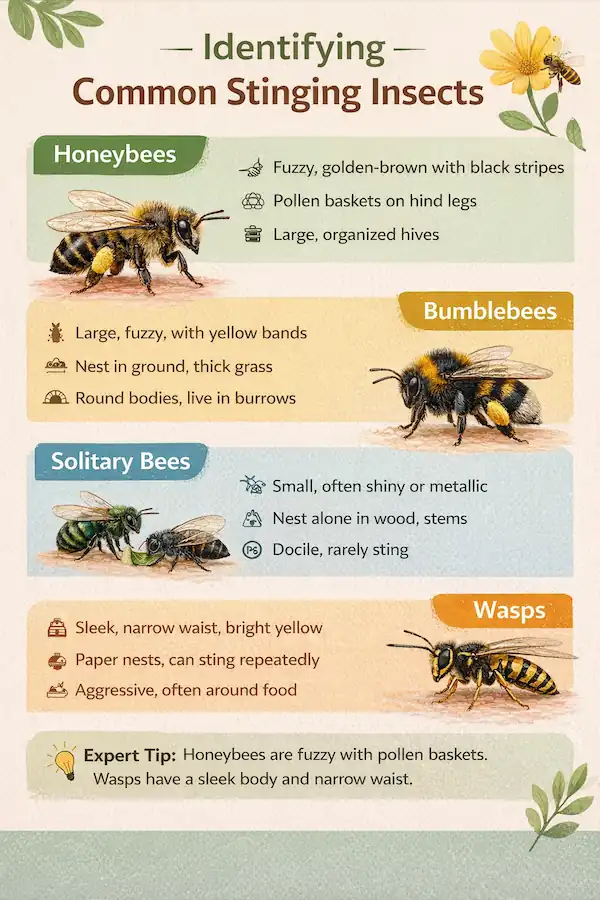
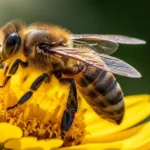
Honeybees have moderately fuzzy bodies and a soft, rounded shape. Their color is usually golden brown with black stripes. If they’re out collecting food, you might notice yellow clumps of pollen on their back legs. Those are pollen baskets.
How they behave
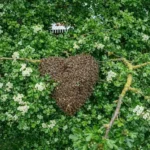
Honeybees are calm and focused on their work. They rarely sting unless their hive is threatened. You may see large groups together when they’re moving to a new home, which can look scary but usually isn’t dangerous.
Bumblebees
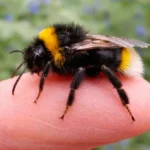
Bumblebees are big and very fuzzy. Their bodies are rounder and chunkier than honeybees. Most are black with bold yellow, orange, or white bands.
Their nests are small and temporary. You’ll usually find them underground, in thick grass, old rodent holes, or under sheds.
How they behave
They’re generally gentle, but they will defend themselves. If their nest is disturbed, bumblebees can sting more than once.
Solitary Bees (Mason Bees, Leafcutter Bees)
These bees come in many shapes and sizes. Some are small, some shiny or metallic, and some barely look like bees at all. A few even resemble flies or tiny wasps.
Very chill. Solitary bees almost never sting and are not aggressive. They spend their time building nests and collecting food. They make individual nests in holes in wood, hollow plant stems, or directly in the ground.
If you’re dealing with unwanted bees around your home, it’s important to know how to get rid of bees safely without harming them or putting yourself at risk.
Wasps (Yellowjackets, Hornets, Paper Wasps)
Wasps have smooth, shiny bodies with very little hair. They have a narrow waist and sharp yellow-and-black coloring. When resting, their wings are folded neatly along their bodies.
Wasps are more defensive than most bees. Yellowjackets, especially, can get aggressive around food or if their nest is disturbed. They can sting multiple times.
They build paper-like nests that are often easy to spot. These can hang under roofs, sit in trees, or be hidden underground.
First Aid for Bee and Wasp Stings
If stung by a honeybee, remove the stinger quickly by scraping it off with a fingernail or a card. Wash the area with soap and water, then apply ice for 10–20 minutes to reduce pain and swelling. Pain relievers or antihistamines can help with discomfort and itching.
Most stings cause mild redness and swelling, but seek emergency help immediately if there’s trouble breathing, swelling of the face, widespread hives, dizziness or nausea. Use an EpiPen if available and call emergency services.
David Carter, founder of Farmstead Guide, has over 20 years of hands-on homesteading experience. From raising poultry to practicing sustainable farming, he shares practical tips and insights to help others live a more self-sufficient lifestyle.